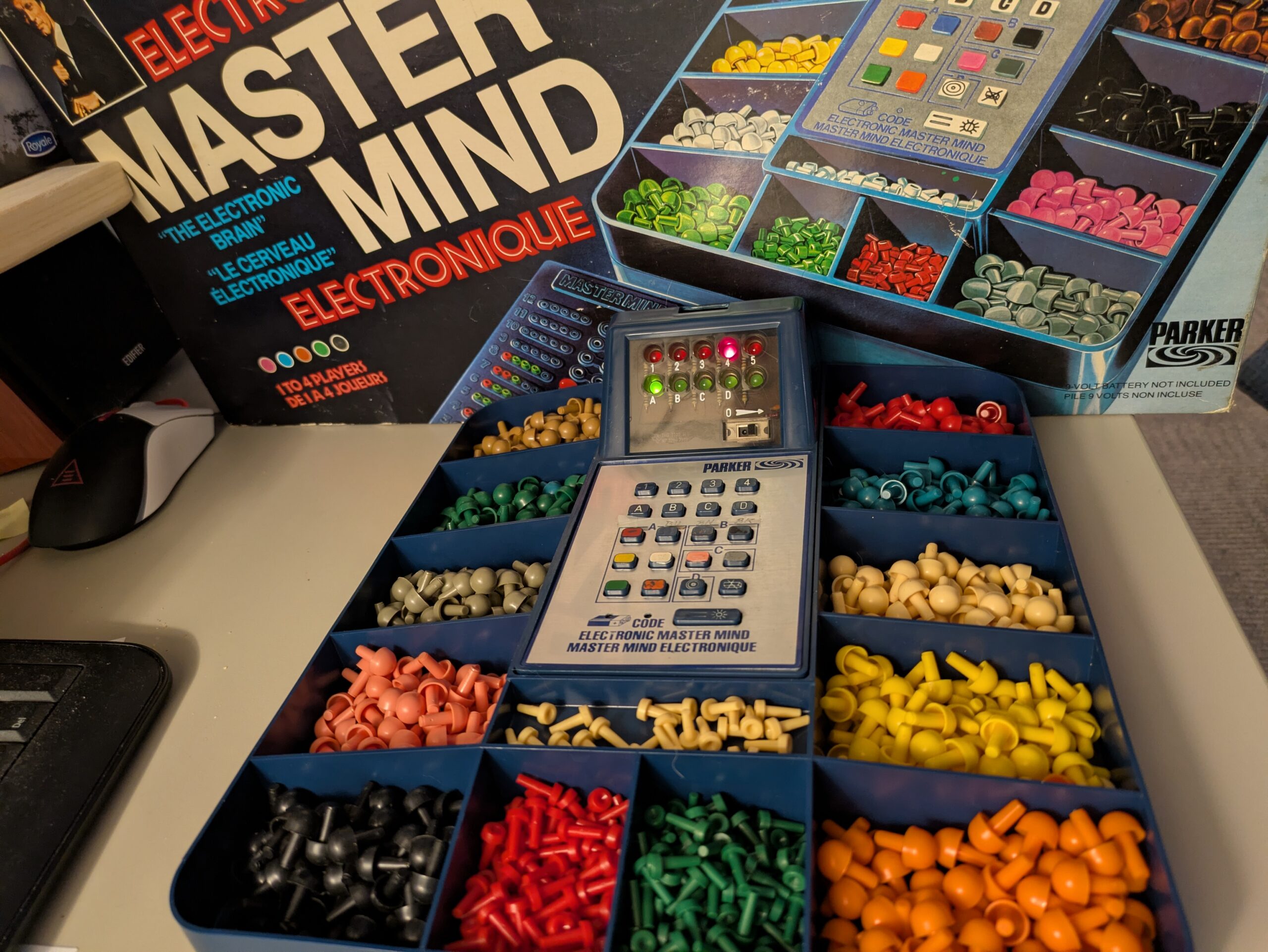
Parker Brother’s Electronic Mastermind
[Vin159]
The Parker Electronic Mastermind, released in 1977, stands out in vintage computing history as one of the earliest dedicated electronic code-breaking devices, blending simple microprocessor logic with the popular Mastermind board game concept. This device gained fame as a precursor to programmable handhelds like Parker Brothers’ Merlin (1978), which expanded on its formula with multiple games and outsold it massively at over 5 million units worldwide. It democratized computing concepts: logic deduction and trial-error feedback, making abstract algorithms tangible without screens or cassettes, a pivotal step before home micros like the TRS-80.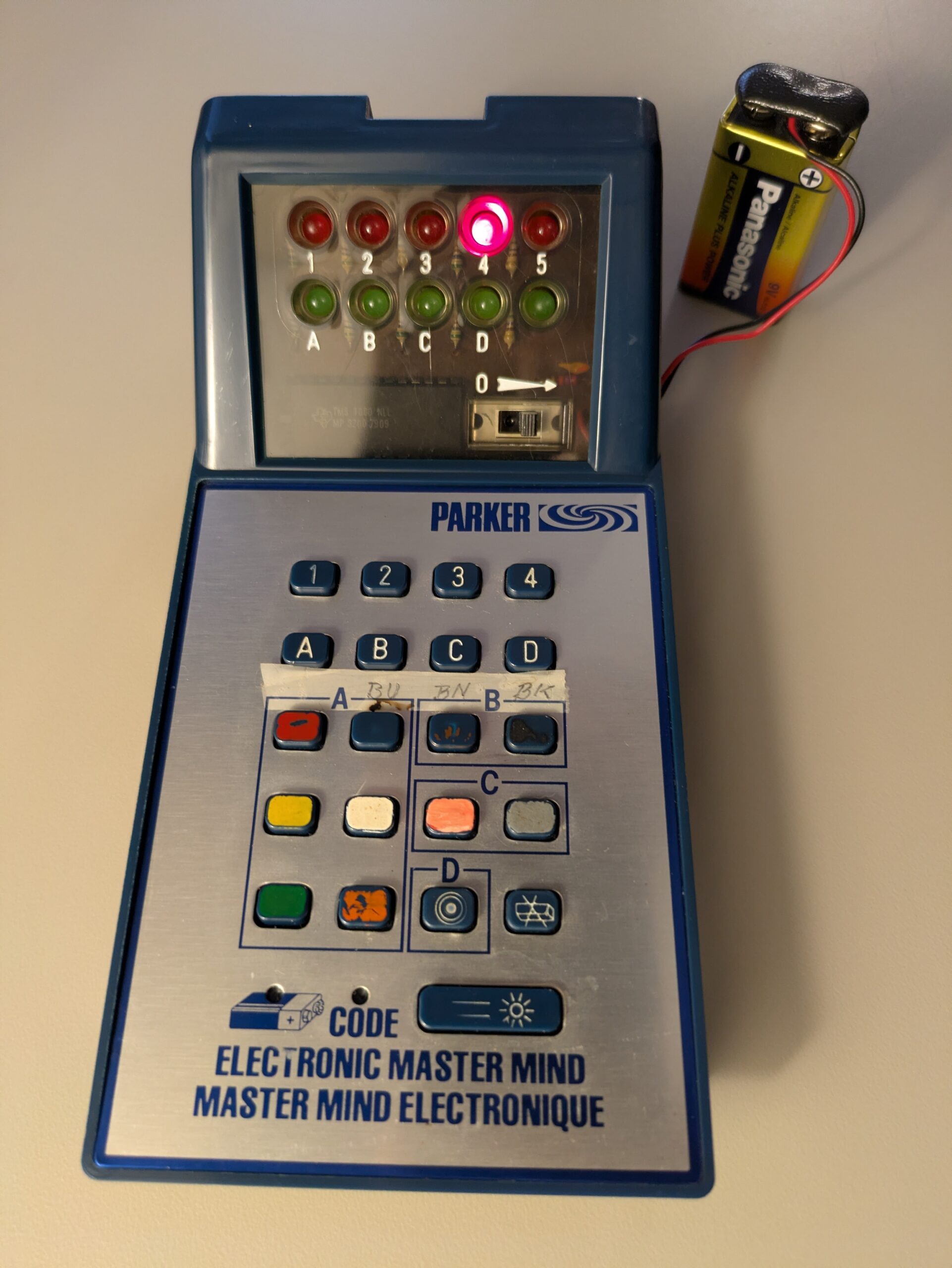
- Manufacturer: Parker Brothers manufactured the Electronic Mastermind, collaborating with Invicta Plastics from the UK for design.
- Type: Electronic Toy
- Release Date: 1977
- Cost at release: $75 (adjusted for inflation)
- MIPS: 0.002 (~2 KIPS)
Hardware Specifications
- CPU: Texas Instruments TMS1000 4-bit microcontroller (mask-programmed ROM, ~1KB program memory, 16×4-bit RAM, 300-400 kHz clock, 0.002-0.005 MIPS).
- Display: Custom LED array with red (correct position), green (correct digit wrong position), and black/off peg indicators; no 7-segment digits,
- Input: Numeric keypad (0-9) for code entry, mode switches for 3/4/5-digit games, reset button
- Power: 9V battery
- Memory/Storage: Fixed ROM-only for game logic; no expandable RAM or peripherals.
- Build: Injection-molded plastic case made in Hong Kong.
- Dimensions: Handheld ~15x8x2 cm
- Weight: ~280 grams
Operating System & Programming Languages
-
Operating System: The Parker Electronic Mastermind had no operating system, as it ran a fixed mask-programmed ROM on the TMS1000 microcontroller with no support for loading or switching software.
-
Supported Languages: The TMS1000 executed proprietary 8-bit machine code instructions (43-54 opcodes optimized for BCD arithmetic, branching, and I/O), hardcoded by TI during manufacturing for this game’s code-breaking logic. No high-level computer languages like BASIC, FORTRAN, or assembly were runnable by end-users; developers used TI’s custom assembly tools to generate ROM masks pre-production.
Notables
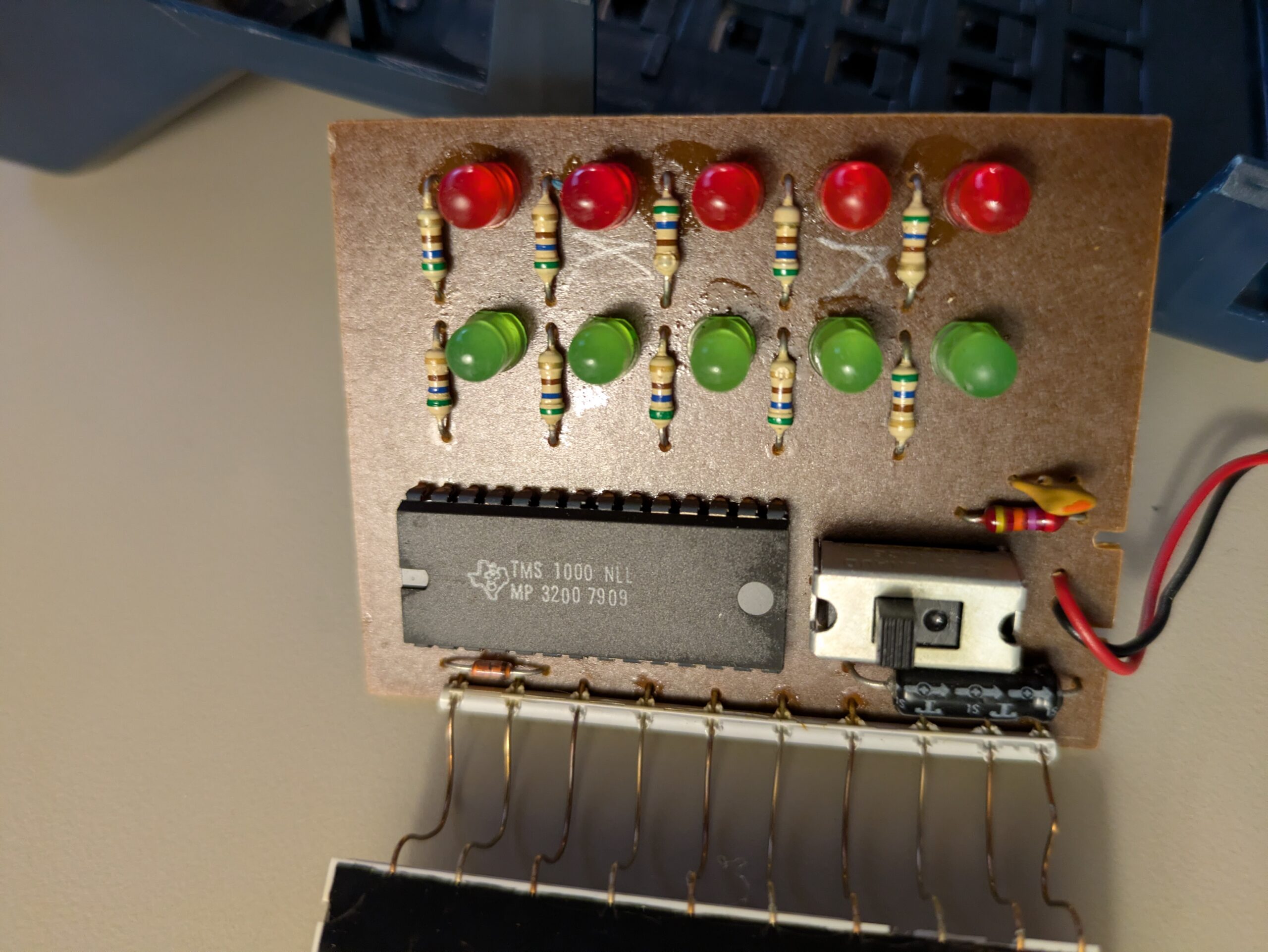
- Firsts: Among the earliest toys to embed a commercial microcontroller (TMS1000, released 1974), predating Merlin’s multi-game fame and introducing code-breaking logic to mass markets.
- Mask-programmed ROM made it unhackable by users
- Pioneered affordable embedded systems for toys, sparking 1970s fascination with “thinking machines” before home PCs; sold modestly vs. Merlin’s 5M+ units but influenced educational logic games.
Donated by: Andrew Miles