Mattel Electronics Auto Race
[Vin161]
Mattel Electronics Auto Race (1976) is widely regarded as the first fully solid‑state, mass‑market handheld electronic game, repurposing calculator hardware into a self‑contained “computer you could put in your pocket.” Its claim to fame lies in demonstrating that microelectronic logic, LED displays, and simple firmware (just 512 bytes of ROM) could deliver an arcade‑style, stateful, time‑tracked game experience without any moving parts beyond switches, effectively seeding the dedicated handheld game category that Mattel and later competitors would expand with Football, Baseball, and other titles, and making it a breakout commercial success for its time in toy and department stores.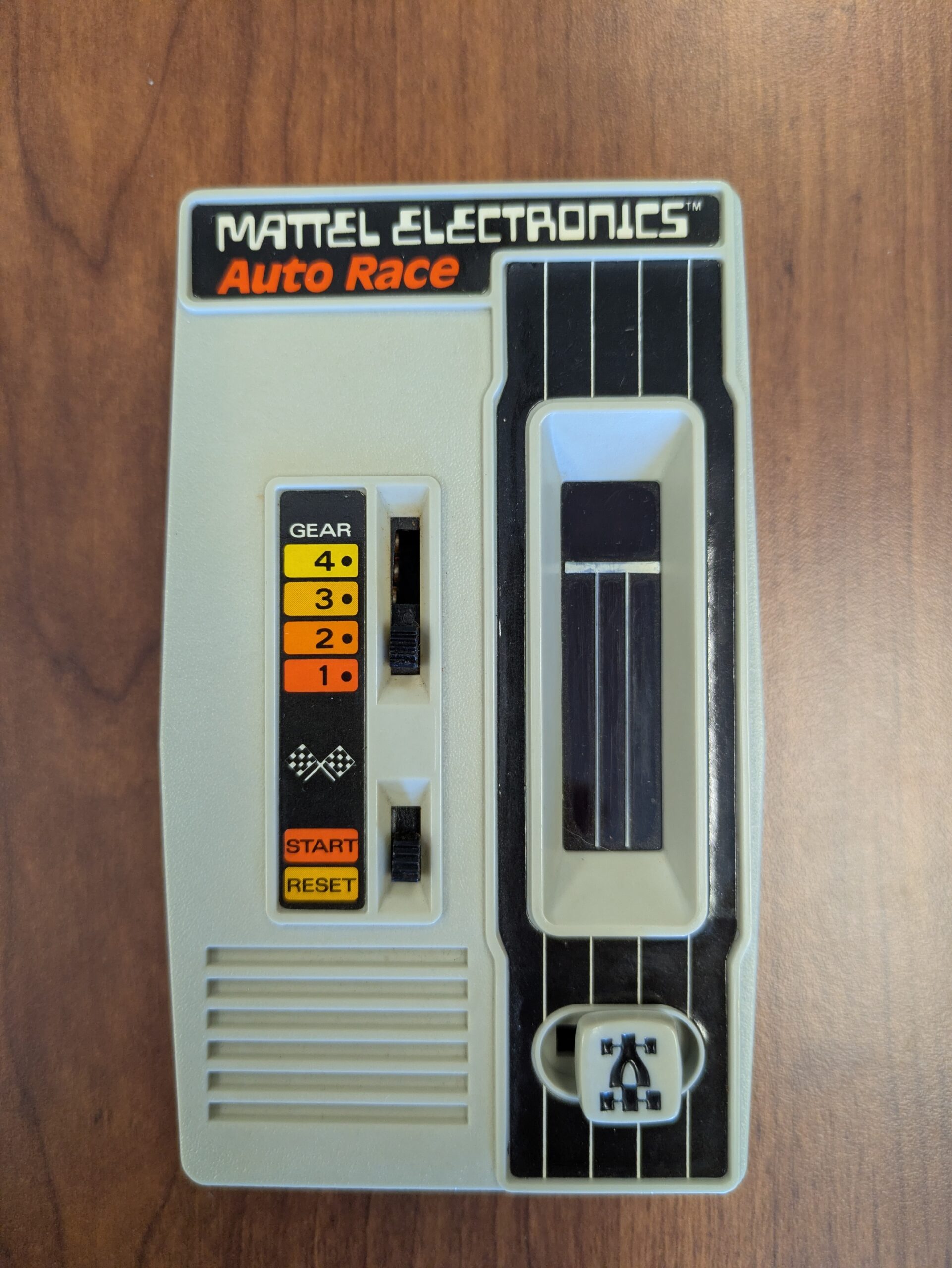
- Manufacturer: Mattel Electronics
- Type: Electronic Toy
- Release Date: 1976
- Cost at release: $125 (adjusted for inflation)
- MIPS: N/A (discrete-logic)
Hardware Specifications
- Electronics: Custom Rockwell B6000 chip. Modified calculator IC with integrated display driver, sound, and 512 bytes ROM for game logic.
- Display: Red LED matrix display (3-lane track with player car and oncoming traffic visualization).
- Sound: Piezo-ceramic speaker (simple beeps via software-toggled timing loops).
- Controls: Lane-switch lever, 4-speed gear shifter, start/reset switch, on/off switch.
- Power: 9V battery
- Weight: ~250g
Donated By: Dr. Edward Melcer