BlackBerry 857
[vin163]
 The BlackBerry R857D, developed by Canada’s Research In Motion (later BlackBerry Limited) in Waterloo, represents the transition from one-way pagers to interactive mobile computing by combining two-way wireless data with secure messaging.
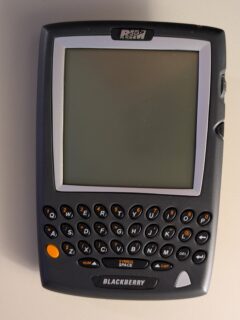 Its claim to fame was enabling reliable, encrypted, push-based communications for professionals and government users, helping establish Canada as a global leader in mobile communications and laying groundwork for the smartphone era. It highlights a major Canadian innovation success story and the widespread adoption of BlackBerry devices across North American business, healthcare, and public sector networks in the late 1990’s.
- Manufacturer: Research In Motion, the tech firm based in Waterloo, Ontario, that later became BlackBerry Limited.
- Type: Two-way pager
- Release Date: 2000
- Cost at release: ~$800 (adjusted for inflation)
- MIPS: 3-7 MIPS
- Hardware Specs
-
- CPU: Intel 386EX 32‑bit embedded CPU
- Memory: 512 KB to 1 MB RAM (depending on model/configuration)
- Storage: 512 KB to 1 MB Flash memory for email and applications
- Display: Monochrome LCD, 132 × 65 pixels
- Keyboard: Full QWERTY thumb keyboard
- Connectivity: Two-way wireless pager network (Mobitex or DataTAC, depending on carrier)
- Battery: Rechargeable NiMH battery, ~8–10 hours active use
- I/O Ports: Serial sync connector for PC connection and charging
- Weight: ~200 grams (0.44 lbs)
- Operating System & Programming Languages
-
- Operating System: The BlackBerry R857D ran a proprietary BlackBerry OS (often referred to internally as RIM OS at the time), designed specifically for secure, push‑email and messaging functionality. This OS was embedded and highly optimized for the 386EX processor, with a lightweight kernel focused on event-driven communication and low-power operation.
- Supported Languages:
- Developers could write applications using C or C++ compiled for the embedded 386EX environment.
- Early BlackBerry devices also supported proprietary scripting and Java-like APIs for simple messaging extensions and enterprise applications, but there was no general-purpose programming environment like on a desktop PC.
- The device did not run typical desktop languages like BASIC, Python, or Java directly; all code had to be cross-compiled to the 386EX architecture and work within the OS’s secure sandbox.
- Notables
-
- One of the first commercially successful two-way wireless pagers with secure, push-based email; laid groundwork for the modern smartphone.
- Developed by Research In Motion (RIM) in Waterloo, Ontario, making it a key Canadian tech export.
- Early users sometimes called it the “CrackBerry” precursor due to its addictive messaging capability (nickname became popular with later models).
- Famous for end-to-end encrypted messaging, widely adopted by businesses, governments, and the medical sector in North America.
- Helped establish the concept of always-connected mobile professionals, transforming workplace communication.
- Lightweight (~200 g) but offered full QWERTY input, which was rare for a handheld device at the time.
- Bridge device between pagers and smartphones, critical in the evolution of mobile computing, secure messaging, and enterprise wireless solutions.
Share: Twitter, Facebook
Short URL:
https://carleton.ca/scs/?p=23507
 The BlackBerry R857D, developed by Canada’s Research In Motion (later BlackBerry Limited) in Waterloo, represents the transition from one-way pagers to interactive mobile computing by combining two-way wireless data with secure messaging.
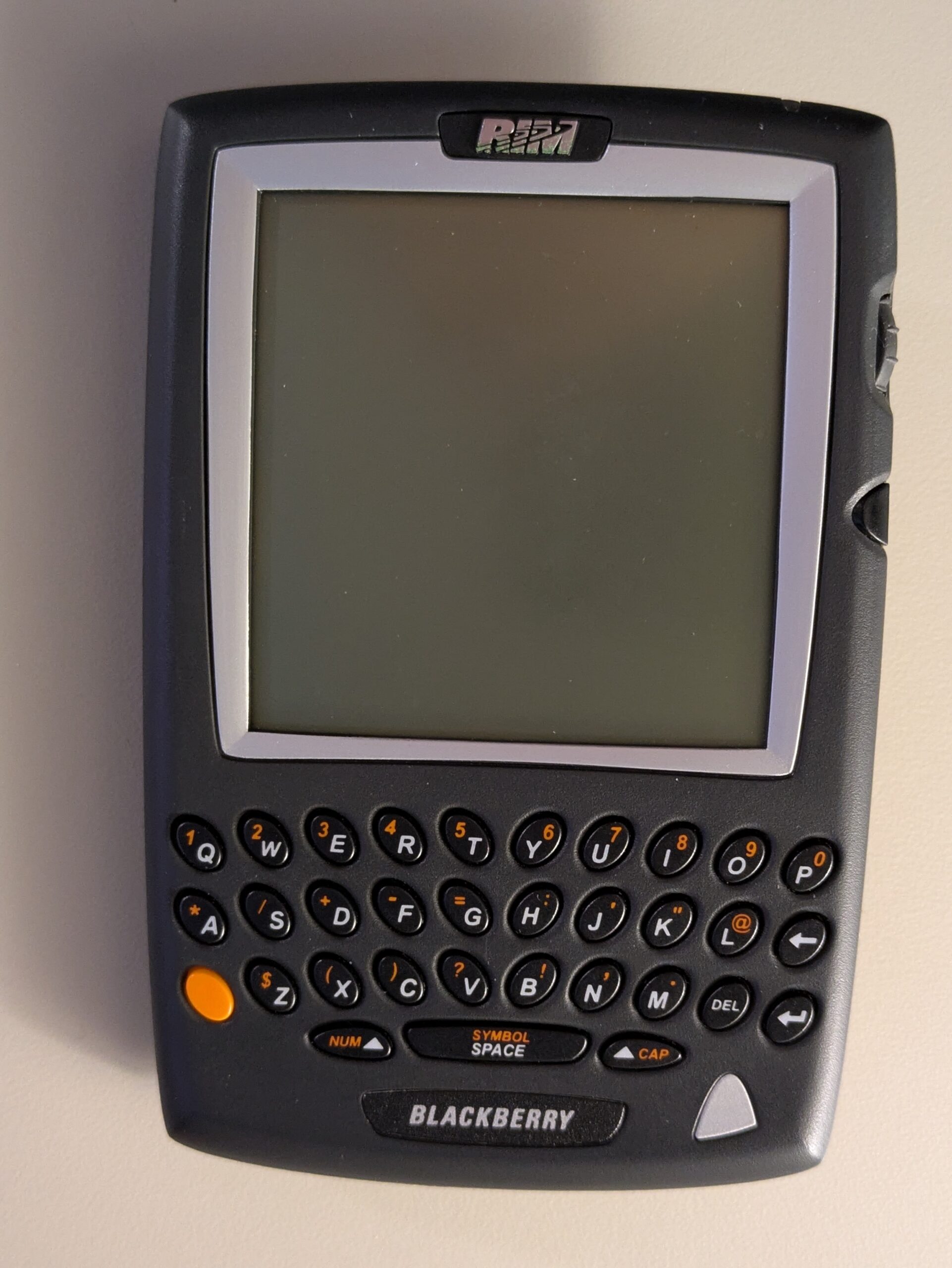 Its claim to fame was enabling reliable, encrypted, push-based communications for professionals and government users, helping establish Canada as a global leader in mobile communications and laying groundwork for the smartphone era. It highlights a major Canadian innovation success story and the widespread adoption of BlackBerry devices across North American business, healthcare, and public sector networks in the late 1990’s.