OLPC XO
[Vin170]
The OLPC XO laptop, also known as the “$100 Laptop” or “Children’s Machine,” was a landmark in computing history as one of the first rugged, low-cost, low-power laptops designed specifically for children in developing countries to facilitate education and self-directed learning. Its notable features include a durable design, power-efficient hardware with a unique sunlight-readable display, and a Fedora Linux-based OS with the child-friendly Sugar interface. The XO was important for pioneering affordable educational technology worldwide; however, it never reached its promised $100 price, was only moderately popular with about 3 million units delivered globally, and faced significant challenges in adoption and impact.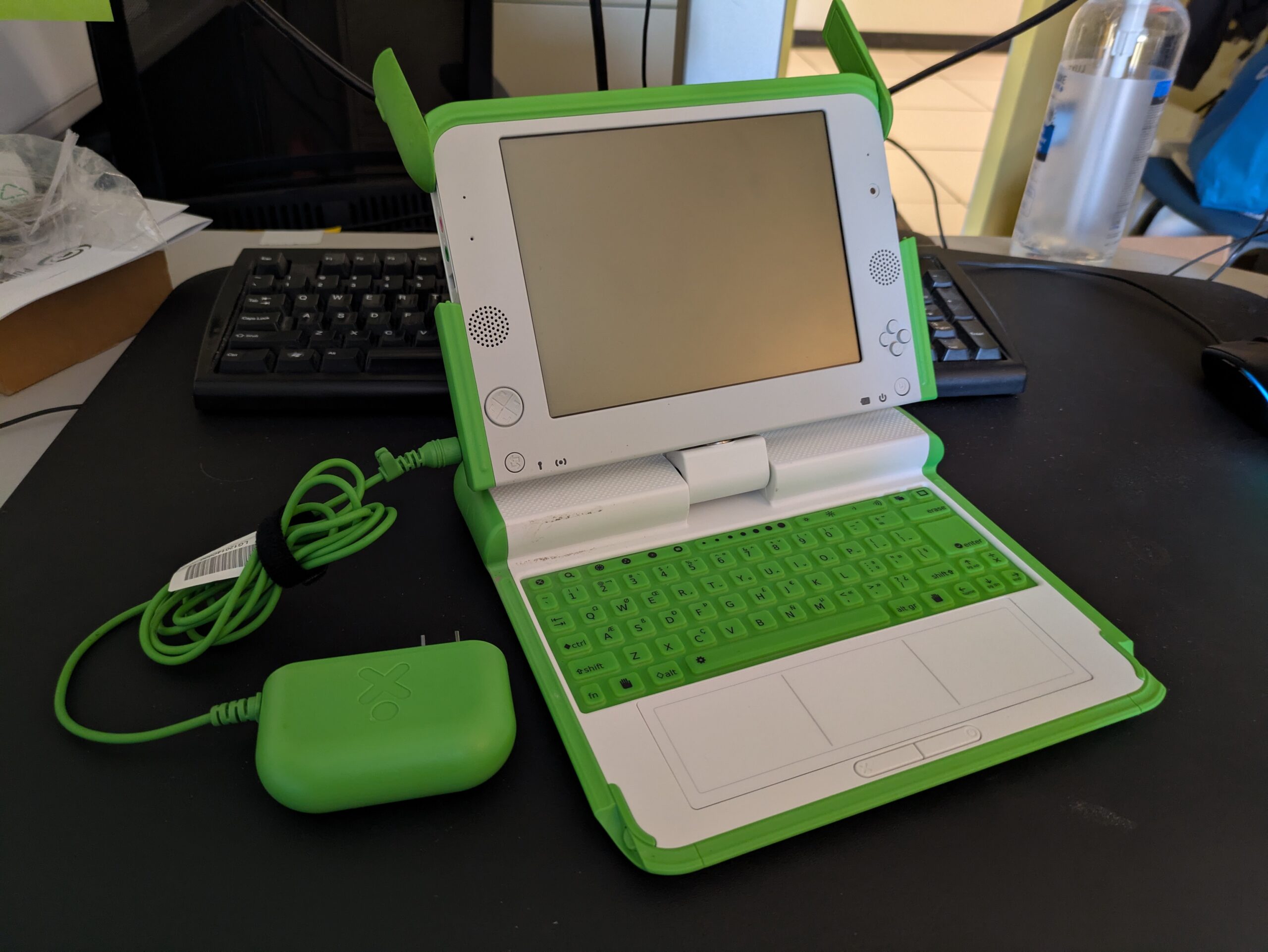
- Manufacturer: Quanta Computer
- Type: Laptop
- Release Date: 2007
- Cost at release: USD $100 (CAD $160 adjusted for inflation)
- MIPS: 0.5 – 1.0 (<1000 KIPS)
Hardware Specifications
- CPU: AMD Geode LX (x86-compatible) 433 MHz
- Memory: 256 MiB DDR
- Mass storage: 1 GiB SLC NAND flash (many units); some later or special units used 2 GiB or larger flash/microSD expansion
- Graphics: Integrated graphics in the Geode/companion chipset with unified memory architecture and a display controller (DCON) that can keep the screen active while the CPU sleeps to save power
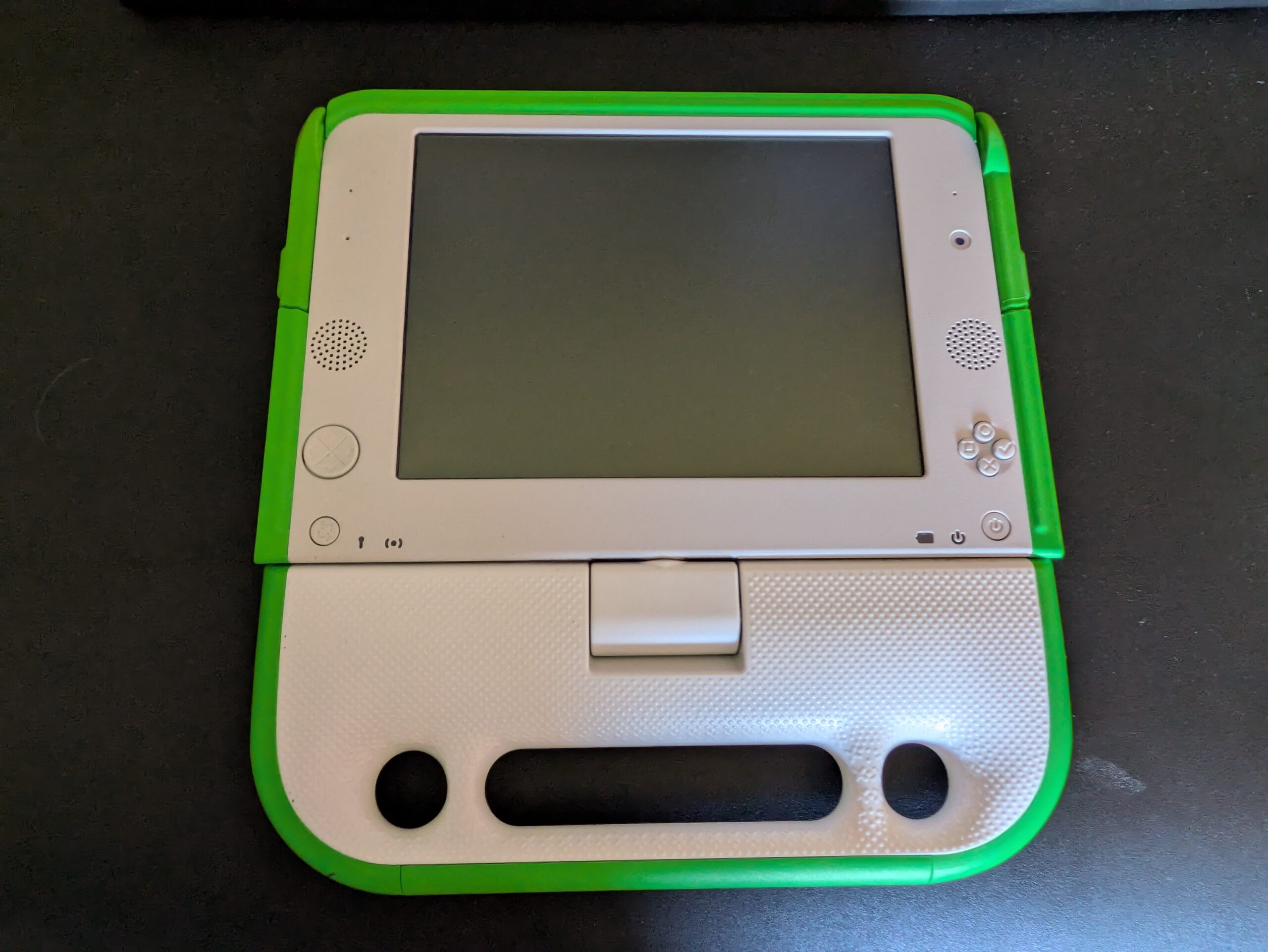
- Display: 7.5″ dual‑mode TFT (sunlight‑readable reflective grayscale mode and color backlit mode) with a perceived high-resolution rendering using subpixel sampling (grayscale mode very low power)
- Battery: Replaceable rechargeable battery options (NiMH on early units; later LiFePO4 packs used in production) with typical battery life around 3 hours for XO-1 (longer on later revisions)
- Power options: Support for solar chargers and external power solutions (and prototypes included hand-crank concepts)
- Networking: Built-in 802.11b/g Wi‑Fi with mesh networking support (802.11s-style mesh), integrated dual rotating antennas for diversity and mesh operation
- Camera: Integrated color camera (approx. 640×480) capable of video and usable as a sensor for educational experiments
- Audio: AC’97-compatible audio, internal stereo speakers, internal microphone, and headphone/mic jacks
- Input: Rubber-membrane sealed keyboard (multi-language layouts), directional/game keys, and a touchpad/stylus area depending on revision
Operating System & Programming Languages
-
Operating System: Fedora-derived Linux distribution with the Sugar learning environment
- Supported Languages:
- Python (Python 2.5 on early XOs) and the Sugar Activity API, with many Activities authored in Python.
- JavaScript (in browser activities), Squeak/Smalltalk (Etoys), Turtle Art (visual programming), Csound (music programming), and ActionScript/Flash support via Gnash in some builds.
- Native/low‑level options: C and C++ development was possible using standard GNU toolchains on the Fedora base, and developers could install Mono/.NET in some deployments to run C# code, though additional dependencies increased footprint.
- Firmware/boot: Open Firmware (a Forth‑style environment) was used on the XO hardware for low‑level access when developer modes were enabled.
Notables
- Nicknames: “$100 Laptop,” “Children’s Machine,” and the “green machine.”
- Famous firsts: Early mass effort to produce a sunlight-readable, extremely low‑power, rugged laptop intended for children at scale and one of the first widely publicized attempts at mesh networking for classroom collaboration.
- Design notables: Distinctive bright green rubber bumpers, rotatable antenna/port covers, rubberized keyboard, and reversible/sunlight-readable dual‑mode display designed by Yves Béhar’s Fuseproject.
- Technical firsts/unusuals: Fanless, solid‑state design with display controller (DCON) that could keep the screen active while the CPU slept to save power.
- Cultural impact: Inspired later low‑cost netbooks and Chromebooks and pushed education ministries worldwide to commit to one‑to‑one computing initiatives despite mixed long‑term outcomes.
- Popularity/fate: Over 3 million units shipped but fell short of lofty distribution goals and faced criticism for implementation and sustainability problems.
- Famous ads: “Give One Get One” campaigns (buy one, donate one) and high-profile promotional spots including a John Lennon style ad used online during the 2008 campaign.
Donated by: Dr. Robert Biddle