Sun Ultra 10
[Vin172]
 The Sun Ultra 10 delivered affordable, high-performance 64-bit RISC computing for graphics-intensive tasks such as 3D modeling, EDA, and multimedia, competing directly with Pentium III systems while advancing Sun’s SPARC architecture in an era of RISC dominance. In university settings like labs at Carleton, it powered Solaris-based education in computer science, networking, and visualization, preserving a snapshot of late-1990s Unix workstation culture central to open systems innovation.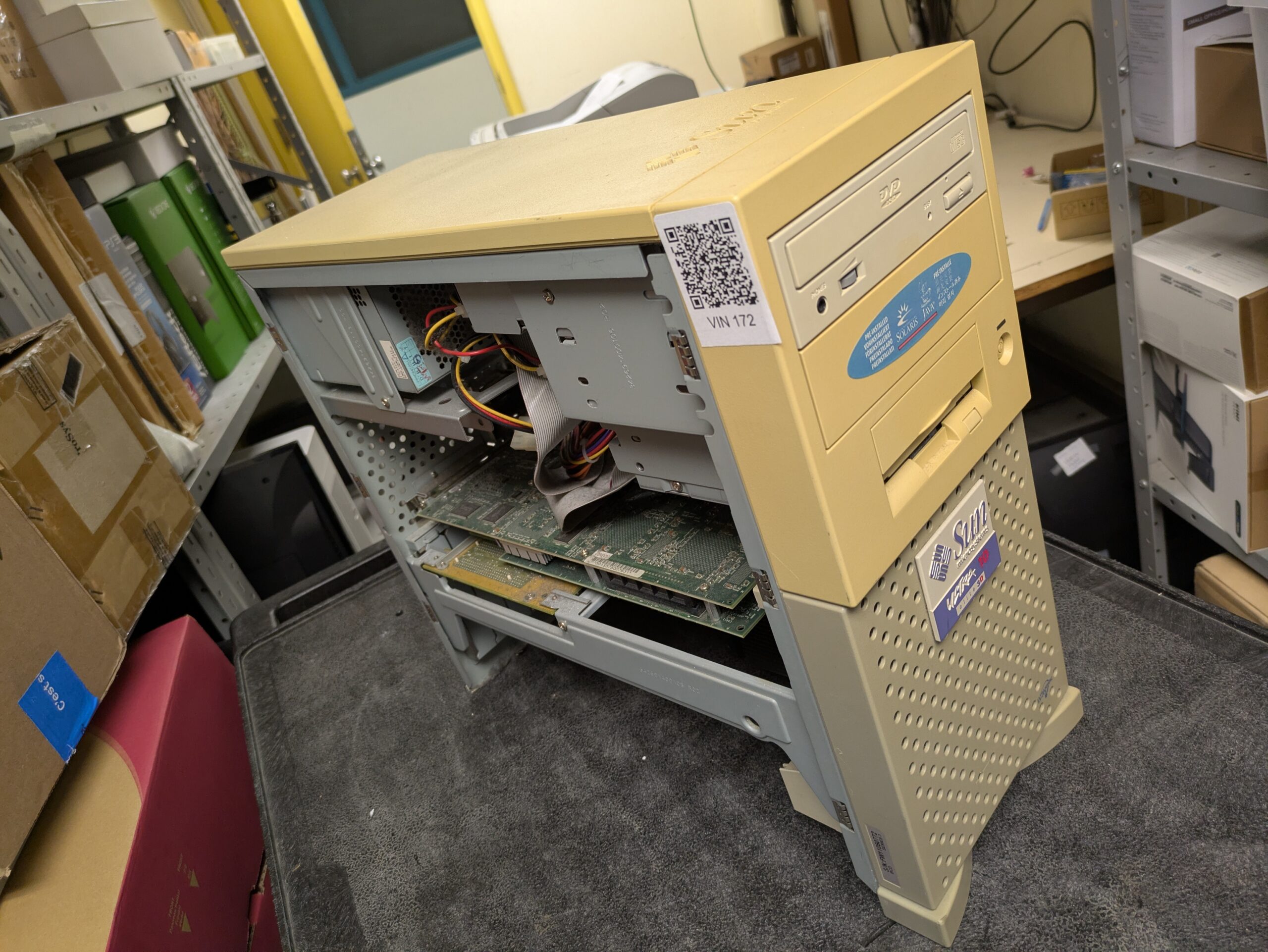
- Manufacturer: Sun Microsystems
- Model: Ultra 10
- Type: Desktop
- Released: 1998
- Original Pricing (adjusted for inflation in CAD):
- Base model: ~$10,000
- Mid-tier: ~$18,000
- High-end: ~$26,000
- MIPS: 200-350 (estimate)
Hardware Specifications
- CPU: UltraSPARC IIi 64-bit RISC CPU, 300 to 440 MHz clock speed, 2 MB L2 cache
- Memory: Up to 1 GB ECC (Error-Correcting Code) RAM, using PC100 DIMMs
- Graphics: UPA graphics slot supporting cards like Creator3D
- Storage: ATA/IDE interface for disk drives
- Expansion: 4 PCI slots for peripheral cards
- Network: Integrated 10/100 Mbps Ethernet
- Input/Output: SCSI and serial ports, USB (early generation)
- Form Factor: Mid-tower workstation chassis
- Weight: Approximately 15.4 kg (34 pounds)
Operating System & Programming Languages
- O/S: Solaris Operating System, shipped preinstalled with Solaris 7 or 8
- Programming Languages: C, C++, Fortran 95 (with extensions toward Fortran 2003), Java (including JDK for development), and Perl through Sun Studio compilers and tools optimized for UltraSPARC. Additional languages like Python and Go could run via ports or packages, alongside OpenMP for parallel computing in C/C++/Fortran on SPARC platforms.
Notables
- SUN computers were used extensively by the School of Computer Science Technical Staff as workstations and servers to run the schools operations in the 1990’s and 2000’s
- The Sun Ultra 10’s codename was “Sea Lion,” while its smaller sibling, the Ultra 5, was called “Otter.”
- It was notable as one of the first Sun workstations to use commodity PC-compatible hardware such as ATA hard disks and PCI-based ATI Rage Pro graphics, blending proprietary Unix workstation tech with cost-effective PC parts.
- The Ultra 10 helped Sun compete against Intel Pentium III and Xeon workstations by offering 64-bit SPARC performance at a lower price point, marking a significant step towards affordable high-performance Unix workstations.
- It featured advanced graphics via the UPA bus, useful in interactive media and 3D applications, with the Sun Creator3D and Elite3D graphics cards innovating in 3D memory and rendering speed.
- Nicknamed for its blending of high performance and cost-saving designs, it remains a popular piece in vintage computing collections to illustrate Sun’s workstation evolution before Oracle’s acquisition.
- Advertising at launch emphasized “high performance at an entry price point” for demanding technical applications and multimedia, highlighting its UltraSPARC IIi CPU and advanced graphics.
- In computing history, the Ultra 10 exemplifies the late-90s shift from proprietary RISC workstations to hybrid architectures combining RISC processors with industry-standard PC components.
Donated by: School of Computer Science