Tandy Color Computer 1 (CoCo 1)
[Vin185]
The Tandy Color Computer 1 (CoCo 1), released in 1980, stood out for its use of the advanced Motorola 6809E CPU, which was among the most sophisticated 8-bit processors of its time, and its affordability compared to competitors like the Apple II or Commodore 64. It was notable for running Microsoft Color BASIC, supporting color graphics, and connecting directly to a TV for display, making it accessible for home and educational use, while also fostering a strong enthusiast and retro computing community.
It provided a capable, expandable, and relatively inexpensive platform for programming, gaming, and learning, especially within North America, where Radio Shack’s widespread retail presence helped it achieve moderate popularity. While it never matched the sales of market leaders, the CoCo 1 was important for its backward compatibility across the CoCo series and its role in democratizing computing access for hobbyists and students. 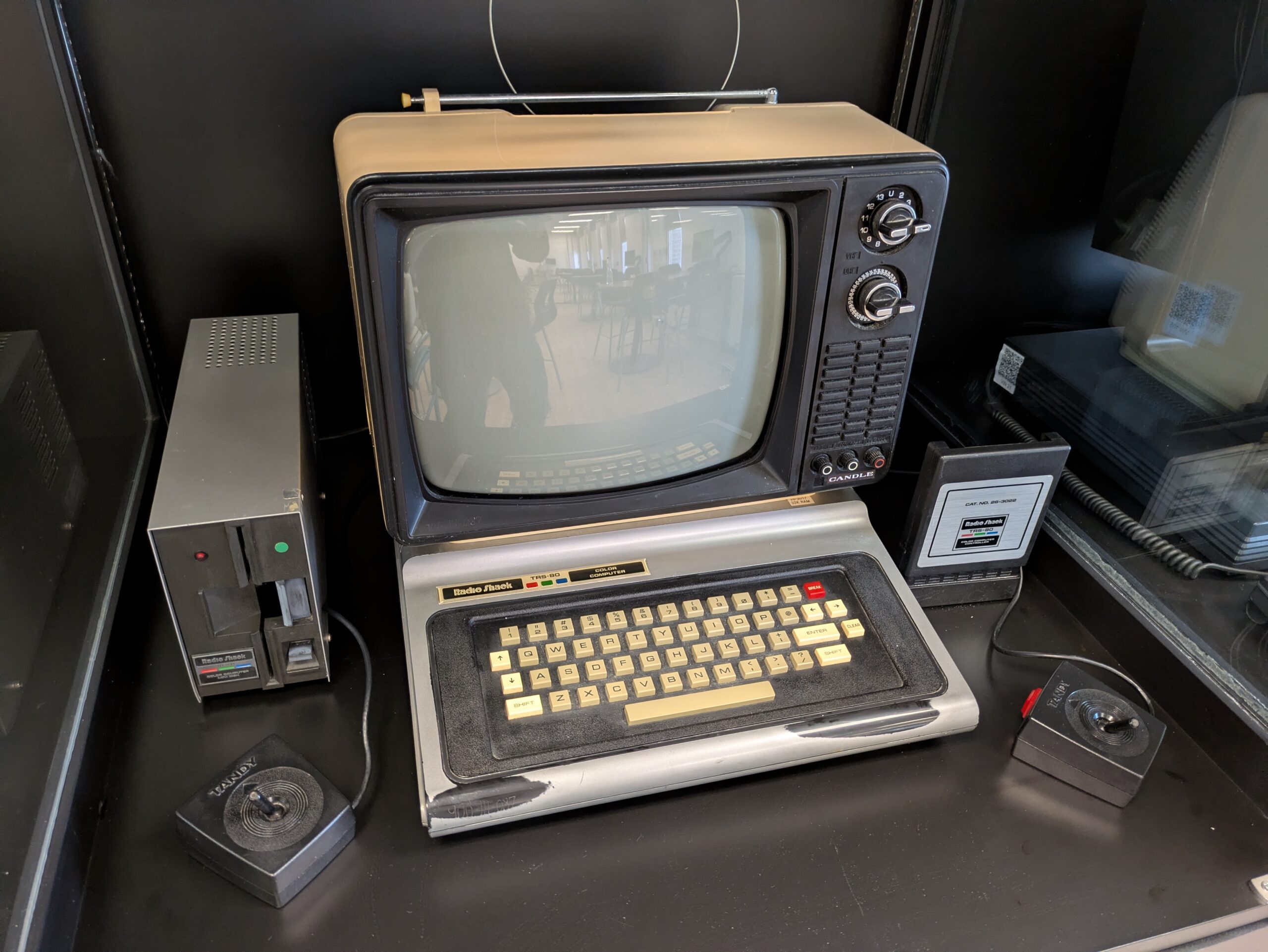
- Manufacturer: Tandy Corporation (Radio Shack)
- Type: Home computer
- Released: 1980
- Cost at release: ~$1,700 (adjusted for inflation)
- MIPS: ~0.5 (500 KIPS)
Hardware Specifications
- CPU: Motorola MC6809E 8-bit processor running at approximately 0.89 MHz
- Memory: 4 KB (early models), expandable to 16 KB or 32 KB through piggybacking or jumper configurations
- ROM: 8 KB ROM with Microsoft Color BASIC v1.0 built-in
- Graphics: Up to 256 x 192 resolution with 4 colors, using the MC6847 Video Display Generator
- Colors: Maximum of 4 colors at high-resolution modes
- Display: Used a standard TV set, with video output via RF
- I/O Ports: 2 joystick ports, 1 serial (RS232C), 1 cassette interface, 1 game port
- Power supply: Operated at 105-130 VAC, maximum power consumption of about 0.26 Watts.
- Weight: ~3.3 kg (7 lbs)
Operating System & Programming Languages
- O/S: The Tandy Color Computer 1 did not have a traditional disk-based operating system in its base configuration; instead, it booted directly into Microsoft Color BASIC in ROM, which served as its primary user interface and environment.
- Color BASIC / Extended Color BASIC: The built‑in ROM environment was Microsoft Color BASIC v1.1 (often just called Color BASIC), which provided a simple command-line interface and programming environment.
- Disk BASIC / RS‑DOS: When expanded with a disk controller and floppy drive, the system used Disk BASIC (often referred to as RS‑DOS), which extended Color BASIC with disk commands and file management.
- OS‑9 Level 1: A more advanced, Unix‑like, multitasking operating system from Microware, available for 64 KB CoCo 1/2 systems; it supported multiple processes, a hierarchical file system, and a richer development environment.
- Programming Languages:
- BASIC variants:
- Microsoft Color BASIC (ROM)
- Extended Color BASIC (ROM upgrade) with enhanced graphics and string handling
- Disk BASIC (for floppy systems)
- BASIC09 (a structured, compiled BASIC for OS‑9)
- Assembly / Machine Language:
- Motorola 6809 assembly, using built‑in monitor commands or assembler cartridges/disks
- Other compiled languages (on OS‑9 or disk systems):
- C compiler (for OS‑9)
- Pascal compiler (for OS‑9)
- Other languages via third‑party software:
- FORTH (several implementations available on tape/disk)
- Logo (educational language, available on disk)
- BASIC variants:
Notables

- This particular color computer was used by a Computer Science garduate student, you can see it was heavily used, the computer case is worn where the palms of your hands would rest while using the keyboard. It used a standard CRT TV making it a great example of 1980’s retro computing in academics.
- The Tandy Color Computer 1, affectionately nicknamed “CoCo,” was a unique 8-bit machine notable for its Motorola 6809E CPU, a more advanced processor than many contemporaries.
- It was born from an experimental “Green Thumb” project aimed at providing agricultural information via videotex terminals, making it one of the first computers developed for both home and specialized professional use.
- The CoCo 1 was one of the first Tandy computers to support a mouse, and it maintained remarkable backward compatibility across its entire product line, a rarity for the era.
- Its distinctive “chiclet” keyboard and TV-based display made it accessible, while its price and expandability fostered a strong enthusiast community.
- In advertising, Radio Shack highlighted its affordability, color graphics, and potential for home, school, and business use, often positioning it as a versatile alternative to pricier rivals.
- The CoCo’s legacy is its role in democratizing computing
Donated by: School of Computer Science Graduate Student