NeXTstation N1100 Turbo
[VIN19]
Steve Jobs founded NeXT Inc. in 1985 after leaving Apple. The NeXTstation N1100 Turbo, was a powerful workstation known for its advanced Motorola 68040 processor, multimedia capabilities, and the innovative NeXTSTEP operating system. This machine played a pivotal role in computing history: Tim Berners-Lee developed the World Wide Web on a NeXT computer at CERN, and John Carmack used a NeXTstation Color to develop the groundbreaking game Doom, making it a platform for two of the most influential digital creations ever. Although only about 50,000 units were sold, its legacy is immense, with NeXT technology forming the foundation of macOS and iOS.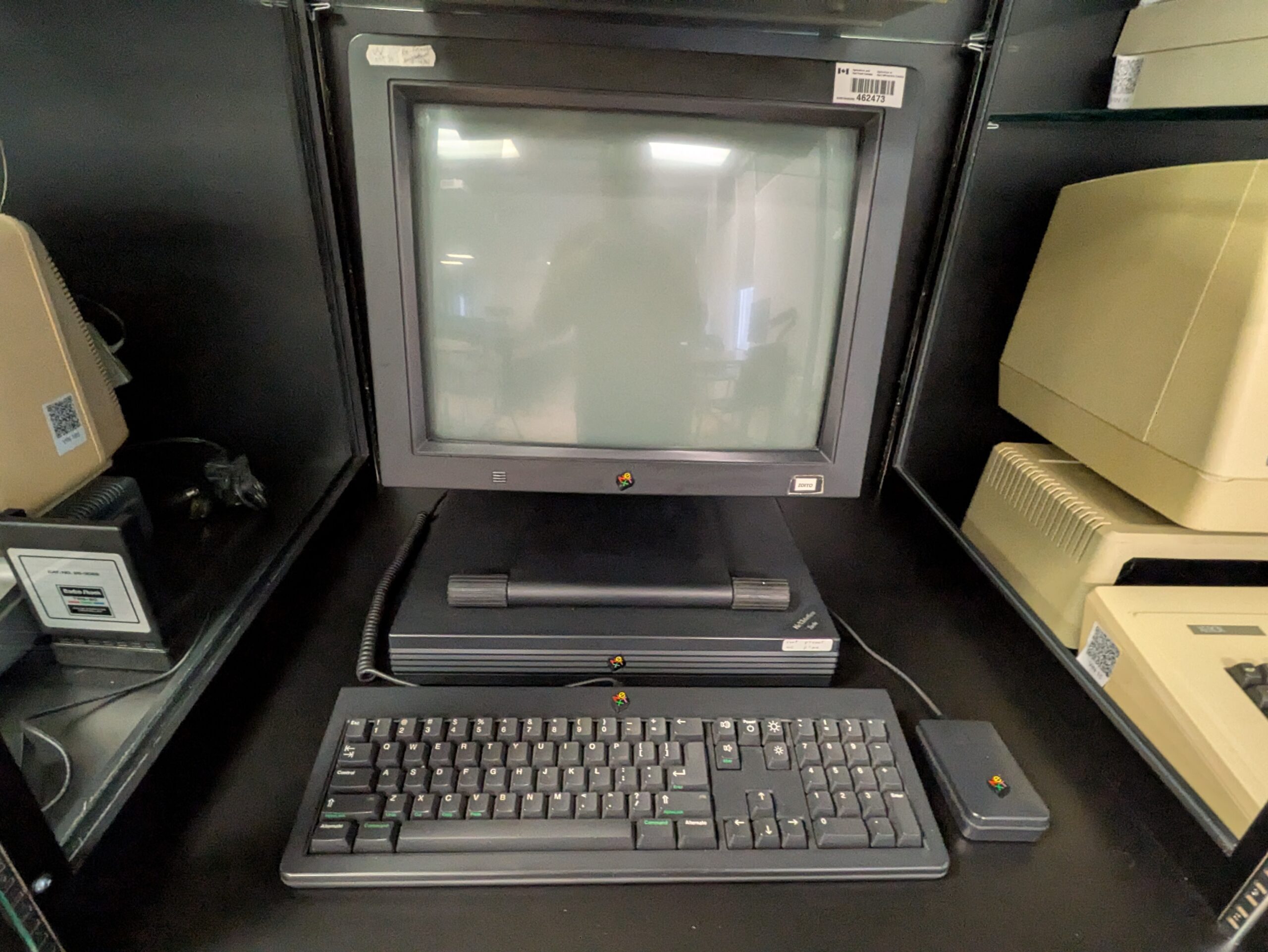
- Manufacturer: NeXT
- Type: Workstation computer
- Release Date: 1990
- Cost at release: USD $6500 (CAD ~$15,000 adjusted for inflation)
- MIPS: 25
Hardware Specifications
- CPU: Motorola 68040, 33 MHz (Turbo model)
- Memory: 8 MB standard, expandable up to 128 MB
- Storage: 3.5″ 2.88 MB floppy drive; hard drives from 105 MB to 400 MB (options)
- Display: 17-inch MegaPixel monochrome monitor, 1120 × 832 resolution, 92 dpi
- Graphics: 256 KB VRAM, 2-bit (4 shades) grayscale
- Networking: Built-in 10BASE-T and 10BASE-2 Ethernet
- Ports: SCSI-2, two RS-423 serial, DSP I/O, MegaPixel display, laser printer
- Input Devices: 84-key keyboard, two-button opto-mechanical mouse
- Audio: CD-quality stereo sound, integrated microphone and speaker
- Dimensions/Weight: 39.8 × 36.5 × 6.4 cm; ~6 kg (13 lb)
Operating System & Programming Languages
-
Operating System: NeXTSTEP operating system
-
Supported Languages:
- Objective-C (the primary language for NeXTSTEP application development)
- C (widely used for system and application programming)
- C++ (supported through third-party compilers)
- Fortran (supported via Absoft and Greenhills compilers)
- Other UNIX languages such as shell scripting, Perl, and more, thanks to its UNIX foundation
Notables
- Nicknamed “the slab” due to its distinctive low-profile, pizza-box form factor, contrasting with the earlier NeXTcube’s “cube” design.
- Steve Jobs founded NeXT Inc. in 1985 after leaving Apple, investing $7 million of his own money and recruiting several key Apple engineers to join him. As founder and CEO, Jobs led NeXT in designing high-end workstations and developing the NeXTSTEP operating system, which was technologically advanced but ultimately too expensive for widespread adoption. Jobs was deeply involved in every aspect of NeXT, from product design and branding-famously hiring Paul Rand to create the NeXT logo-to the company’s strategic pivot from hardware to software in the early 1990s
- Only about 50,000 units were sold, making it a rare collector’s item today.
- Supported object-oriented programming and multitasking with the NeXTSTEP OS, which influenced modern macOS and iOS.
- Used by John Carmack to develop the iconic game Doom and by Tim Berners-Lee to build the first web browser and web server (though the original web server was on a NeXTcube, NeXTstations were used for related development).
- Featured advanced networking and multimedia capabilities for its time, including a built-in digital signal processor and high-resolution MegaPixel display.
- After NeXT ceased hardware production, Canon acquired rights to the design and released the Object.Station based on NeXTstation technology
Donated by: Dr. Arlen Michaels