Computer Devices Miniterm 1202D
[Vin190]
The Computer Devices Miniterm 1202D stands out as a rare 1970s portable printing terminal paired with teletype mechanisms, prized for its acoustic coupler that enabled dial-up connections to mainframes without dedicated lines, embodying early mobile data access. Its claim to fame lies in pioneering compact, battery-powered teletype-style interfaces for field engineers and researchers, bridging the gap between bulky ASR-33 teletypes and future CRT terminals by offering tilt-adjustable ergonomics and RS-232 compatibility in a briefcase-sized form.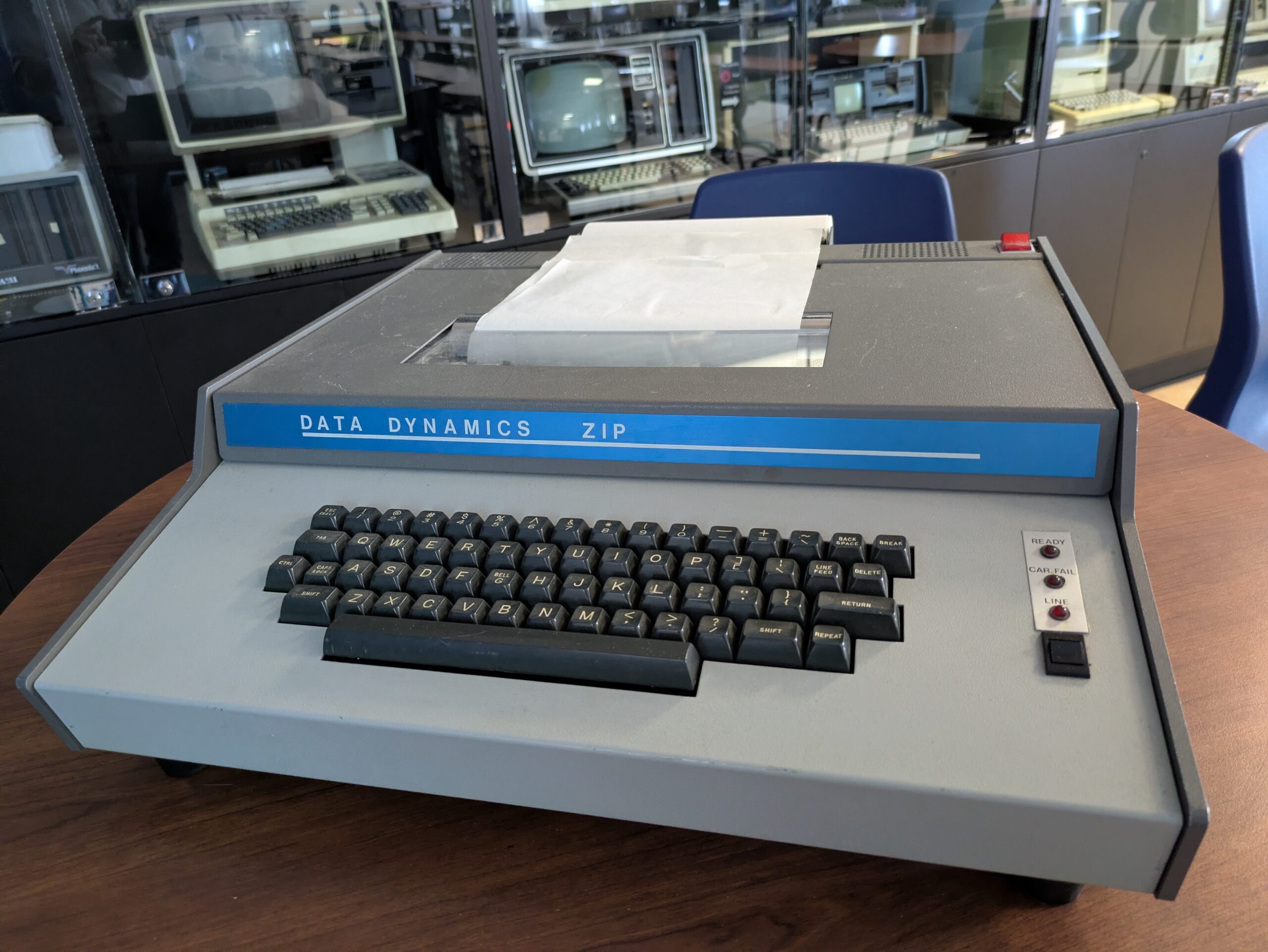
- Manufacturer: Computer Devices, Inc.
- Type: Portable video display & printing terminal / teletype
- Released: 1976
- Cost at release: ~$12,500 (adjusted for inflation)
- MIPS: N/A
Hardware Specifications
- CPU: N/A – likely used TTL chips such as UART equivalents like the AY-5-1010 or MC6850
- Interfaces: RS-232 serial port; optional acoustic coupler modem for dial-up.
- Printer: Thermal dot-matrix, 80-column, ~60 CPS speed, paper roll-fed.
- Keyboard: QWERTY full-travel, integrated with tiltable display/printer hood.
- Power: Battery-powered (NiCd packs) for portability; AC adapter option.
- Dimensions: Briefcase-sized (~14x10x6 inches).
- Weight: 7-9 kg including batteries and paper.
Operating System & Programming Languages
- None (Video display terminal)
Notables
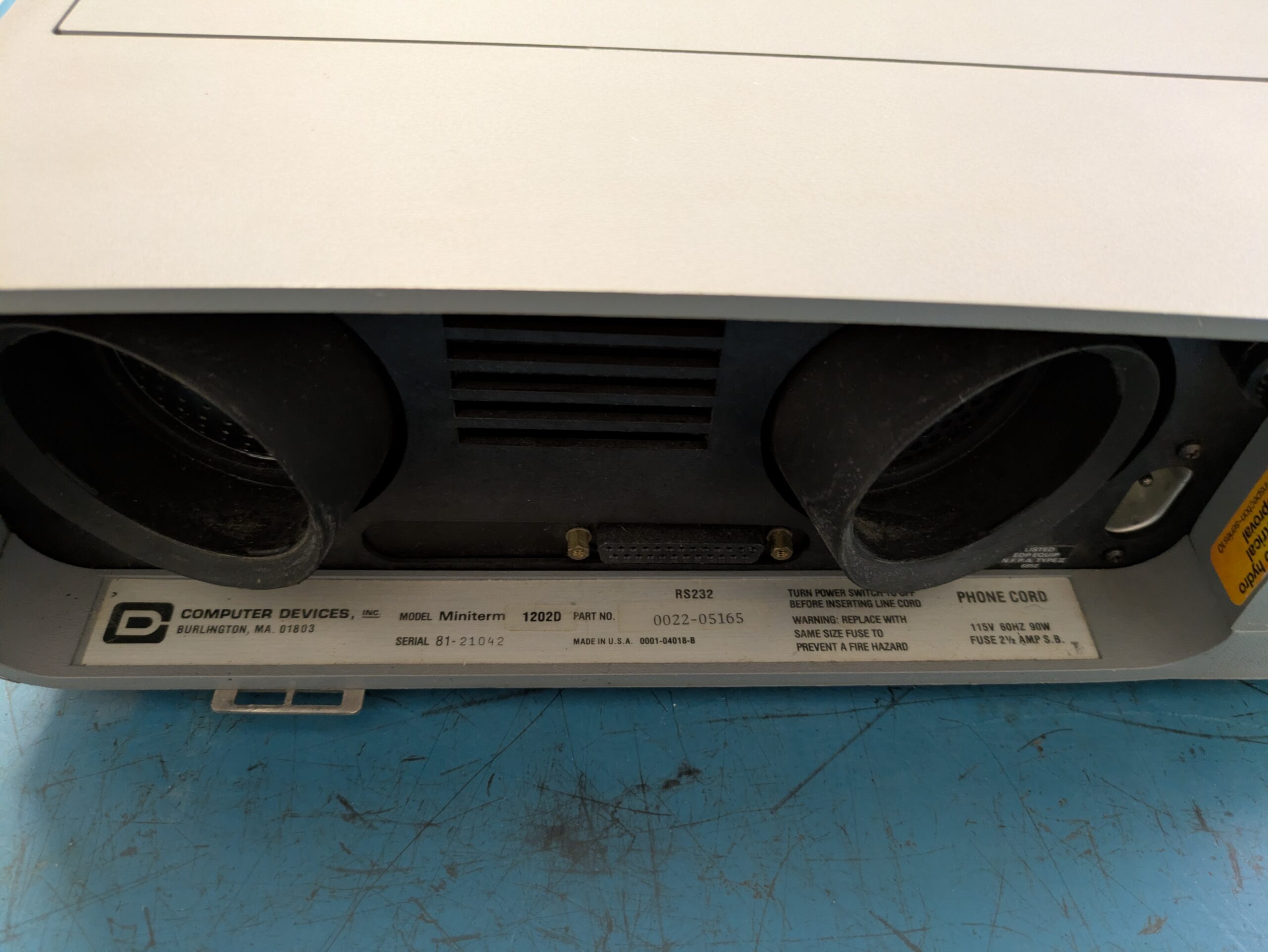
- The Computer Devices Miniterm 1202D, a mid-1970s “dumb” portable printing terminal, earned niche fame as one of the first briefcase-sized teletypes with acoustic couplers, enabling field engineers to dial into minicomputers without fixed lines
- nicknamed the “engineer’s briefcase”
- Miniterm 1202D marked a transitional “first” in mobile I/O by shrinking ASR-33-style printers into battery-powered units, influencing later portables like the TI Silent 700 and bridging teletype era to CRT dominance during timesharing boom.
Donated By: Dr. Arlen Michaels