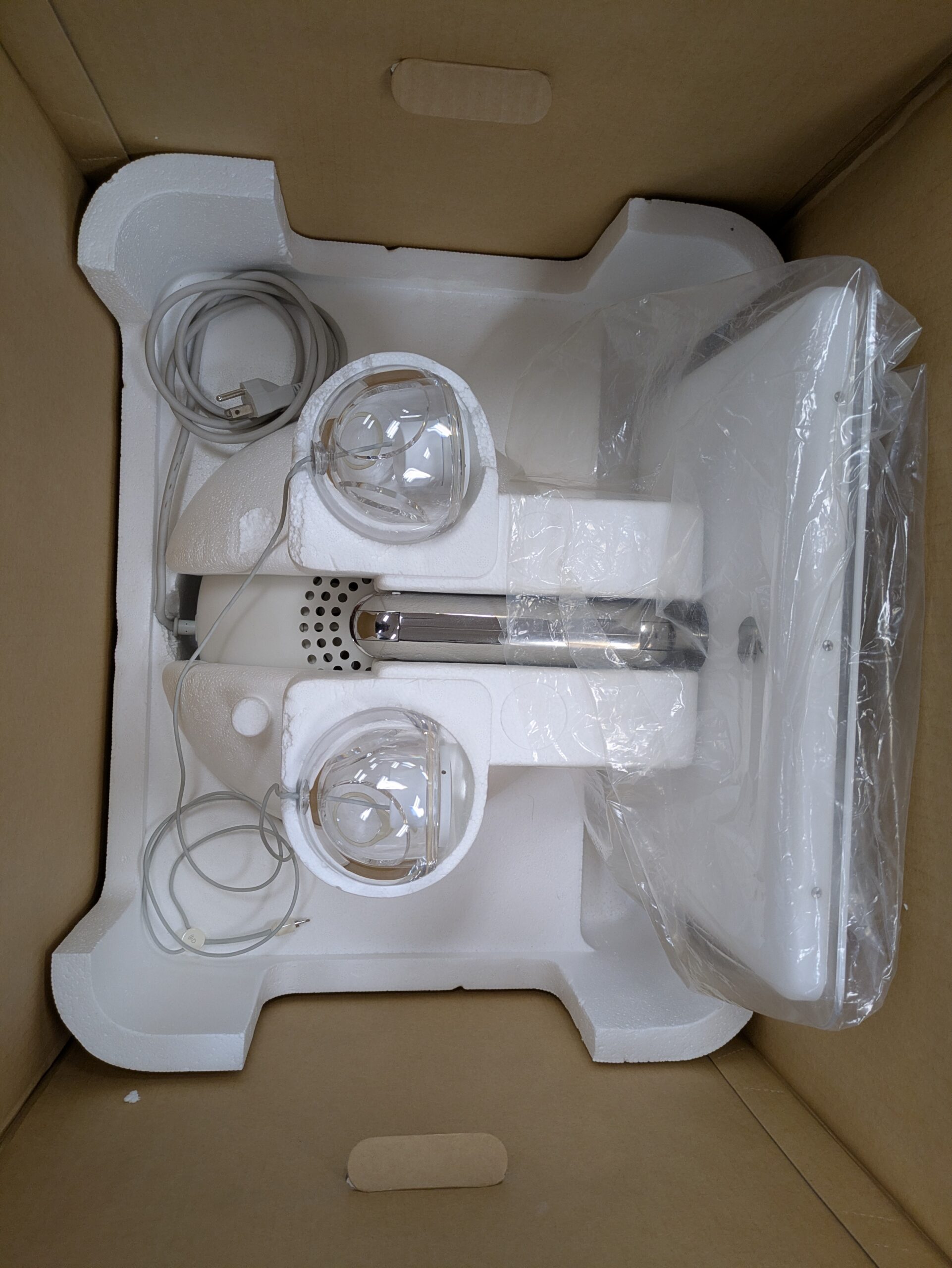
Apple iMac G4
[Vin192]
The Apple iMac G4 (2002–2004) is best remembered for its iconic “desk lamp” design, an articulated LCD arm paired with a hemispherical base, that decoupled the display from the computer for the first time in a mass-market desktop, influencing modern ergonomic and industrial design across the industry. Technologically, it marked Apple’s transition from CRTs to flat-panel LCDs and helped normalize USB, FireWire, and a clean all-in-one aesthetic in educational and creative environments. Hugely popular and widely deployed in universities and studios, the iMac G4 became a museum-grade example of how industrial design, human-computer interaction, and branding can reshape public expectations of what a computer should look like and how it should fit into everyday academic life.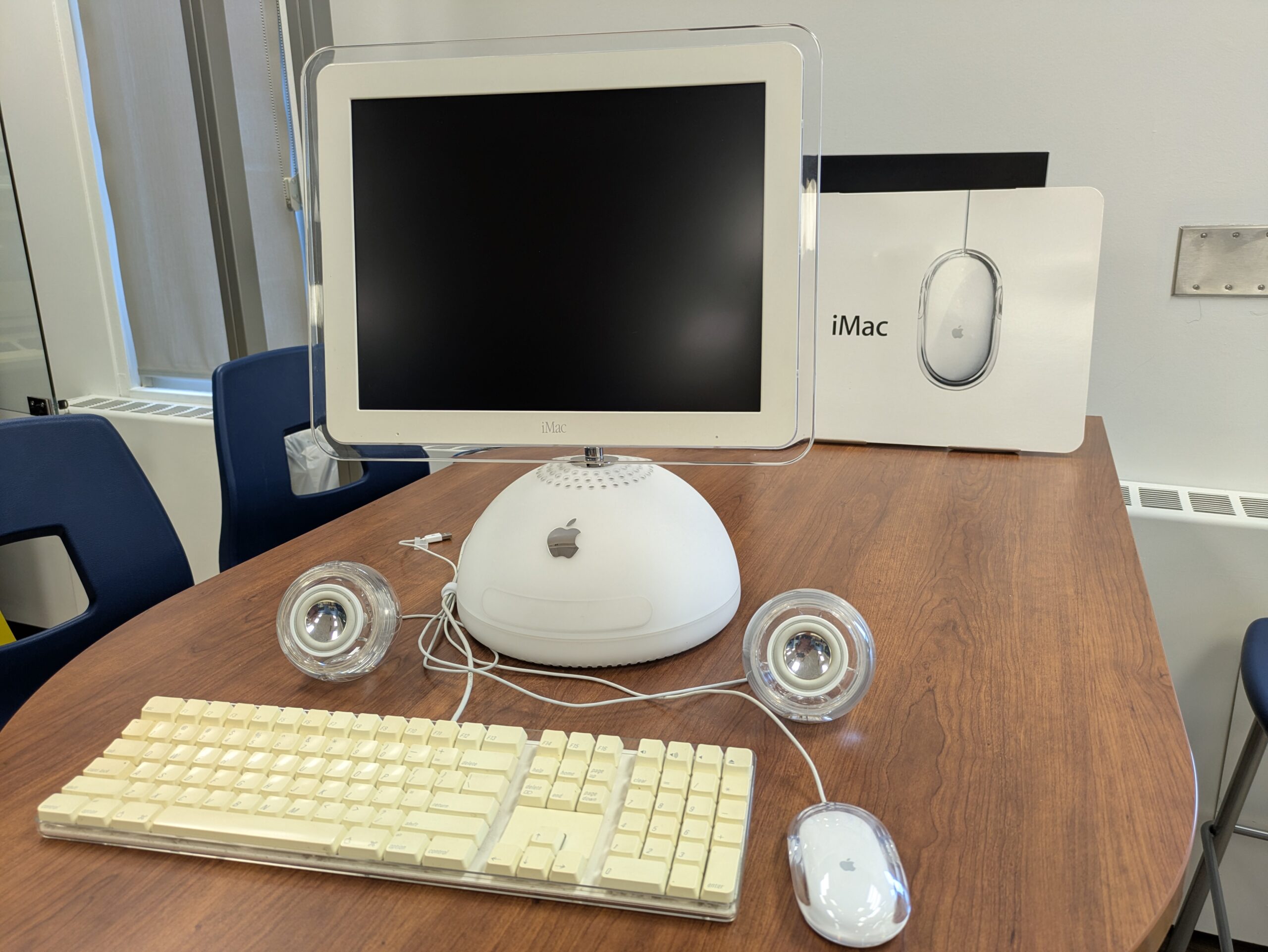
- Manufacturer: Apple Computer Inc.
- Released: 2002
- Type: All-in-one personal computer
- Cost at release (base model): ~$3,350 (adjusted for inflation)
- MIPS: 1,400 – 1,800
Hardware Specifications
- CPU: PowerPC G4 (various speeds depending on model):
- Early models: 700 MHz and 800 MHz G4 variants.
- Later models: 1.0 GHz and 1.25 GHz PowerPC G4 with Velocity Engine.
- Level 2 Cache: 256 KB on-chip.
- System Bus: Up to ~167 MHz on later USB 2.0 models.
- Memory
- RAM (Standard): 128 MB to 256 MB depending on model; later USB 2.0 models shipped with 256 MB DDR SDRAM.
- Max RAM: Upgradable typically up to 1 GB (some unofficial reports of 2 GB possible).
- Hard Drive: 40 GB, 60 GB, or 80 GB Ultra ATA (most common 7200 rpm on USB 2.0 models).
- Optical Drive Options: Combo (DVD-ROM/CD-RW) or SuperDrive (DVD-R/CD-RW).
- Flat-panel LCD sizes: 15″ (1024×768), 17″ (1440×900), and 20″ widescreen (1680×1050).
- Unique Articulated Arm: Adjustable display mounted on a ball-and-arm for flexible viewing angles (iconic design).
 Graphics Processors:
- NVIDIA GeForce2 MX with 32 MB VRAM on early units.
- NVIDIA GeForce4 MX with 64 MB VRAM on later 1.0 GHz+ units.
- Connectivity & Ports
- USB: 2–3 ports (USB 1.1 on earliest; USB 2.0 on later models).
- FireWire 400: 2 ports.
- Ethernet: 10/100 BASE-T built-in.
- Modem: Built-in 56k V.92.
- Optional: AirPort (802.11b/g) and Bluetooth on later configurations.
- Audio: Built-in speakers and headphone jack; audio in/out ports
- Weight: Approximately 9.7 kg (21.2 lb) for 15″ models and 10.4 kg (22.8 lb) for 17″ models.
Operating System & Programming Languages
- O/S:
- Shipped primarily with Mac OS X 10.1 “Puma” (early 2002 models) and Mac OS X 10.2 “Jaguar” (later models).
- Officially supported upgrades up to Mac OS X 10.4 “Tiger”, which is generally considered the most stable and historically representative OS for the iMac G4.
- Could also dual-boot Mac OS 9.2.2 (Classic Mac OS) on many models, making it a transitional machine between “classic” and Unix-based Mac computing.
- Programming Languages:
- C and C++ – primary system and application development languages (via Apple Developer Tools/Xcode).
- Objective-C – central to Mac OS X application development (Cocoa framework).
- Java – officially supported by Apple
- Python – included with Mac OS X
- Perl – bundled with Mac OS X; popular for system administration and web scripting.
- Ruby – available via third-party packages and later OS X releases.
- AppleScript – Apple’s native automation and scripting language.
- Pascal – supported historically through legacy tools and education environments.
- Assembly (PowerPC) – used in low-level or performance-critical academic and research work.
Notables
- Commonly called the “Sunflower iMac” or “Desk Lamp Mac” due to its articulated arm and lamp-like silhouette.
- One of the first mass-market computers to fully decouple the display from the system unit, pioneering ergonomic adjustability now standard in modern monitors and all-in-ones.
- Famously compared to (and inspired by) the Anglepoise desk lamp, making it a landmark example of industrial design influencing computing form factors.
- Helped normalize flat-panel LCDs in consumer desktops, accelerating the industry’s move away from bulky CRT monitors.
- Widely adopted in universities, design studios, and media labs, reinforcing Apple’s dominance in creative and academic computing in the early 2000s.
- Bridged Classic Mac OS and Mac OS X, representing Apple’s shift to a modern Unix-based operating system.
- Regularly appears in museums of modern art and design, underscoring its cross-disciplinary significance.
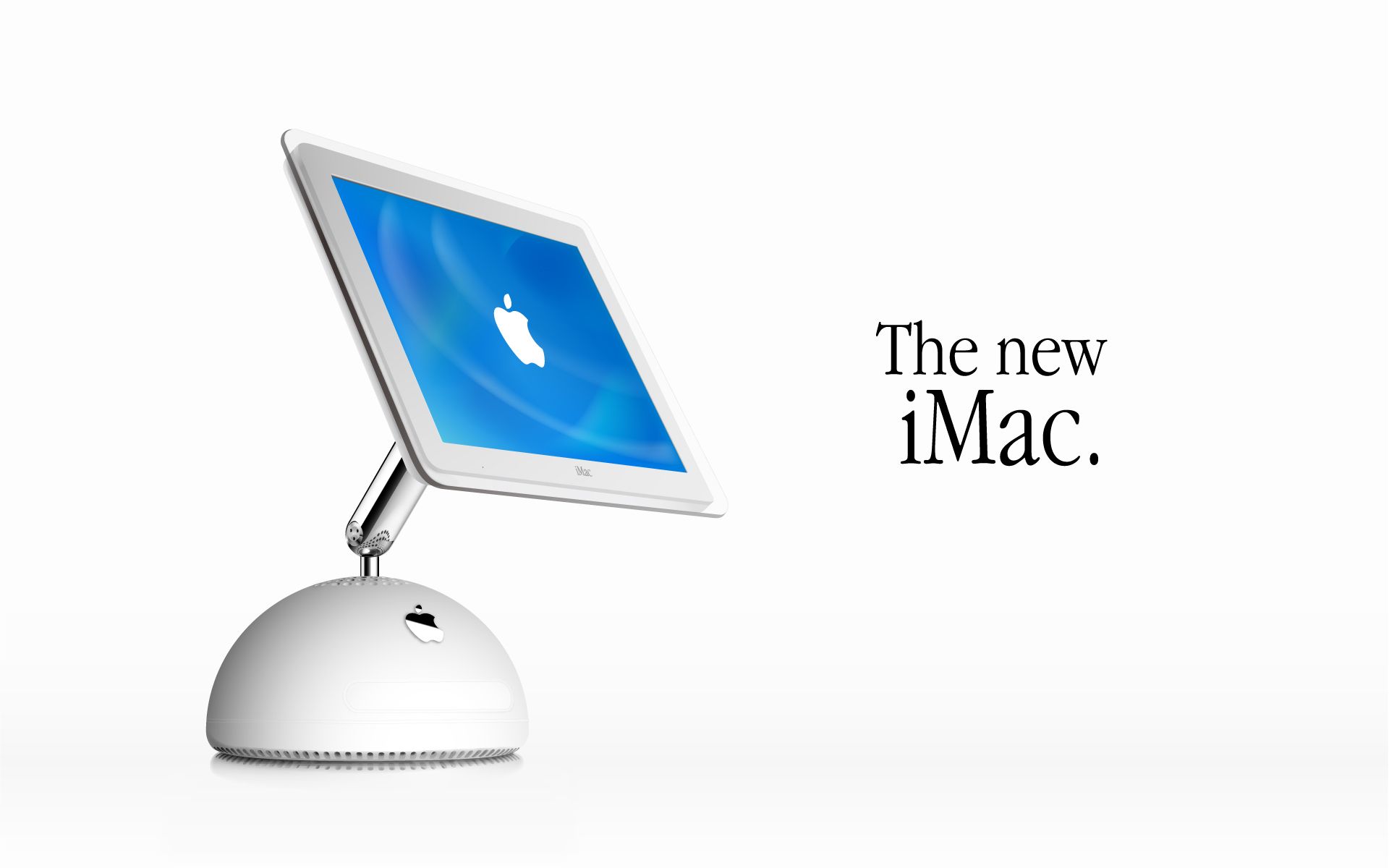
- Apple ads emphasized motion, elegance, and human interaction, often showing the screen floating and moving effortlessly, selling design and experience, not raw specs.
- Seen as the final and most expressive evolution of the iMac line before Apple pivoted to minimalist aluminum designs, making it a high point of expressive, human-centric computer design.
Donated by: Dr. Arlen Michaels