MITS Altair 8800
MITS Altair 8800
[vin199]
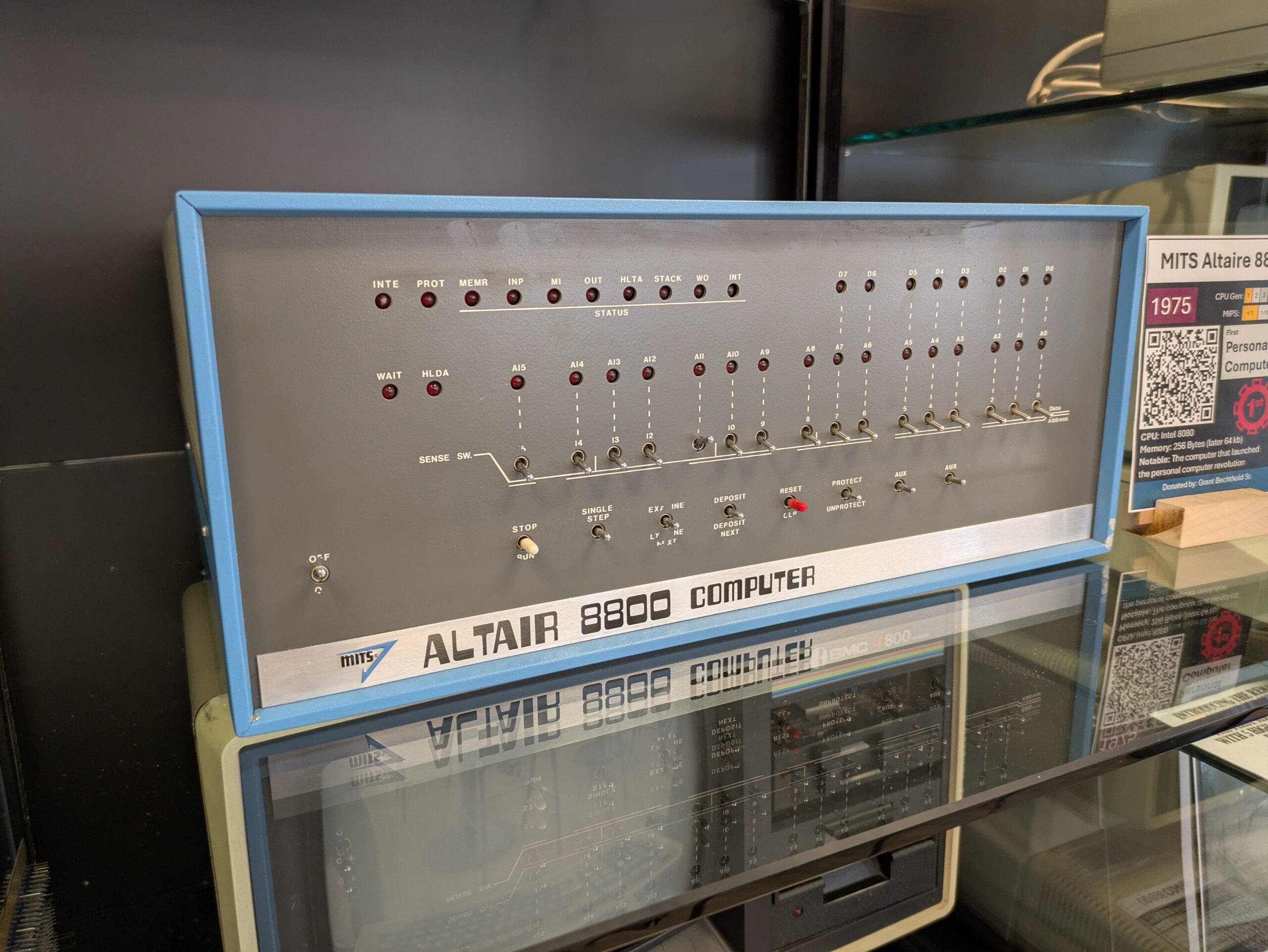
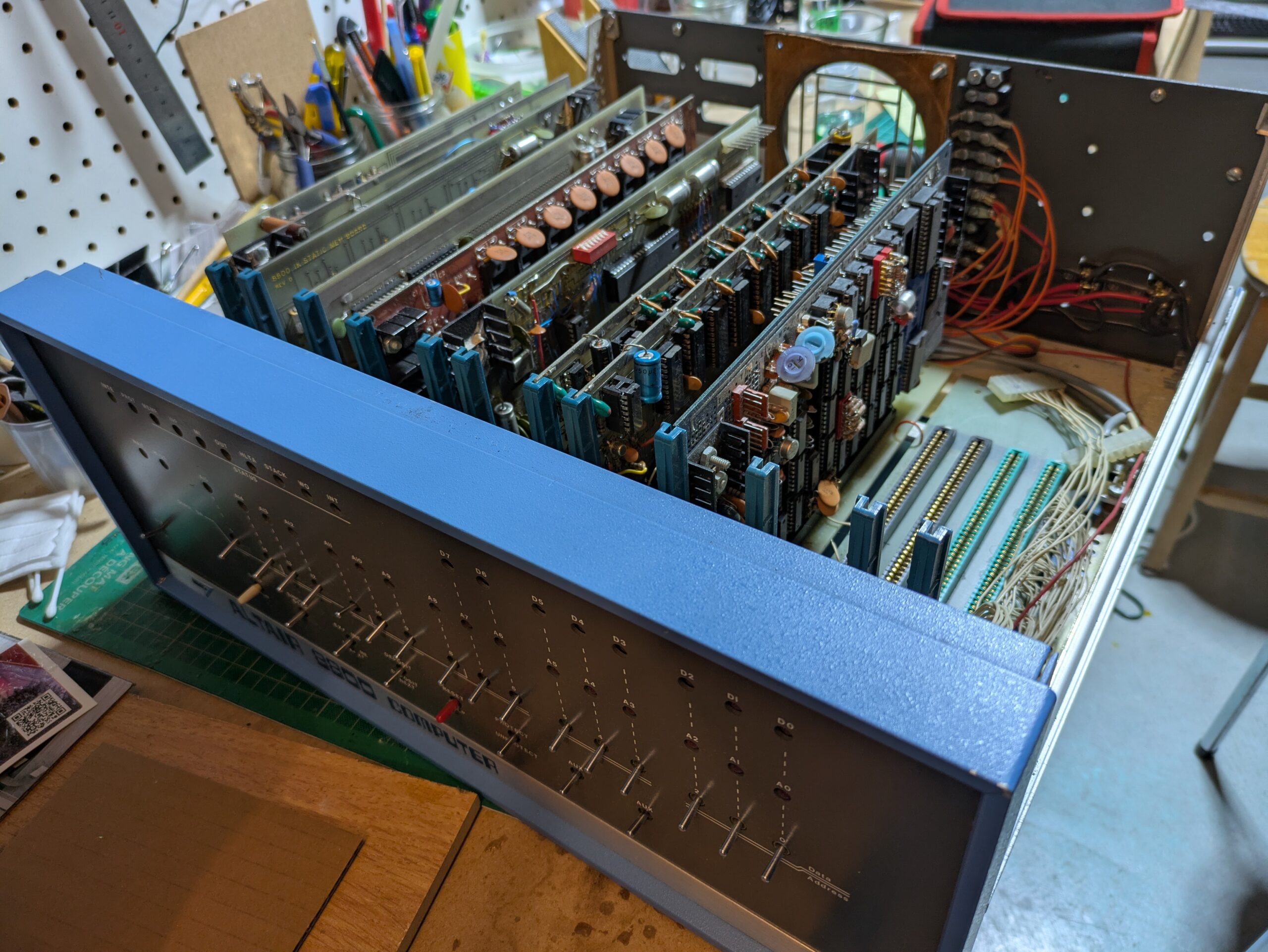
The MITS Altair 8800 (1975) is widely regarded as the spark that ignited the personal computer revolution and is often considered the most important microcomputer of all time, introducing an affordable kit based on the Intel 8080 and the expandable S-100 bus architecture. Led by company founder Ed Roberts, whose young employee Bill Gates wrote its first software, Altair DOS. The Altair became a focal point for hobbyist groups such as the infamous Homebrew Computer Club, with its front-panel switches and LEDs embodying early hands-on computing. Its popularity among hobbyists and university labs fostered a software ecosystem that transformed computing from institutional mainframes into a personal accessible computer.
- Manufacturer: Micro Instrumentation and Telemetry Systems (MITS), an Albuquerque, New Mexico–based electronics company.
- Type: Personal Computer
- Announced: January 1975
- Cost as a kit*: ~$2,500 (*adjusted for inflation)
- Cost fully assembled*: ~$3,500
- Cost fully equipped*: ~$15,000 (including memory expansion, interface boards, and a terminal)
- MIPS: ~0.29 (290 KIPS)
-
- CPU: Intel 8080, 2 MHz (~0.29 MIPS)
- Memory: Initially 256 bytes RAM standard; expandable up to 64 KB using S‑100 bus cards
- Bus/Expansion: S‑100 bus (first widely adopted microcomputer bus standard)
- Storage: Optional paper tape or later cassette interface; no built-in storage
- Input/Output: Front-panel toggle switches for input, LEDs for output
- Keyboard/Display: Optional via Teletype Model 33 ASR or other terminals
- Power Supply: ~0.3 kW internal supply
- Weight: Approximately 7 kg (15 lb) for the basic kit; fully expanded systems heavier
- Form Factor: Desktop case with removable panels for board installation
-
- Operating System: The MITS Altair 8800 initially did not have a built-in operating system in the modern sense. Its first widely used OS was Altair DOS, developed by Bill Gates and Paul Allen for MITS, though early hobbyists often worked directly with machine code via front-panel switches.
- Supported Languages:
- Assembly language for the Intel 8080
- BASIC – via Altair BASIC, developed by Microsoft (watch the video below and see that running DOS was not a trivial task)
- FORTRAN and other experimental hobbyist languages through third-party compilers
- Machine code entered manually for programs without an OS
-
- Widely credited with launching the personal computer revolution in 1975.
- First commercially successful microcomputer kit using the Intel 8080.
- Introduced the S-100 bus, which became the first de-facto microcomputer expansion standard.
- Inspired the first product of Microsoft (Altair BASIC).
- Developed by Ed Roberts of MITS.
- A young Bill Gates and Paul Allen created its BASIC interpreter.
- Became the centerpiece of early user communities including the Homebrew Computer Club, helping ignite Silicon Valley’s PC culture.
- Popularized hands-on computing via front-panel switches and LED’s.
- Often simply called “the Altair.” and was named after the star Altair, inspired by the TV series Star Trek.
- Featured on the January 1975 cover of Popular Electronics, triggering overwhelming demand and thousands of orders.
- The name of the MITS Altair 8800 was suggested during preparation of its feature article for Popular Electronics. According to editor Les Solomon, his teenage daughter proposed “Altair” after watching an episode of the science-fiction series Star Trek in which the star Altair was mentioned.
- Demonstrated that computing could be personal, affordable, and expandable.
- Frequently regarded as the most influential microcomputer ever produced, shaping the modern PC industry.
- What a résumé
-
Grant Bechthold Sr.
“My dad was a rocket scientist with NRC. When they shut it down in the late 60’s they stood up a micro computer group at NRC. He was very active in the hobbyist Ottawa computer group. Our basement was full of computers and electronics.” – Grant Bechthold Jr.
Grant Bechthold Sr. was an Engineering graduate from Carleton University.