American Automation EZ-Pro Development System AA-547
[vin25]
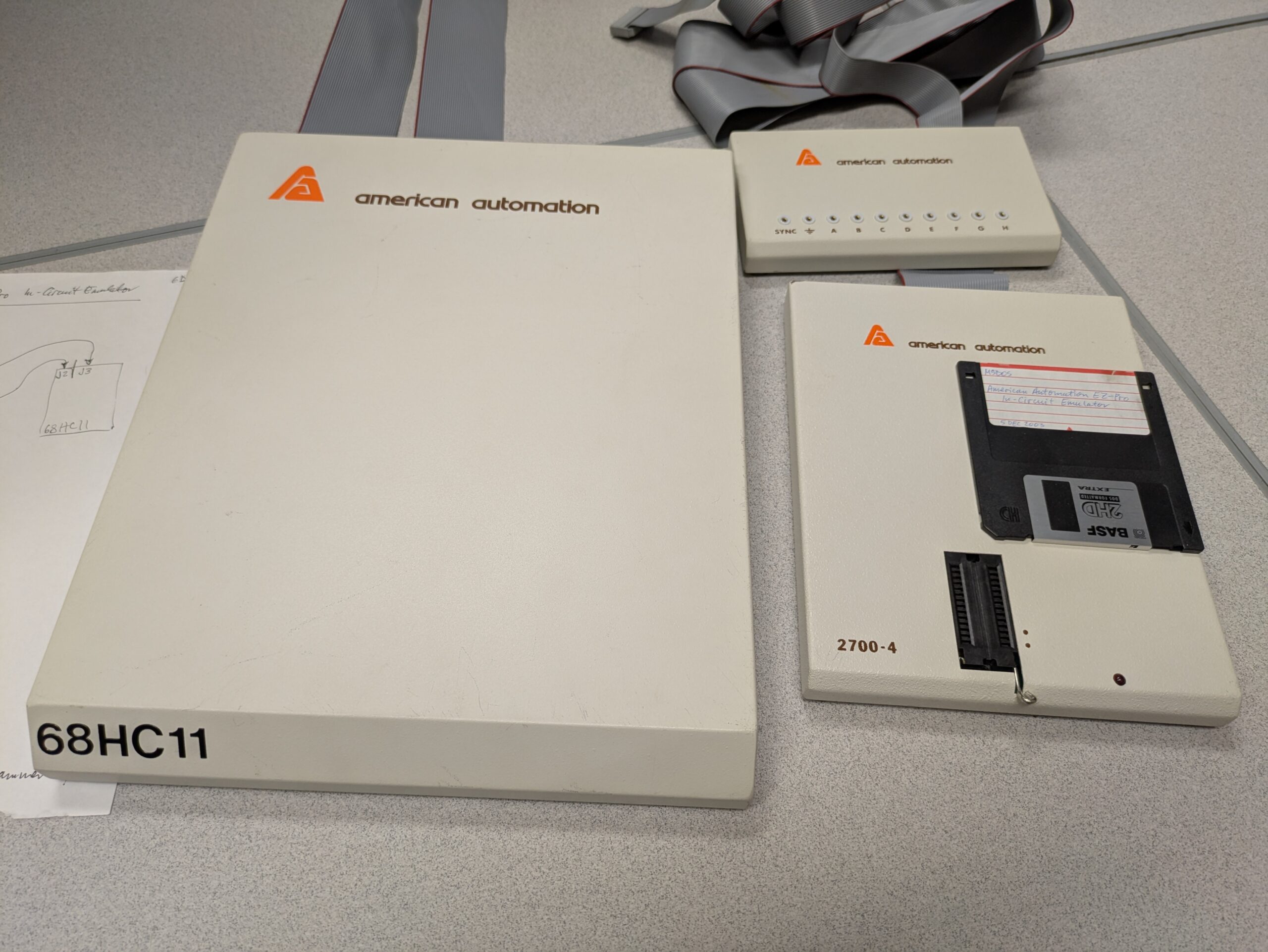
The American Automation EZ-Pro Development System AA-547 was a specialized hardware platform from the early 1980s designed for embedded systems development, particularly notable for its in-circuit emulation capabilities for microcontrollers like the Motorola 68HC11. Its claim to fame was serving as an essential tool for engineers to prototype, test, and debug embedded systems, making it a significant contributor to the evolution of embedded computing technology. While not a mass-market personal computer and thus not widely popular among general consumers, it was important within engineering and technical circles.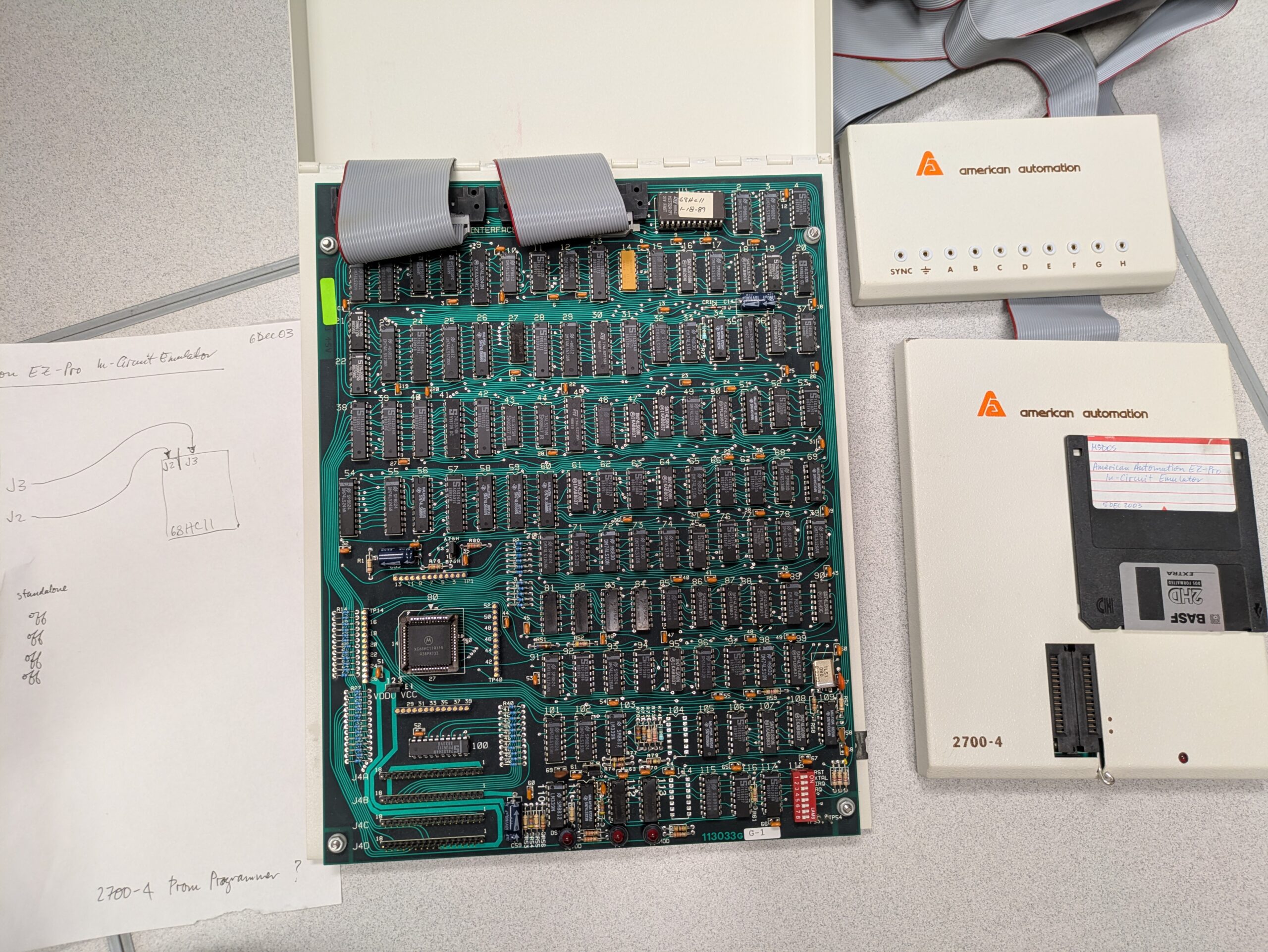
- Manufacturer: American Automation
- Type: Embedded systems development platform
- Announced: December 1972
- Release Date: Early 1980’s
- Cost at release: ~$18,000 (adjusted for inflation)
- MIPS: 0.3 (300 KIPS)
Hardware Specifications
- Microcontroller: In-circuit emulator and debugger for microcontrollers commonly Motorola 68HC11
- Modular hardware design with multiple interface and emulation modules
- Support for real-time code testing and debugging directly on target hardware
- Serial and parallel I/O ports for communication with host computers and target systems
- Expandable with additional peripherals for various microcontroller families
Operating System & Programming Languages
- Operating System: N/A
- Supported Languages:
- Assembly language, for direct hardware control and efficiency.
- C, which became the industry standard for embedded systems due to its balance of low-level access and portability.
- Occasionally, C++ was also used for more complex projects, and BASIC or other languages could be used depending on the development tools available, but C and Assembly were predominant
Notables
- The American Automation EZ-Pro Development System AA-547 was a niche, professional-grade embedded systems development tool, not a general-purpose computer.
- It was notable for its robust in-circuit emulation and debugging features, which allowed engineers to interact directly with microcontroller hardware during development.
- The system played a key role in the transition from manual, hardware-based prototyping to more automated, software-driven embedded system design.
- While it did not have widely known nicknames, it was sometimes referred to simply as the “EZ-Pro” in engineering circles.
- Its main historical significance lies in its contribution to advancing embedded systems engineering and prototyping during the early 1980s.
- Due to its specialized function and high cost, it was uncommon outside of professional and academic environments.
Donated by: Dr. Arlen Michaels