BMC if800
[vin30]
The BMC if800 was a notable early 1980s business computer distinguished by its robust all-in-one design, which integrated a CPU, keyboard, dual 5-inch floppy drives, a 12-inch color monitor, and a fast dot matrix printer into a single, heavy unit. Its claim to fame included advanced features for its time, such as a built-in “Super View” windows manager (an early graphical interface), and support for Chinese character (kanji) processing, making it especially significant for Asian markets and pioneering business computing applications. While manufactured by OKI Electric in Japan and marketed under the BMC brand abroad, the if800 was not a mass-market success due to its high price and business focus, but it holds historical importance as an early example of integrated business PCs.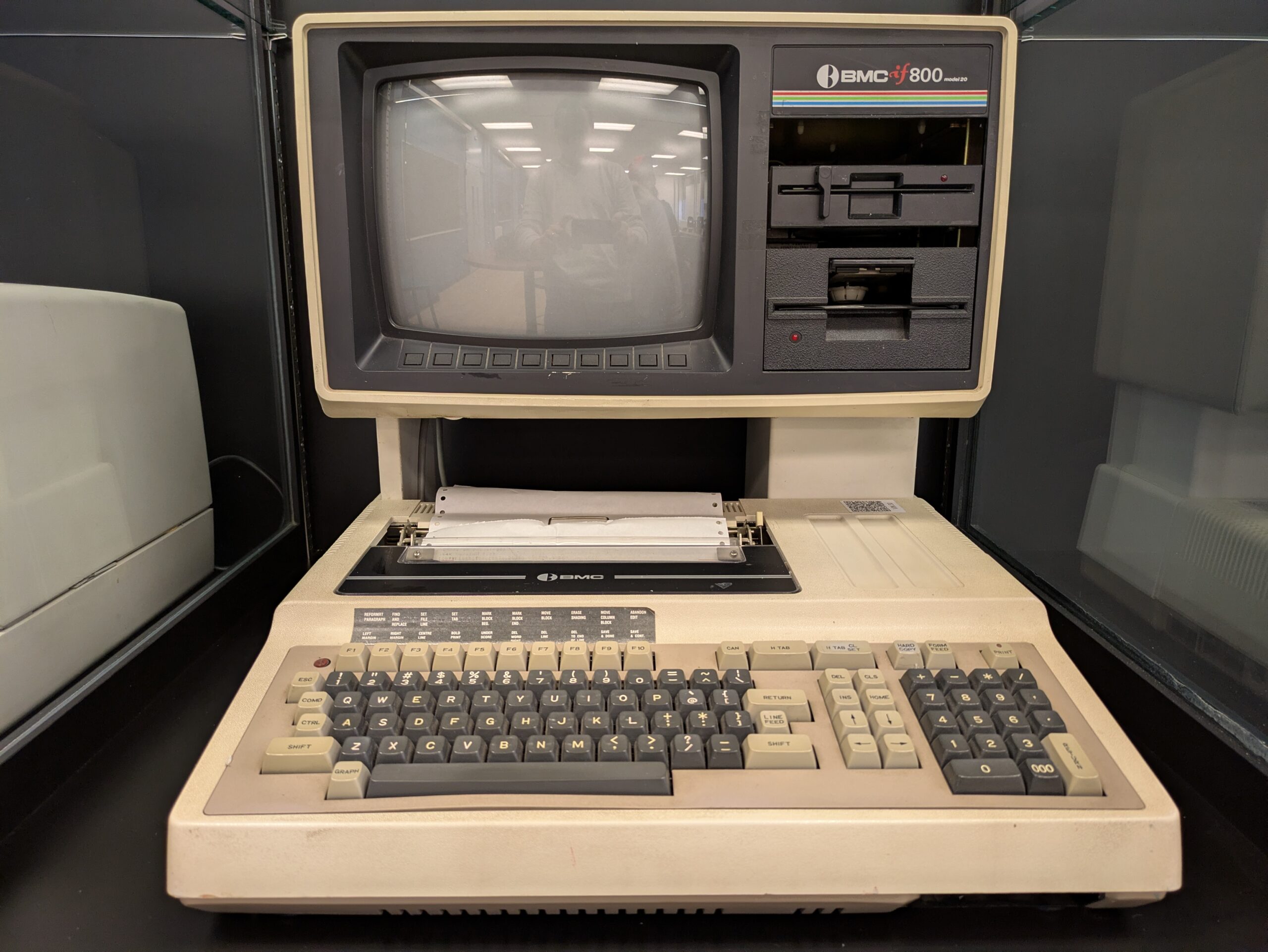
- Manufacturer: OKI Electric Industry Company Ltd. in Japan and marketed internationally under the BMC brand
- Type: All-in-one business personal computer
- Release Date: 1982
- Cost at release: USD $7,950 (CAD ~$29,000 adjusted for inflation)
- MIPS: 0.58 (580 KIPS)
Hardware Specifications
- CPU: Zilog Z80, 4 MHz
- Memory: Typically 64 KB (expandable in some models)
- Storage: Dual 5.25-inch floppy disk drives
- Display: 12-inch color monitor (integrated)
- Printer: High-speed dot matrix printer (integrated)
- Keyboard: Built-in, full-size
- Expansion: Limited internal expansion due to all-in-one design
- Graphics: Early support for graphical interface (“Super View” windows manager)
- Weight: ~50 kg
Operating System & Programming Languages
- Operating System: CP/M 2.2
- Supported Languages: MBASIC and CBASIC, Pascal/Z, FORTRAN, COBOL, Assembly language (Z80 macro assembler) and Other CP/M-compatible languages and tools
Notables
- The BMC if800 was one of the earliest all-in-one business computers, integrating a CPU, dual floppy drives, a 12-inch color monitor, keyboard, and a high-speed dot matrix printer into a single, robust unit.
- It featured an early graphical interface called “Super View” windows manager, and supported Chinese character (kanji) processing, making it notable for multilingual business use and pioneering in Asian markets.
- The Model 20 was especially recognized for helping to pioneer the business personal computer market in Japan, while later models added advanced features like multi-window operation and enhanced graphics.
- Its large size and heavy build earned it a reputation as a “business tank” among enthusiasts, though no widely used nickname is documented
Donated by: Dr. Arlen Michael