Xerox 820-II
[vin31]
The Xerox 820-II, introduced in 1982, was a CP/M-based personal computer featuring a Zilog Z80A processor at 4 MHz, a 24-line by 80-character monochrome CRT, and a robust 96-key ASCII keyboard with special function keys like HELP. Its claim to fame was its flexible expansion options, including support for both 8-bit and optional 16-bit 8086 processor cards, and its compatibility with a wide range of CP/M software, making it a versatile choice for business and professional users at the time. Despite its technical strengths, the 820-II was not a commercial success and had limited popularity, overshadowed by competitors like the IBM PC.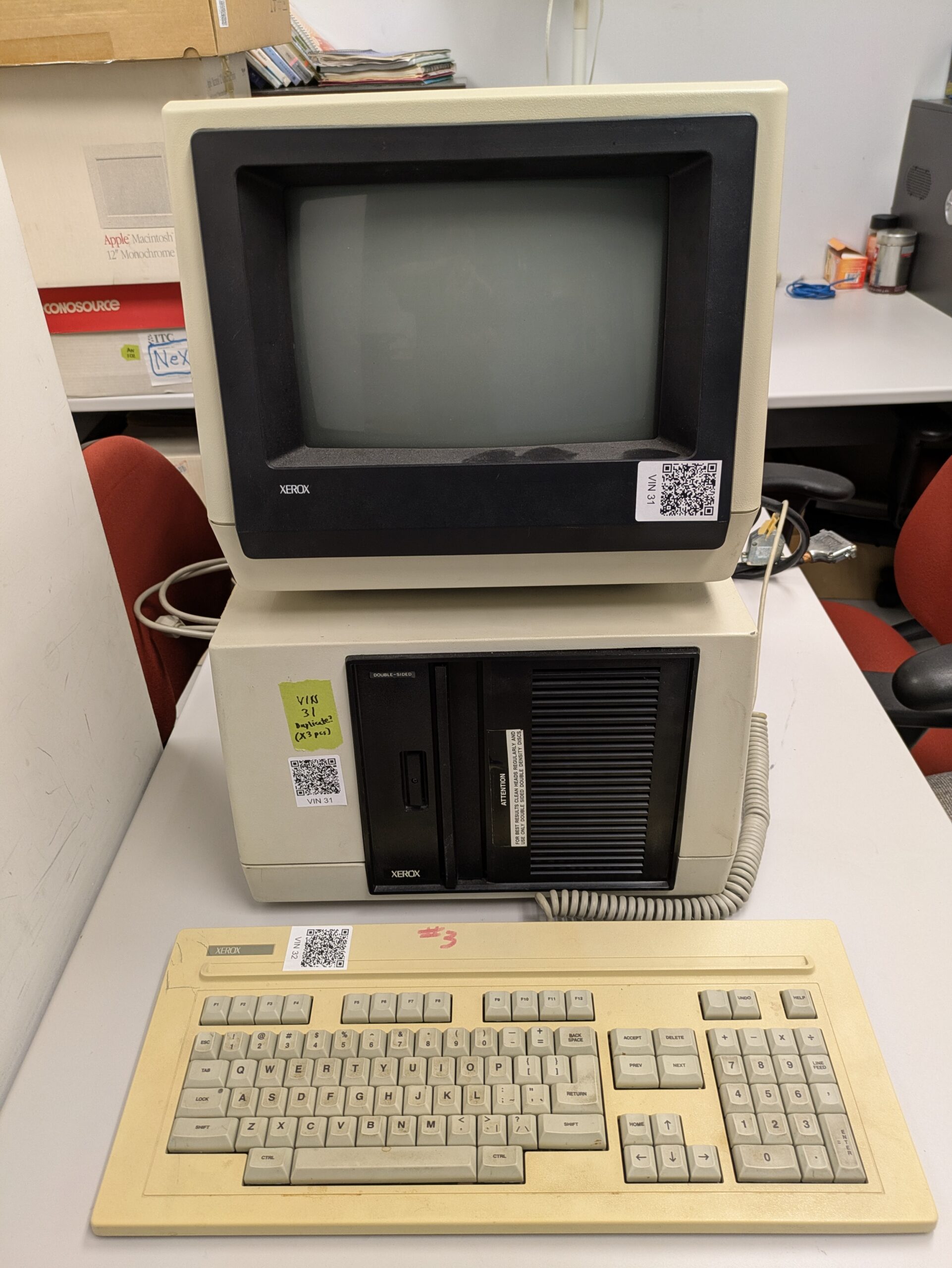
- Manufacturer: Xerox
- Type: Personal Computer
- Release Date: 1982
- Cost at release: USD $3,000 (CAD ~$10,000 adjusted for inflation)
- Cost with peripherals: USD $7,695 (CAD ~$28,000 adjusted for inflation)
- MIPS: 0.29 MIPS (290 KIPS)
Technical Specifications
- CPU: Zilog Z80A, 4.0 MHz
- Memory: 64 KB standard RAM
- Graphics: 24 lines × 80 characters monochrome CRT
- Storage: Dual 5¼-inch floppy drives standard; optional 8-inch floppy and hard disk configuration
- Ports: Parallel and serial interfaces for printers and modems
Operating System & Programming Languages
-
Operating System: CP/M 2.2 standard; MS-DOS with optional 8086 card
- Supported Languages:
-
- Microsoft BASIC-80, Turbo Pascal, FORTRAN, PL/I, CBASIC II
- Many other compilers and interpreters available for CP/M systems, such as assembler and COBOL
Notables
- The Xerox 820-II was nicknamed “The Worm” internally, reflecting Xerox’s rivalry with Apple at the time.
- Its design was largely based on the Ferguson Big Board kit computer, using many off-the-shelf components rather than Xerox’s own innovations.
- Most of the computer’s electronics were built into the CRT monitor, an unusual design for the era.
- Xerox’s advertising for the 820 featured monks and the slogan “another miracle,” which became a memorable part of its marketing campaign.
- Despite Xerox’s pioneering work at PARC (which led to the modern graphical user interface), the 820-II did not use any of this advanced technology, instead opting for a conventional CP/M system.
- The 820-II was one of the first personal computers sold by a major office-equipment company, but it failed to achieve significant commercial success and was quickly overshadowed by the IBM PC.
- By 1984, surplus 820 mainboards were so common that they could be purchased for as little as $50 and assembled into working systems by hobbyists.
- Its place in computing history is as an example of how even industry giants can misjudge the rapidly evolving personal computer market, and how being first to market does not guarantee success
Donated by: Arlen Michael