Intel iSBC 80/10
[vin41]
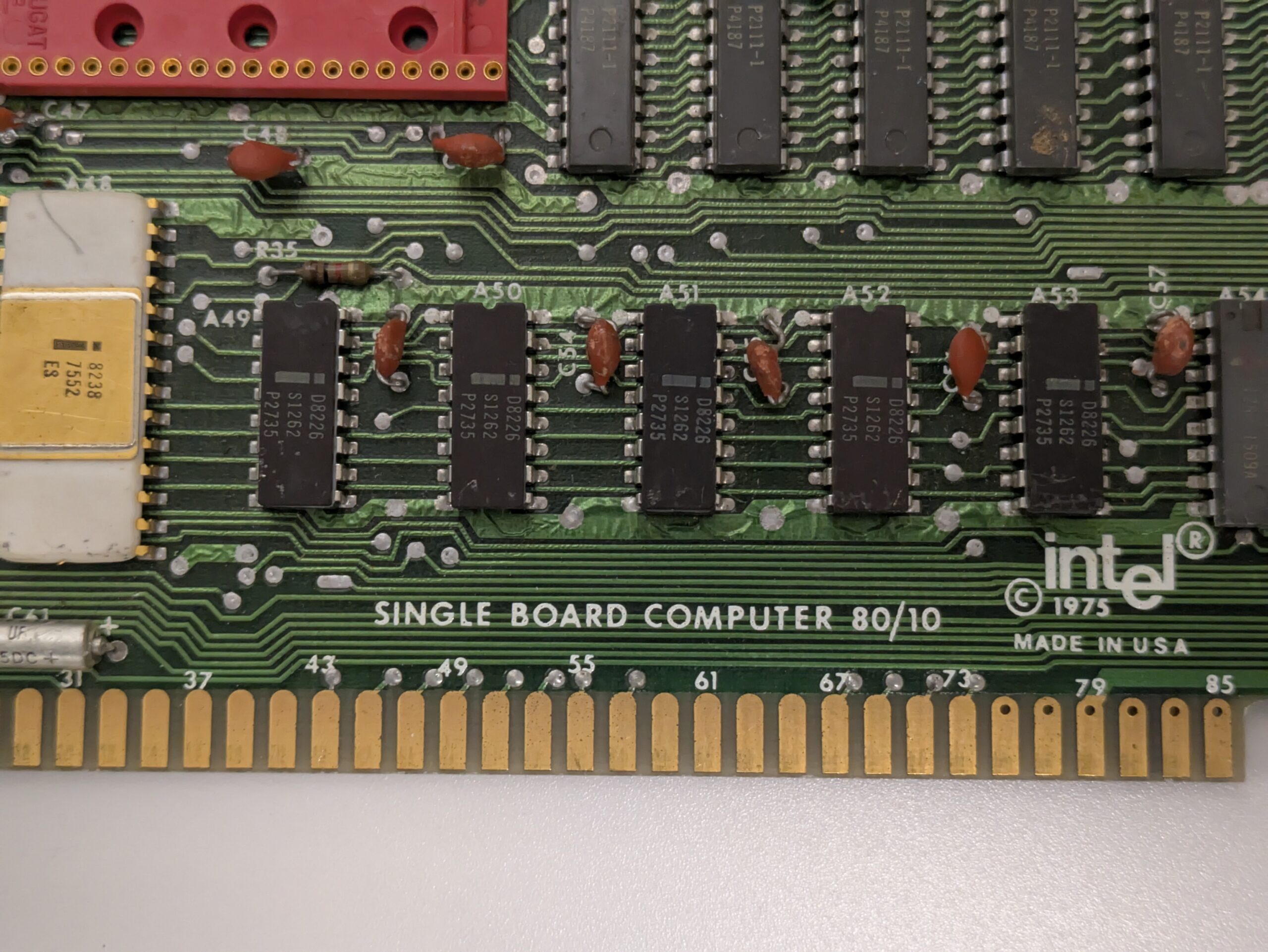
 The Intel iSBC 80/10, introduced in 1976, was the industry’s first single-board computer, integrating a CPU (the 8080 microprocessor), memory, I/O ports, and system clock onto a single 6.75-by-12 inch printed circuit board—a revolutionary step that made computing more compact and accessible for industrial and OEM applications. Its claim to fame lies in pioneering the single-board computer concept and establishing the Multibus architecture, which became a standard for system expansion and modularity in embedded and industrial systems. The iSBC 80/10 was widely adopted in industrial automation and process control, but there is no notable evidence of specific Canadian connections or widespread consumer popularity; its impact was primarily within engineering and industrial circles, laying groundwork for future embedded computing platforms.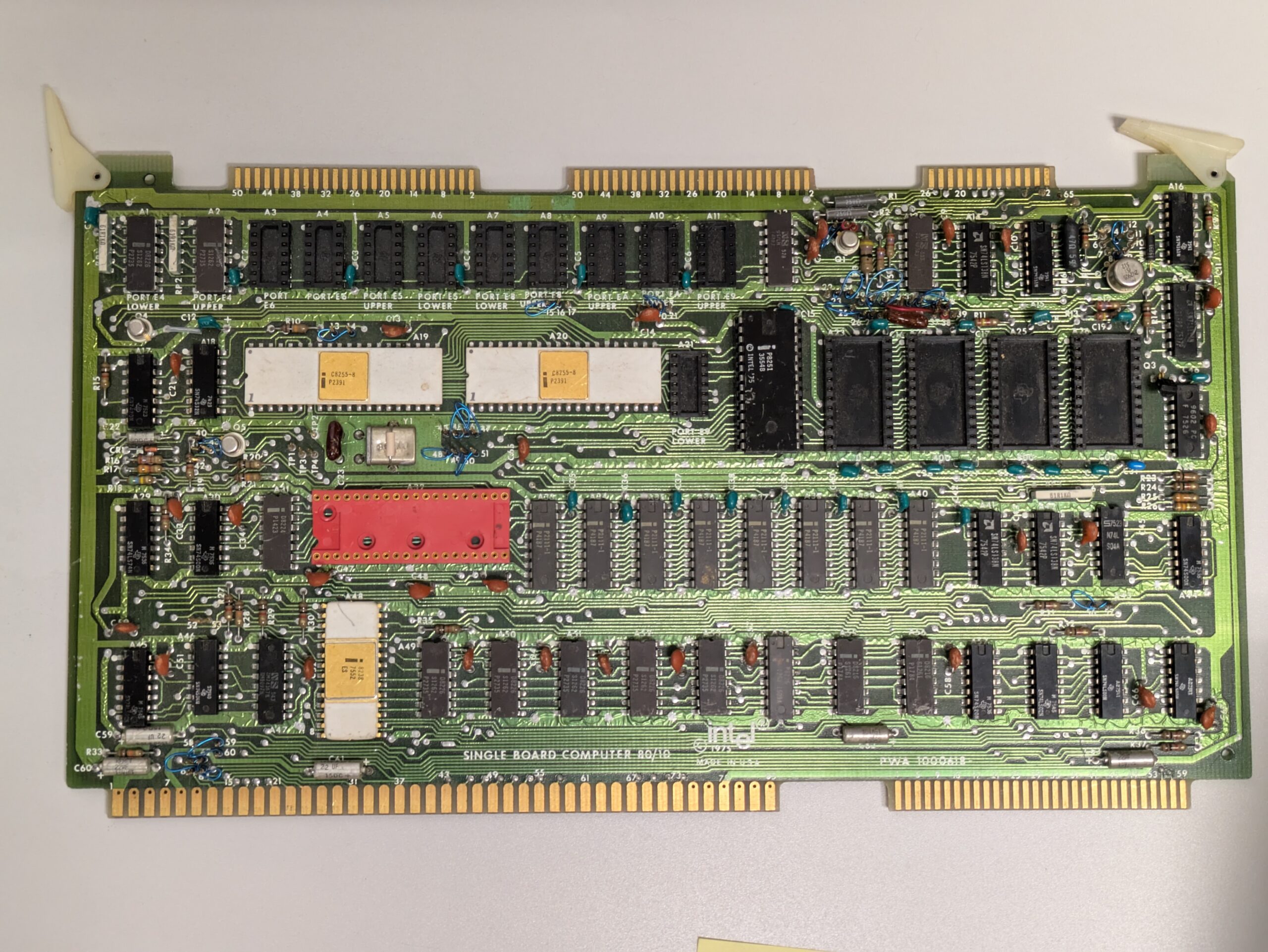
- Manufacturer: Intel Corporation
- Type: Single-board computer (SBC)
- Release Date: 1976
- Cost at release: USD $395 (CAD ~$2,000 adjusted for inflation)
- Cost with peripherals: A complete system with necessary peripherals (chassis, power supply, additional memory, and I/O modules) could cost USD $2,000 (CAD ~$10,000 adjusted for inflation)
- MIPS: 0.5 (500 KIPS)
Hardware Specifications
- CPU: Intel 8080A CPU ran at up to 2 MHz
- Memory: 1 KB static RAM onboard, expandable up to 4 KB on the board
- Sockets for up to 16 KB of ROM/EPROM (varies by chip type; typically 4–8 KB practical).
- 48 programmable parallel I/O lines via two Intel 8255A chips.
- Programmable serial interface supporting RS-232C and teletype compatibility, with Intel 8251 USART.
- Single-level interrupt system with 11 interrupt sources.
- 1.04 ms interval timer.
- Single iSBX (Multimodule) bus connector for board expansion.
- Limited master MULTIBUS interface for system integration.
- Board size: 6.75 x 12 inches
Operating System & Programming Languages
- Operating System: typically ran a monitor program as its resident operating system, which provided basic system control, program loading, and debugging functions
- Supported Languages:
- Assembly language (8080/8085)
- Intel’s PL/M-80 high-level language, designed specifically for microprocessor-based systems
- Other languages such as BASIC and FORTRAN could be used if cross-compiled or hosted on a development system, but were not typically resident on the iSBC 80/10 itself
Notables
- The Intel iSBC 80/10 was the world’s first commercially available single-board computer, debuting in 1976 and integrating CPU, memory, and I/O onto one board—a revolutionary step at the time.
- It played a foundational role in establishing the Multibus architecture, which became a standard for modular and expandable embedded systems.
- The iSBC 80/10 was widely used in industrial automation, process control, and telecommunications, prized for its reliability and adaptability in harsh environments.
- It had no widely recognized nickname, but “SBC” (single-board computer) became a generic term thanks to its influence.
- The iSBC series, starting with the 80/10, is credited with helping to standardize and popularize single-board computers, laying the groundwork for modern embedded and industrial computing.
- Its design philosophy was compactness, expandability, and integration—continues to influence embedded system design today.
- The iSBC 80/10 is considered a milestone in microcomputer history, marking Intel’s early leadership in microprocessor-based system innovation
Donated by: Arlen Michaels