Synertek SYM-1
[vin43]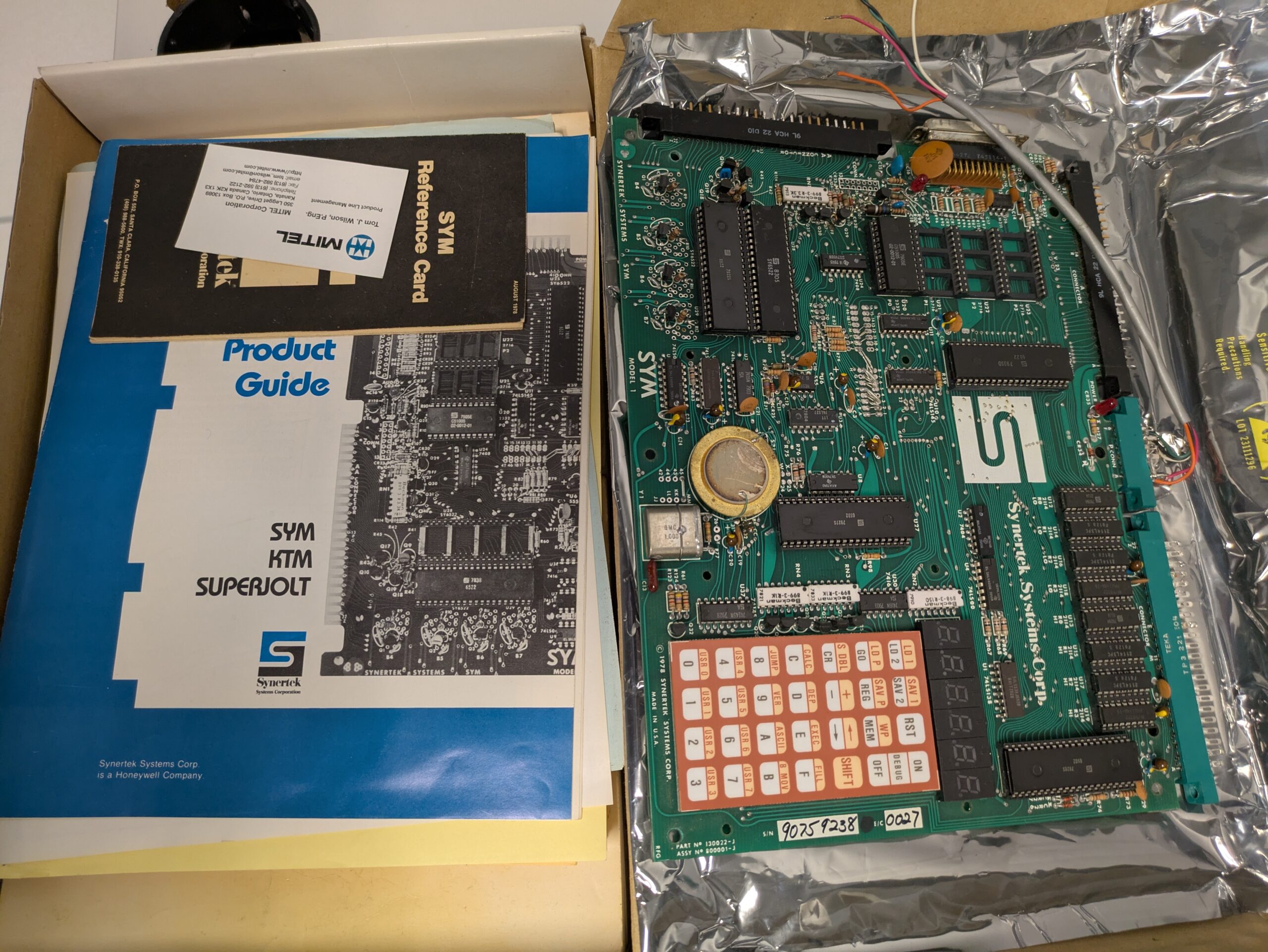
The Synertek SYM-1 was a pioneering single board computer introduced in 1975, designed by Ray Holt for Synertek Systems. It was a significant product in the early microcomputer era, offering a complete and versatile platform for learning and development. The Synertek SYM-1 was a single-board “trainer” computer notable for its use of the 6502 processor, enhanced monitor ROM, expandable RAM, and versatile I/O options, including an RS-232 serial port and a unique oscilloscope display interface. Its claim to fame was being a more advanced, compatible successor to the KIM-1, offering features like vectored I/O routines and high-speed cassette storage, which made it popular for education, hobbyists, and as a development platform, selling ~50,000 units
- Manufacturer: Synertek
- Release Date: 1975
- Cost at release: USD $240 (CAD ~$1,000 adjusted for inflation)
- Cost with peripherals: USD $800 (CAD ~$3,300 adjusted for inflation)
Hardware Specifications
- CPU: Synertek 6502 running at 1 MHz
- Memory
- RAM: 1 KB expandable to 4 KB on-board
- ROM: 4 KB (expandable to 24 KB)
- Ports:
- 28-key dual-function keyboard
- 6-digit LED display
- 48 programmable parallel I/O lines (expandable to 71)
- Serial interface (RS-232 and teletype compatible)
- Storage: Audio cassette interface
- Dimensions: 10.75″ x 8.25″ x 0.5″
- Power: Single 5V power supply
Operating System & Programming Languages
-
Operating System: Supermon monitor
-
Supported Languages: 6502 assembly (via its built-in monitor and optional Resident Assembler/Editor), BASIC (through an add-on ROM), and could also run languages like Pascal, Forth, and even C with appropriate software tools and configuration
Notables
-
The SYM-1 was originally called the VIM-1 (Versatile Input Monitor) and was designed by Ray Holt as a more advanced, compatible successor to the KIM-1
-
It featured unique capabilities for its time, such as allowing an oscilloscope to be used as a 32-character display and included a high-speed (185 bytes/second) cassette storage interface-much faster than its competitors
-
The SYM-1 included a sophisticated monitor ROM (Supermon) with vectored I/O, making it easy to interface with new hardware and develop custom routines-an approach later seen in the BBC Micro
-
It was known for its robust I/O lines, expandability, and the ability to run on a single +5V power supply, making it popular for education, prototyping, and embedded applications
-
The SYM-1 was sometimes referred to as the VIM-1 in early documentation and circles
-
While not as widely recognized as some contemporaries, it sold about 50,000 units and played a significant role in early microcomputer development and education, especially as a trainer and for hardware interfacing
-
Its flexible ROM sockets allowed users to add languages like BASIC, Resident Assembler/Editor, and Macro Assembler, making it adaptable for various uses
-
The SYM-1’s design and documentation inspired a dedicated user community and newsletters, such as the SYM-Physis User Group
Donated by: Arlen Michaels