Zenith ZCF-2325-EY
[vin48]
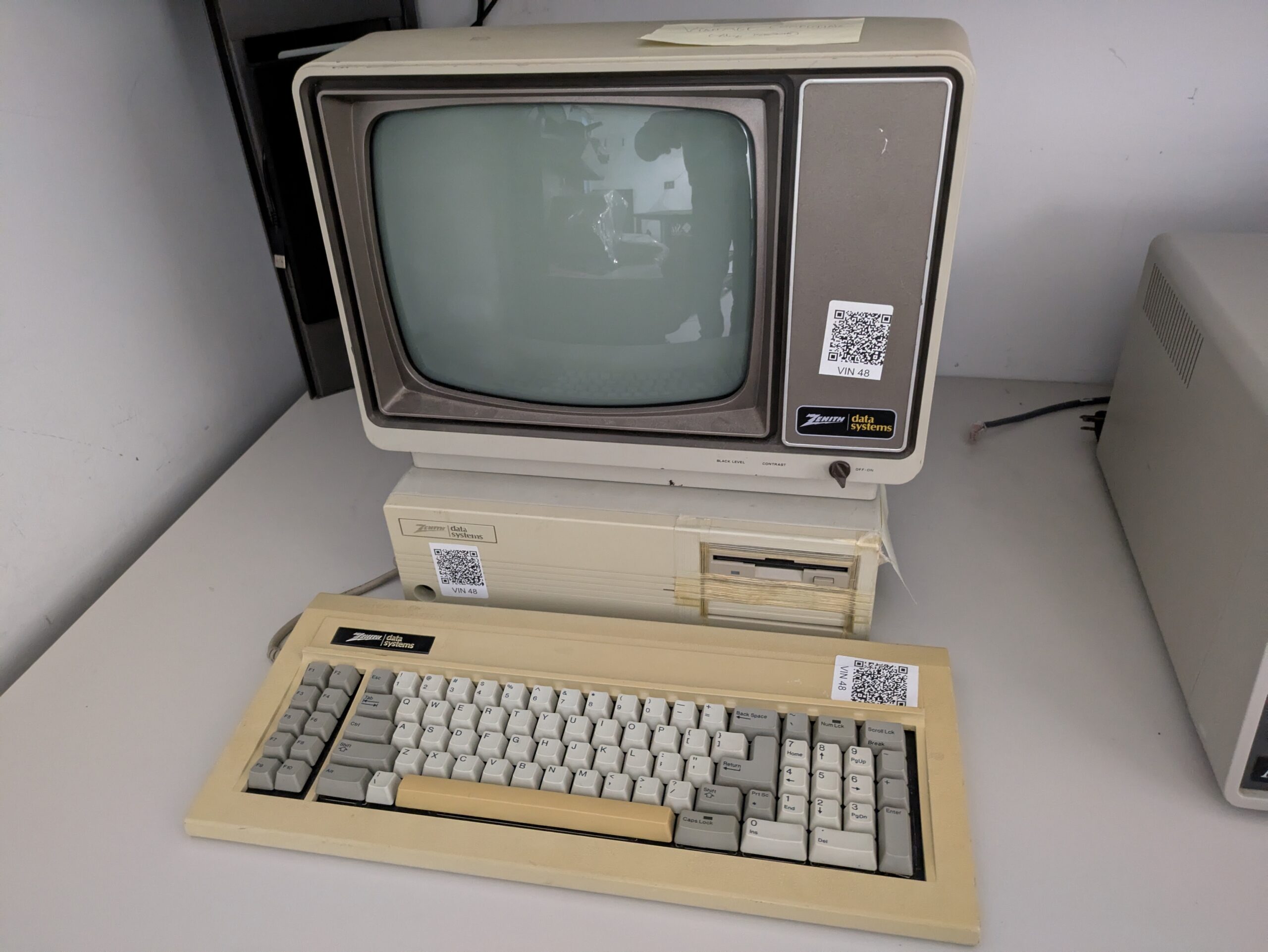
The Zenith ZCF-2325-EY was a vintage computer notable for its use of the Intel 80286 processor, likely running at 12–16 MHz, paired with around 1 MB of RAM and a 3.5″ floppy drive, making it a powerful and advanced system for its time in the mid-to-late 1980s. Its claim to fame was delivering robust business computing capabilities-such as EGA/VGA graphics, multiple serial and parallel ports, and compatibility with Zenith’s proprietary DOS (ZDOS)-in a reliable desktop form factor, which made it popular in institutional and government settings rather than in homes. The Zenith ZCF-2325-EY computer was used at Carleton Universities library.
- Manufacturer: Zenith Data Systems Corporation
- Type: Desktop computer
- Release Date: 1986
- Cost at release: ~$10,000 (adjusted for inflation)
- MIPS: 1.28–2.66
Hardware Specifications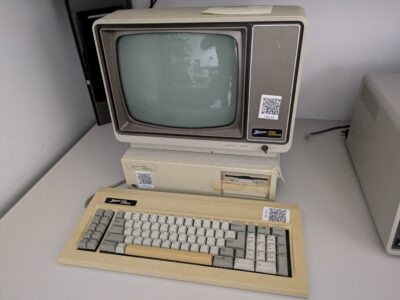
- CPU: Intel 80286 CPU, likely running at 16 MHz.
- Memory: Approximately 1 MB of RAM, with the ability to address up to 768 KB using Zenith’s proprietary DOS (ZDOS).
- Storage: 3.5″ floppy drive.
- Display: CRT graphics (specific resolution not detailed, but typical for the era would be EGA or CGA).
Operating System & Programming Languages
-
Operating System: The Zenith ZCF-2325-EY ran Zenith Data Systems’ version of MS-DOS, called ZDOS, which was a proprietary adaptation of MS-DOS for Zenith hardware
- Supported Languages:
- Microsoft BASIC, FORTRAN-86, COBOL-86, Pascal, BASCOM-86 (Z-BASIC for ZDOS)
- Assembly language (with available assemblers and editors for ZDOS environments)
- Additional languages, such as UCSD Pascal, were also available for similar Zenith/Heath systems running CP/M, and likely could be run on ZDOS with the appropriate interpreter or compiler.
Notables
- Great example of squeezing as much life out of old expensive hardware as possible. Carleton’s library staff literally taped the floppy drive bay in place to make it usable.
- The Zenith ZCF-2325-EY featured an Intel 80286 CPU and was released around 1984, making it one of the early 16-bit business desktop computers.
- It ran Zenith’s proprietary version of MS-DOS, called ZDOS, and could address up to 768 KB of RAM-an advanced feature for its time.
- The system used a 3.5″ floppy drive, which was still relatively new compared to the more common 5.25″ format in the early 1980s.
- Its place in history is as a representative of the transition from 8-bit to 16-bit personal computing, helping to set standards for business and educational computing platforms in the mid-1980s
Donated by: Carleton University Library