Commodore 64
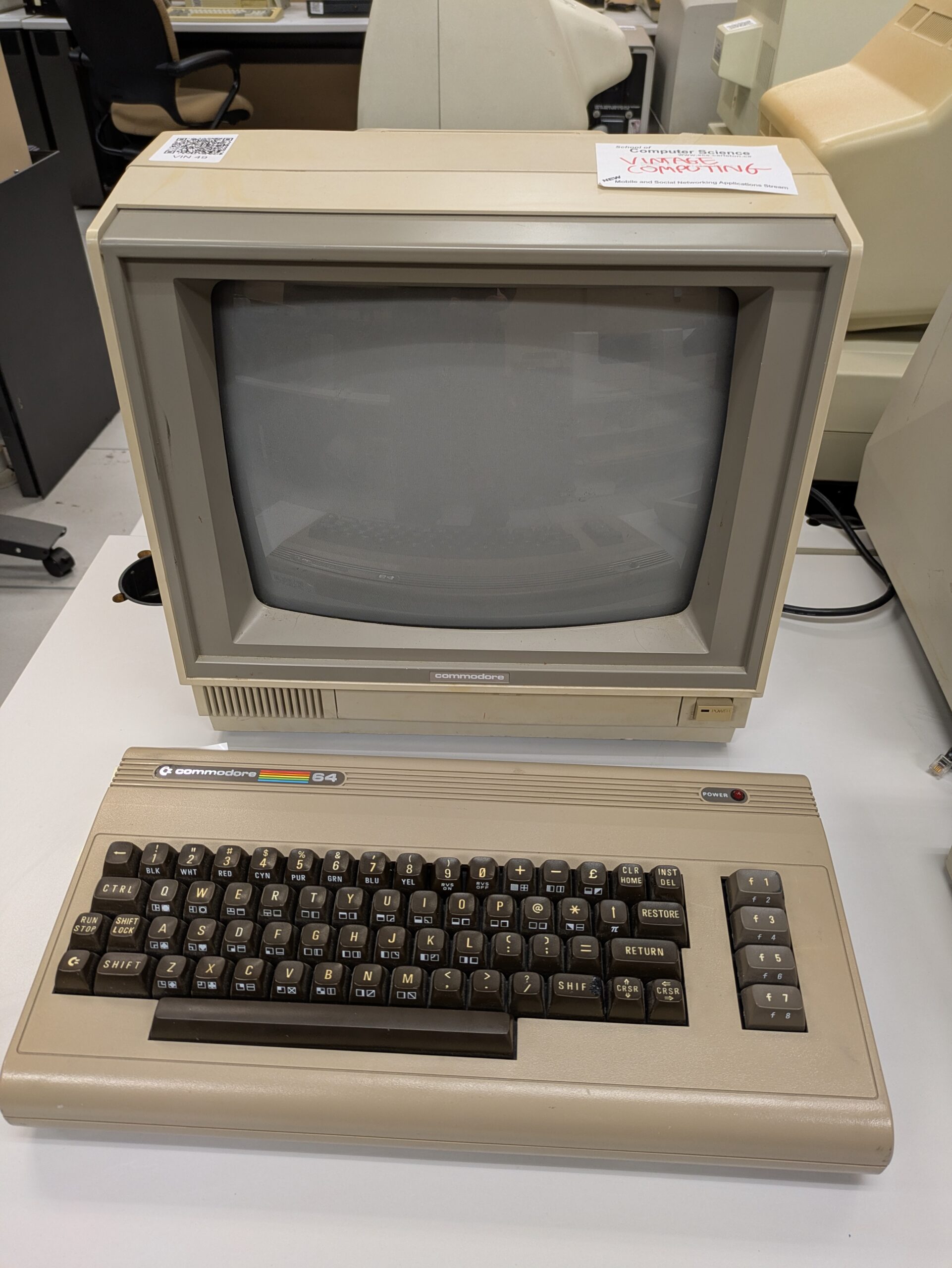
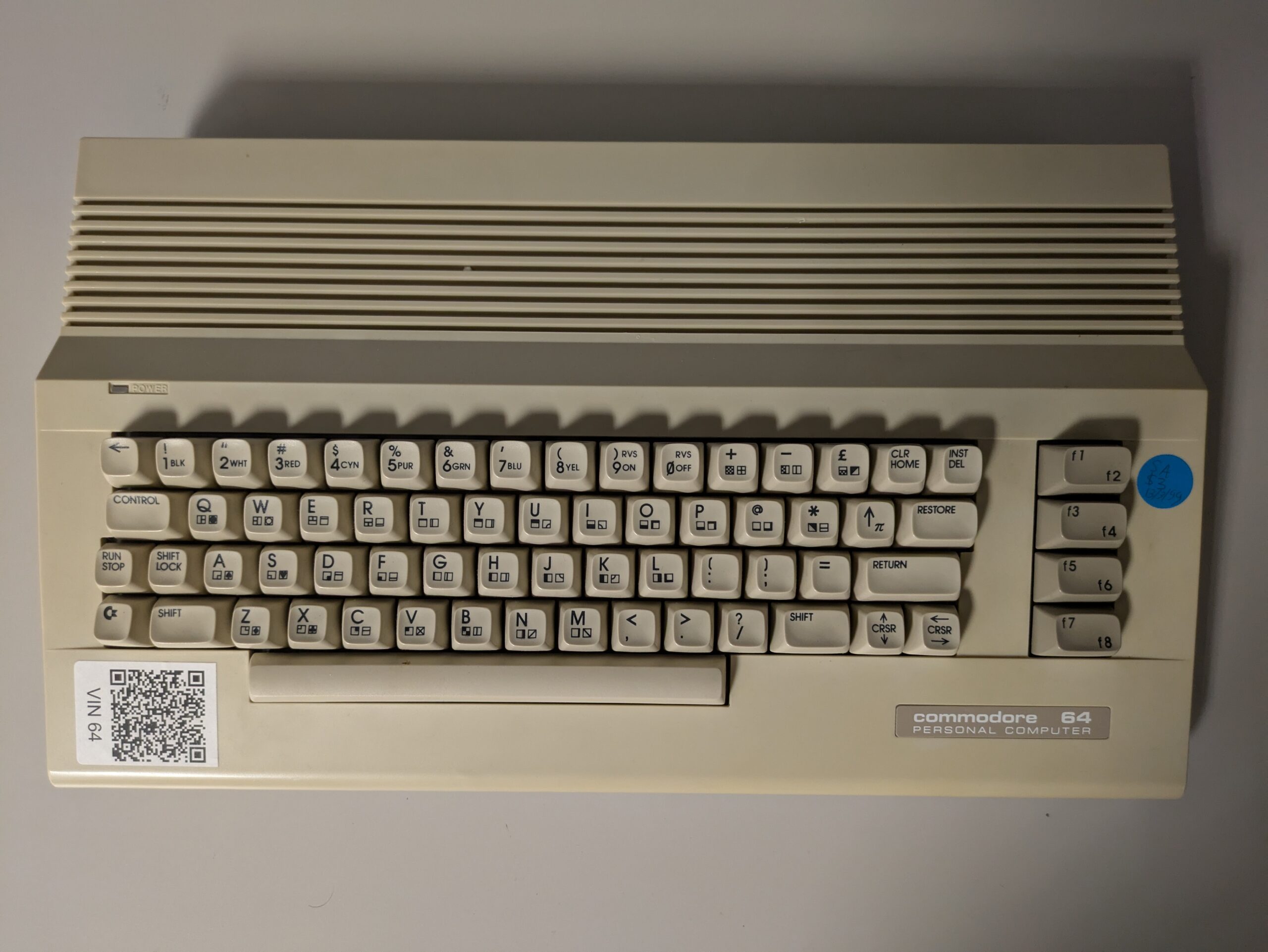
The Commodore 64 was a groundbreaking 8-bit home computer introduced in January 1982 by Commodore International and stands as the best-selling single computer model of all time, with estimated sales between 12.5 and 17 million units worldwide. Released in 1982, it significantly influenced the gaming industry with its unparalleled graphics and sound capabilities for the time. Its affordability and versatility made it a favourite among hobbyists and professionals alike. Some Commodore 64 units were made in Canada.
- Manufacturer: Commodore
- Type: Gaming Console / Personal Computer
- Release Date: 1982
- Longevity: Produced from 1982 to 1994
- Cost at release: USD $595 (CAD ~$4,000 adjusted for inflation)
- MIPS: 0.14 – 0.49 (140 – 490 KIPS)
Technical Specifications
- CPU: MOS Technology 6510 @ 1.023 MHz (NTSC version) or 0.985 MHz (PAL version)
- Memory: 64 KB RAM + 20 KB ROM
- Graphics: VIC-II chip (320 × 200 resolution, 16 colors, sprites, raster interrupt)
- Sound: SID 6581 chip (3 oscillators, 4 waveforms, filter, ADSR envelope, ring modulation)
- Storage: Cassette tape drive, optional floppy disk drive (1541)
- Operating System: Commodore KERNAL / Commodore BASIC 2.0
Operating System & Programming Languages
-
Operating System: CBM BASIC version 2.0
-
Supported Languages:
- Commodore BASIC: The default language built into the ROM, based on Microsoft 6502 BASIC
- Assembly Language (6502/6510): Programmers could write directly in assembly for the 6510 CPU using assemblers like Turbo Macro Pro and others
- C: C compilers such as Power C allowed C programming, though with some limitations due to hardware constraints
- Pascal: Several Pascal implementations were available, including Waterloo Pascal
- FORTRAN: FORTRAN compilers existed for scientific and engineering applications
- COBOL: COBOL was available for business-oriented programming
- APL: The APL language, known for its mathematical notation, was also supported
- Other BASIC Variants: Enhanced BASICs and extensions, such as Simons’ BASIC, provided more features
- Machine Language: Direct machine code programming was possible, often entered via monitors or loaders
Historical Significance
- Affordability: Priced at $595 at launch (equivalent to ~$4,000 CAD in 2025), it was significantly cheaper than many competitors
- Availability: Sold in department stores, toy stores, and other mainstream retail outlets
- Versatility: Used for gaming, productivity, and programming
- Longevity: Produced from 1982 to 1994, with a lifespan far exceeding expectations for home computers of the time
Notables
The Commodore 64’s influence extended beyond its production years:
- Gaming: Boasted a library of 3,500 – 5,500 commercially released games.
- Music: The SID chip became legendary for its distinctive sound, inspiring musicians and spawning a chiptune subculture.
- Programming: Introduced many users to BASIC programming and computer literacy
- Demo scene: Sparked a subculture of programmers pushing the hardware to its limits, creating impressive audiovisual demonstrations
Despite its success, the Commodore 64’s legacy is sometimes overlooked in broader computer histories, possibly due to its perception as primarily a gaming machine or its association with the eventual downfall of Commodore as a company
The Commodore 64’s unique combination of advanced graphics and sound capabilities, affordability, and widespread availability made it a defining machine of the 1980’s home computer era, leaving an indelible mark on the history of personal computing.