[Vin56]
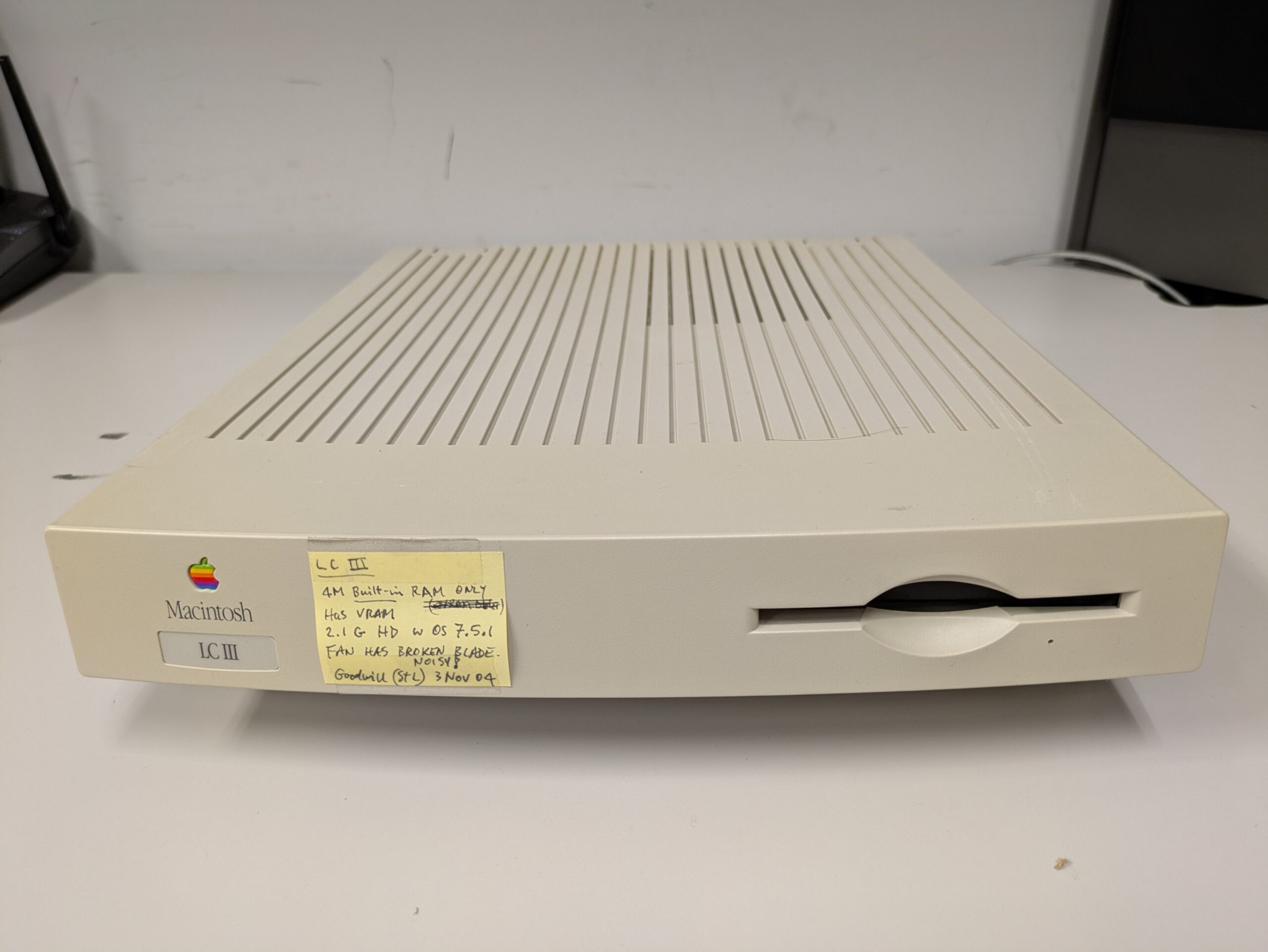
The Apple Macintosh LC III, launched in 1993, was a major upgrade in Apple’s low-cost color line, featuring a 25 MHz Motorola 68030 processor, a 32-bit data bus, and expandability up to 36 MB of RAM—triple its predecessor’s capacity and nearly double the performance. Its claim to fame was delivering robust performance at a much lower price ($1,349 at launch, $700 less than the LC II), making advanced computing more accessible for schools and consumers, especially through its popularity in educational institutions and as the consumer Performa 450 variant.
- Manufacturer: Apple Computer Inc.
- Type: Personal Computer
- Release Date: 1993
- Cost at release: USD $1,800 (CAD ~$4,400 adjusted for inflation)
- MIPS: 6.3
Hardware Specifications
- CPU: Motorola 68030, 25 MHz
- RAM: 4 MB standard, expandable to 36 MB (1 x 72-pin SIMM slot)
- Data Bus: 32 bits
- Hard Drive: 80 MB hard drive (standard configuration)
- Video: 512 KB VRAM (built-in), expandable to 768 KB (with 1 x 256 KB SIMM)
- Supported Resolutions: 512 x 384 (16-bit), 640 x 400 (16-bit), 640 x 480 (8-bit), 832 x 624, and more
- Floppy Drive: 1.44 MB auto-inject
- Weight: 8.8 lbs (4 kg)
Operating System & Programming Languages
- OS: System 7.1 and supports operating systems up to Mac OS 7.6.1
- Programming Languages: C and C++ (using Macintosh Programmer’s Workshop or CodeWarrior), Pascal (Apple Pascal and other Pascal compilers), HyperTalk (via HyperCard), AppleScript, Perl, Real Basic (on later versions of System 7), Assembly language (68k assembly) and other scripting and educational languages available for classic Mac OS environments
Notables
- The LC III’s “pizza box” case design was famous for its slim, stackable profile and easy access – just two tabs to open the case, making upgrades and repairs simple.
- Its name stands for “Low-Cost Color,” reflecting Apple’s push to bring affordable color computing to schools and homes.
- The LC III was the first Macintosh to use 72-pin SIMMs, breaking the 10 MB RAM barrier and allowing expansion up to 36 MB—an important leap for the era.
- It offered nearly the performance of the much more expensive Macintosh IIci, but at a fraction of the price, earning praise from MacWorld Magazine and helping make color Macs mainstream in education.
- The LC III line included consumer versions under the Performa brand (notably the Performa 450), and a speed-bumped “LC III+” version at 33 MHz.
- An unusual hardware quirk: some LC III units left the Apple factory with capacitors installed backwards, but the robust design meant they didn’t fail catastrophically—an oddity that’s become a talking point among collectors.
- The LC III’s legacy is its role in making color Macs accessible and affordable, helping Apple maintain a stronghold in schools and homes during the early 1990s
Donated by: Arlen Michaels