Toshiba Satellite 1710C DS
[vin57]
The Toshiba Satellite 1710C DS was a late-1990s entry-level laptop notable for its robust, serviceable design and modular components, such as easily replaceable hard drives and CD-ROM drives, which made it appealing for both consumers and IT departments seeking durability and straightforward maintenance.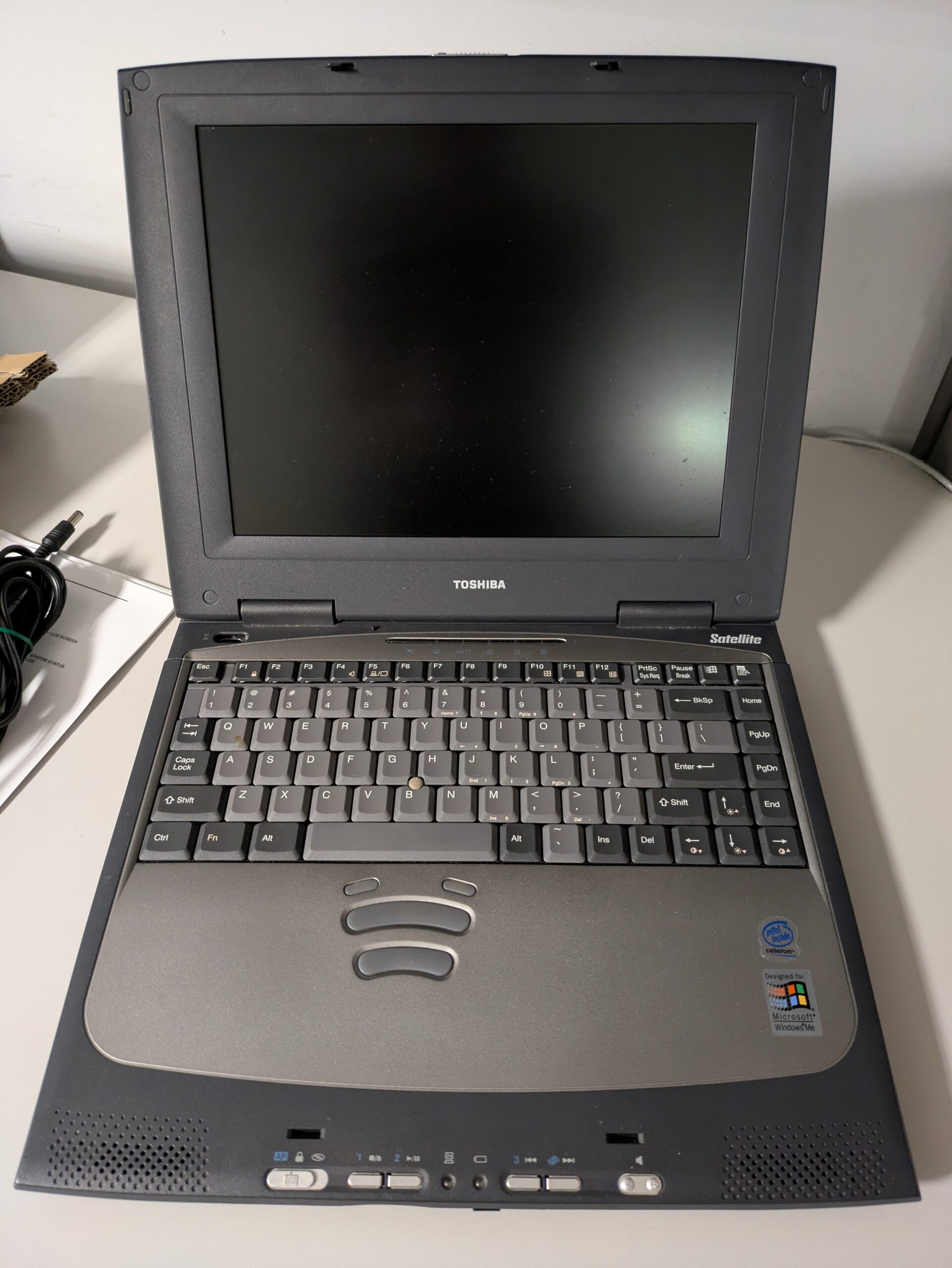
- Manufacturer: Toshiba
- Released: 1994
- Type: Laptop
- Cost at release: USD $3,500 (CAD ~$8,750 adjusted for inflation)
- MIPS: 20-40 (depending on the exact CPU variant and clock speed)
Hardware Specifications
- Processor: Intel Pentium MMX, typically running at 233 MHz
- Memory: 32 MB, expandable up to 160 MB
- Hard Drive: 2.1 GB or 4.3 GB IDE HDD (varied by configuration)
- Display: 12.1-inch TFT active-matrix color LCD, 800×600 resolution
- Optical Drive: Built-in CD-ROM drive (removable)
- Floppy Drive: External 3.5-inch floppy disk drive (included as a peripheral)
- Graphics: Integrated Chips & Technologies graphics controller
- Audio: Built-in stereo speakers, microphone, and audio jacks
- Ports: Parallel, serial, VGA out, PS/2, infrared, USB 1.1, modem (optional)
- Battery: Removable lithium-ion battery
- Weight: Approximately 3.3 kg (7.3 lbs)
Operating System & Programming Languages
- O/S: Microsoft Windows 98, but it was also compatible with Windows ME and could run various versions of Linux that supported its hardware
- Programming Languages:
- Any language that could be compiled or interpreted in the Windows 98 environment, including:
- C and C++ (via compilers like Microsoft Visual C++ or Borland C++)
- Pascal (Borland/Turbo Pascal)
- BASIC (such as QBasic, Visual Basic)
- Java (with the Java Runtime Environment)
- Assembly language (using assemblers like MASM or TASM)
- Scripting languages such as Perl and Python (with appropriate interpreters)
- Other languages supported by third-party compilers or interpreters for Windows 98 and Linux
Notables
- The Toshiba Satellite 1710C DS was part of the popular Satellite line, known for making laptops more accessible to both business and home users in the late 1990s.
- It stood out for its modular design, allowing easy upgrades and repairs, and included features like a removable CD-ROM drive and external floppy disk support
Donated by: Arlen Michaels