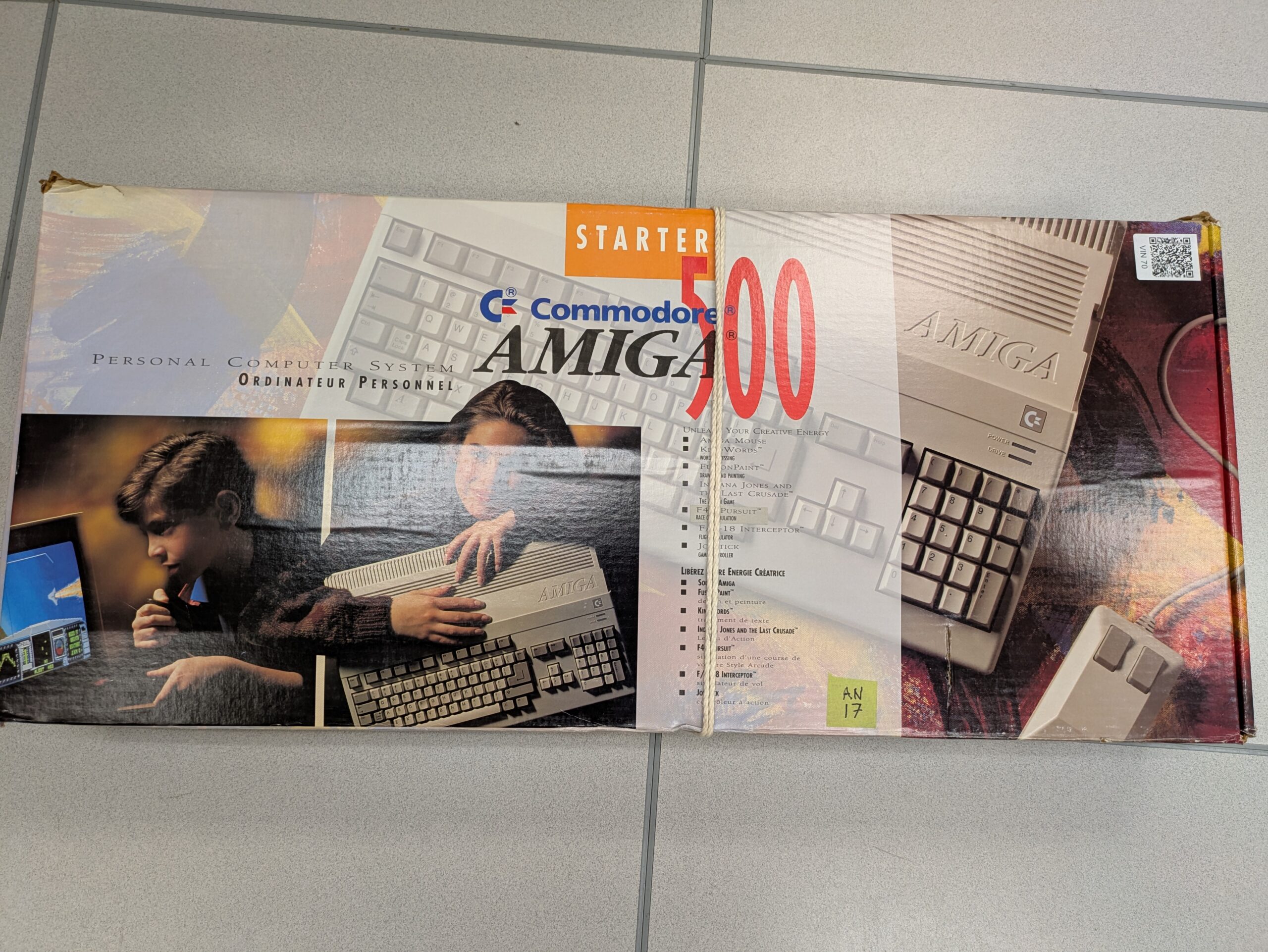
Commodore Amiga A500
Commodore Amiga A500
[Vin63]
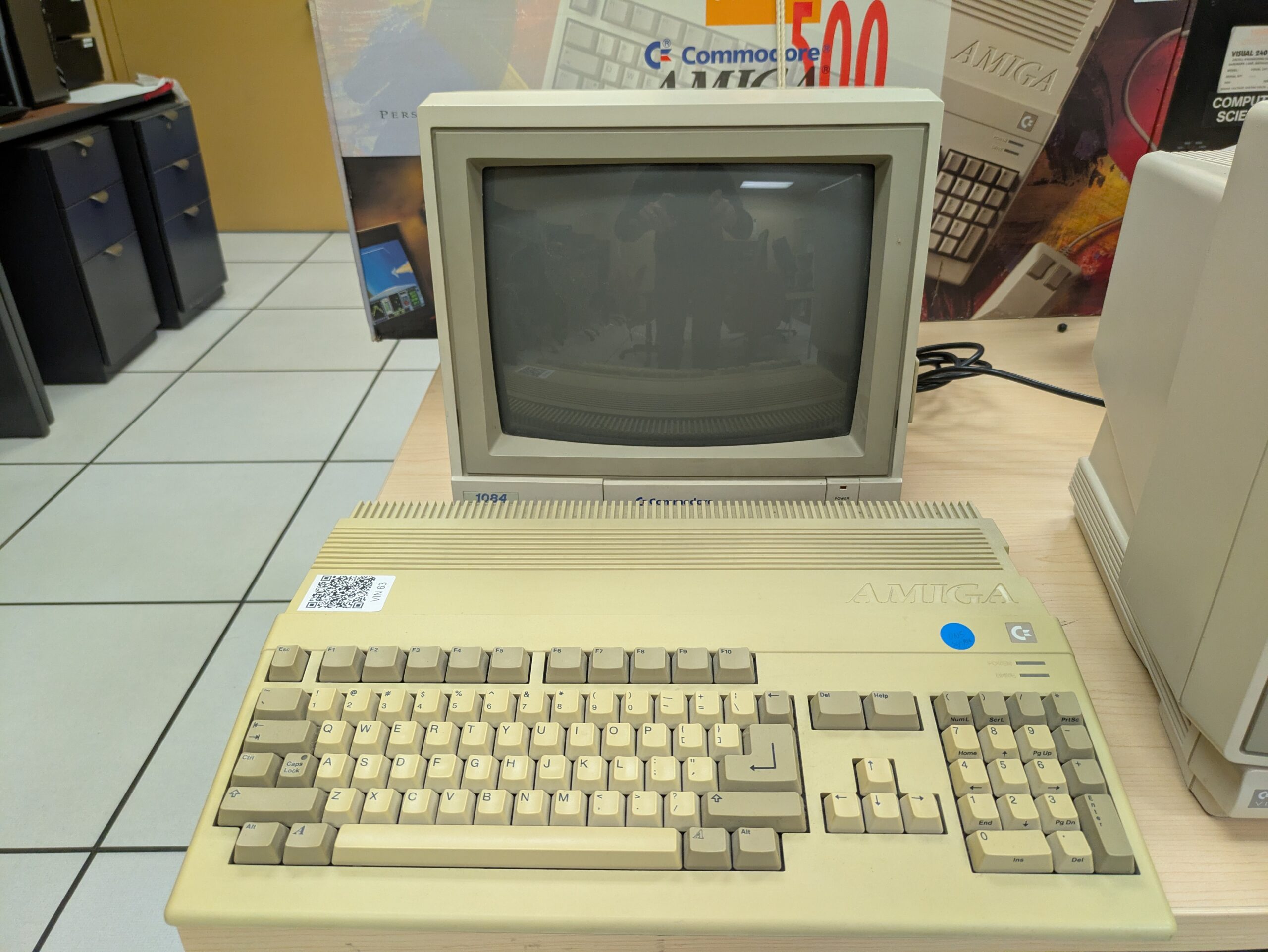
The Amiga 500 was a groundbreaking home computer released by Commodore in 1987, renowned for its advanced graphics and sound capabilities, powered by custom chips (Agnus, Denise, Paula) and a true preemptive multitasking operating system, features far ahead of most contemporaries. Its claim to fame was its popularity as a gaming and multimedia platform, offering rich audio-visual experiences and supporting a vast library of games and creative software, which helped it become the best-selling Amiga model with over 2.5 million units sold worldwide. The Amiga 500 played a pivotal role in making home computing accessible and fun, influencing later multimedia computing and gaming, and it has enduring cultural significance among retro enthusiasts.
- Manufacturer: Commodore
- Released: Oct. 1987
- Type: Personal Computer
- Cost at release: USD $699 (CAD ~$2,200 adjusted for inflation)
- MIPS: 0.73 (730 KIPS)
Hardware Specifications
- Processor: please list the important hardware specs in point form. Also include its weight.
- Memory: 512 KB chip RAM standard, expandable to 1 MB (A500+ models up to 2 MB chip RAM).
- Graphics: Original Chip Set (OCS), up to 4096 colors (12-bit palette), maximum resolutions up to 640×512 (PAL) or 640×400 (NTSC); supports advanced modes like Extra HalfBrite and Hold-And-Modify (HAM) for up to 4096 colors on screen.
- Sound: 4-channel, 8-bit stereo PCM audio, up to 28 kHz sample rate.
- Storage: Built-in 3.5″ double-density floppy disk drive (880 KB standard Amiga format).
- Operating System: AmigaOS 1.2 or 1.3 (upgradeable with more RAM).
- Expansion: Trapdoor slot for RAM/RTC expansion, side expansion slot for peripherals (hard drives, memory, CPU upgrades).
- Ports: Two DE9 joystick/mouse ports, RS-232 serial port, Centronics parallel port, analog RGB video out, RF modulator (TV out), stereo RCA audio out.
- Keyboard: Integrated, 94 or 96 keys with numeric keypad.
- Weight: Approximately 3.1 kg
Operating System & Programming Languages
- Operating System: The Amiga 500 ran AmigaOS, a proprietary, preemptive multitasking operating system developed by Commodore International. AmigaOS consisted of two main components: Kickstart (firmware in ROM) and Workbench (the graphical desktop environment), with versions 1.2 and 1.3 being standard for the A500.
- Programming Languages:
- Assembly Language (68k/68000 Assembly) was widely used for games and demos due to its speed and direct hardware access.
- C (various compilers including Aztec C, Lattice C, DICE C, SAS/C, VBCC, and GCC) was commonly used for utilities, applications, and some games.
- BASIC Dialects: AmigaBASIC (by Microsoft), ABasic, GFA BASIC, HiSoft Basic, AMOS BASIC, Blitz BASIC.
- Pascal: Amiga Pascal, Kick-Pascal, High Speed Pascal, Free Pascal.
- Other Languages: Forth (JForth), FORTRAN, Logo, Oberon, Perl, Ruby, Amiga E, Python (AmigaPython), ARexx (Amiga’s own scripting language), Scheme, Modula-2, C++, Java (JAmiga), Draco, ML, and more.
- Scripting: ARexx was built-in for scripting and automation
Notables
- The Amiga 500’s custom chips: Agnus, Denise, and Paula were given female names to disguise their functions and thwart industrial espionage, and its codename during development was “Rock Lobster,” a nod to the B-52’s song.
- Its graphics and sound capabilities were so advanced that it was used in TV production and video effects for shows like Clarissa Explains It All and Unsolved Mysteries.
- The A500 redefined the home computer market, making multitasking and color graphics standard features before Microsoft or Apple did.
- It was Commodore’s best-selling Amiga model and outsold its main rival, the Atari ST, especially in Europe
Media
A notable TV ad, the “Cartoon Classics” commercial, captured the excitement of the era and is fondly remembered by retro fans
Donated By: Dr. Arlen Michaels