Sinclair ZX-81 (Timex Sinclair 1000)
[Vin72]
The Sinclair ZX-81, introduced in 1981, was a groundbreaking home computer celebrated for its ultra-affordable price, minimalist design with only four main chips, and a base of just 1 KB of RAM—features that made personal computing accessible to millions. Its claim to fame was democratizing computer ownership: it sold over 1.5 million units worldwide, sparked a home computing boom, and inspired a generation of programmers and hobbyists by making programming and computing available to the general public through high street retailers rather than just mail order.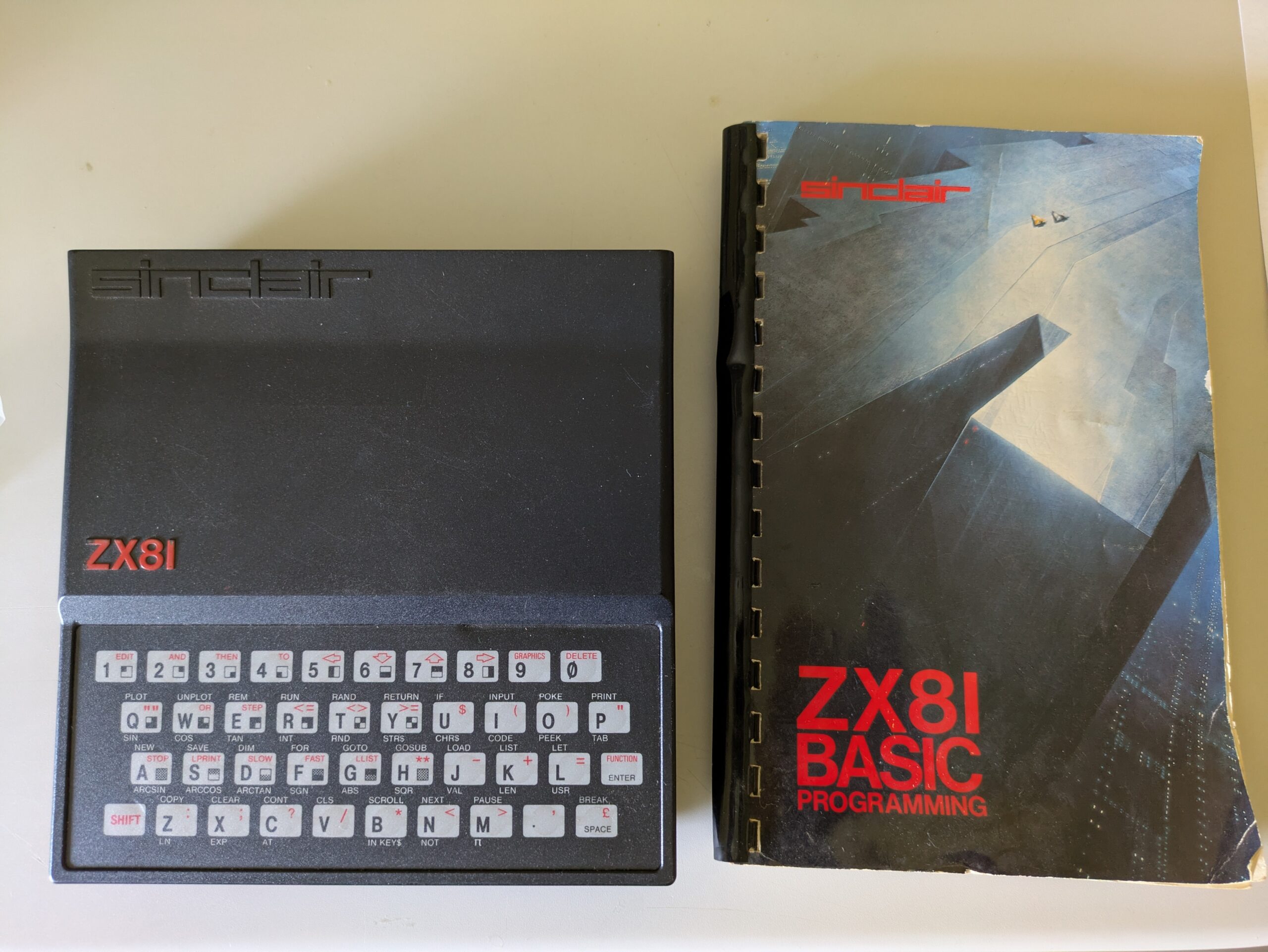
The ZX-81 was especially significant in computing history for catalyzing the mass adoption of home computers in the UK and North America, including Canada, where it was sold as the Timex Sinclair 1000 one of the first widely available home computers in the Canadian market, manufactured by Timex Corporation in Dundee, Scotland. Its simplicity, affordability, and broad reach played a pivotal role in shaping the early home computing landscape and nurturing the software and hardware industries that followed.
- Manufacturer: Sinclair Research
- Released: 1981
- Type: Home Computer
- Cost at release: GBP £99.95 (CAD ~$745 adjusted for inflation)
- MIPS: 0.058 (58 KIPS)
Hardware Specifications
- CPU: Zilog Z80A, 8-bit, running at 3.25 MHz.
- Memory:
- RAM: 1 KB built-in (expandable up to 16 KB or more via external modules; max 56 KB usable).
- ROM: 8 KB, containing Sinclair BASIC interpreter.
- Display:
- Text Mode: 32 characters x 24 lines (2 lines reserved for system use).
- Graphics Mode: 64 x 44 pixels (monochrome).
- Keyboard: 40-key membrane, pressure-pad switches.
- Video Output: RF modulator for connection to a standard TV (UHF/NTSC/PAL, depending on region).
- Sound: None.
- I/O Ports: Edge connector for RAM expansion and peripherals, cassette interface for data storage (audio cassette, 250 baud).
- Power Supply: 9V DC, 600 mA (center positive).
- Case Dimensions: Approx. 167 mm (width) x 175 mm (depth) x 40 mm (height).
- Weight: 350 grams (12.15 oz)
Operating System & Programming Languages
- Operating System: used an 8 KB ROM containing its operating system and the built-in Sinclair BASIC interpreter. The operating system was tightly integrated with BASIC, providing the user interface, program editing, and system control directly through the BASIC environment
- Programming Languages:
- Sinclair ZX81 BASIC: The default and primary language, resident in ROM, was a minimal but functional dialect of BASIC designed for ease of use and learning.
- Z80 Assembly Language / Machine Code: Advanced users could write programs directly in Z80 assembly or machine code, either by embedding code within BASIC programs (using the USR function) or by loading binary files via cassette.
- Forth: Several Forth implementations (such as fig-FORTH and ZX-FORTH) were available through third-party expansion cartridges or software.
- Pascal: Pascal interpreters and compilers were produced by third parties, allowing structured programming on the ZX-81/Timex Sinclair 1000.
- BCPL: Some add-ons enabled use of this early systems programming language.
- Other Languages: Additional niche and experimental languages, such as RPNZL (a Forth-like language), and extended versions of BASIC with added commands, were also available through software expansions and magazines.
Notables
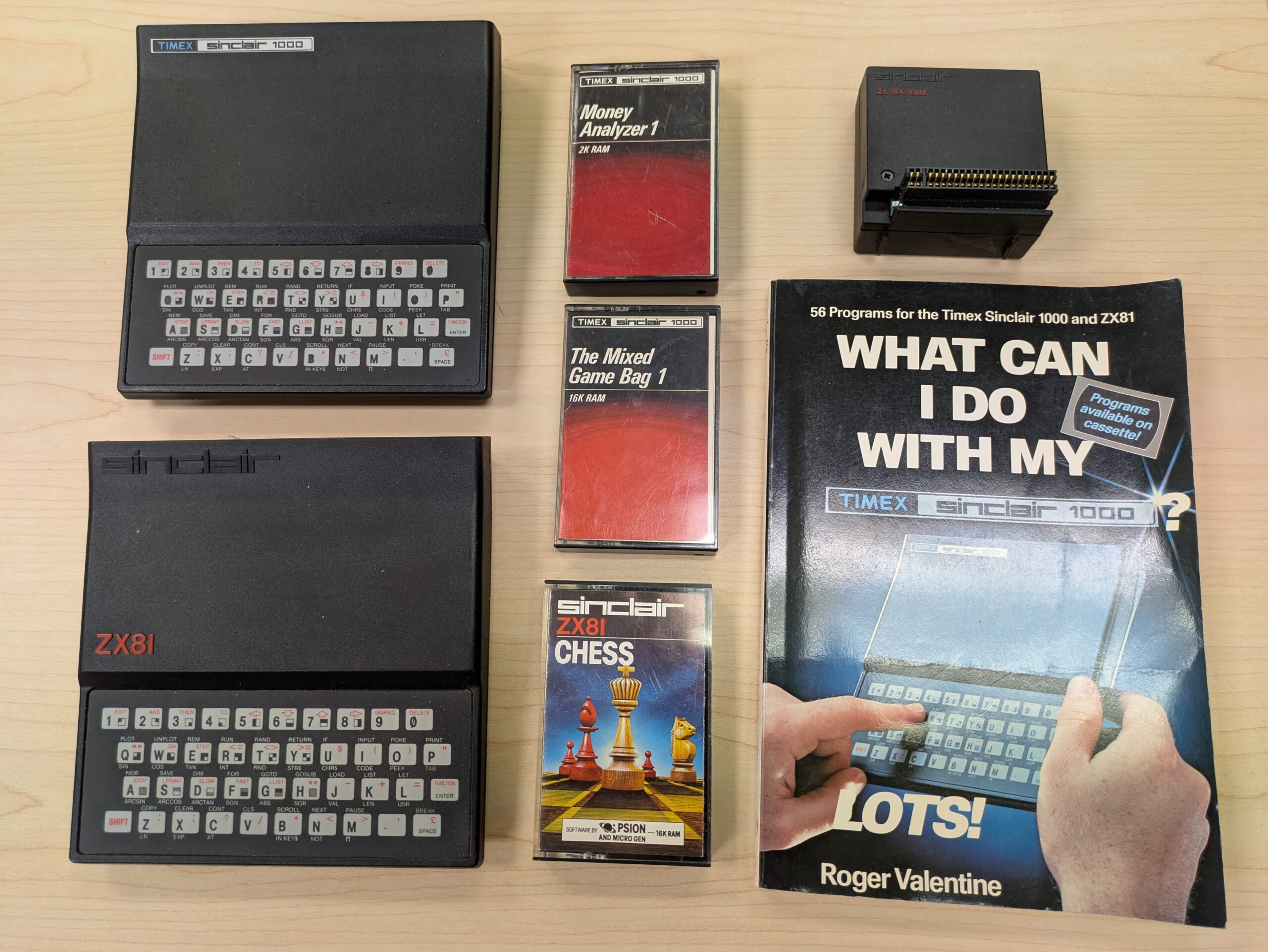
- Democratized Home Computing: One of the first truly affordable, mass-market home computers, selling over 1.5 million units globally.
- Catalyst for Industry: Sparked a wave of software and hardware companies and inspired a generation of programmers and engineers.
- Retail Revolution: First home computer widely available in high street shops, not just by mail order
- Minimalist Marvel: Used only four main chips, drastically reducing cost and complexity compared to competitors.
- “Wobble RAM”: The 16KB RAM expansion was infamous for being unstable—any bump could crash the computer and erase all data, earning the nickname “wobble RAM” among users.
- Keyboard Quirk: Featured a pressure-sensitive membrane keyboard, often compared to microwave oven buttons—cheap, but challenging for extended typing.
- Legendary 1K Chess: Despite only 1 KB of RAM, programmers managed to create games like 1K ZX Chess, fitting most chess rules in just 672 bytes.
- Square Root Bug: Early models had a notorious bug where the square root of 0.25 returned the wrong result (1.359…), prompting Sinclair to replace faulty ROMs.
- “Dogsbody” Chip: The ULA chip was nicknamed the “dogsbody” for handling multiple vital tasks usually spread across several chips.
- First Computer for Many: For countless users in the UK, U.S., and Canada, the ZX-81 (Timex Sinclair 1000) was their first computer experience.
Donated By: Don Shesnicky and Arlen Michaels