Texas Instruments TI-99/4A
[Vin73]
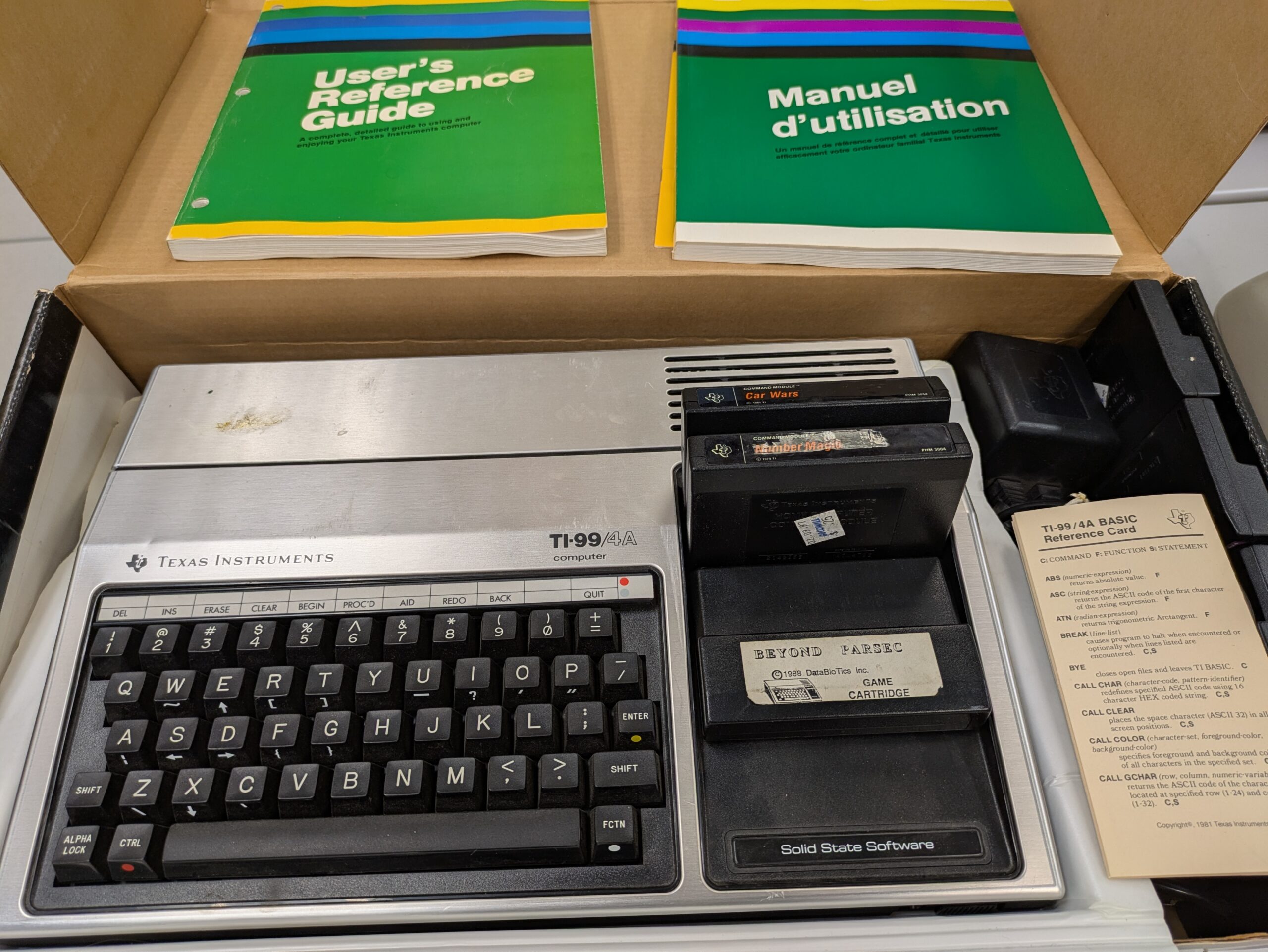
The Texas Instruments TI-99/4A, launched in 1981, was the world’s first 16-bit home computer, notable for its advanced TMS9900 processor, color graphics, and pioneering speech synthesis peripheral. Its claim to fame lies in introducing 16-bit technology to the home market, influencing later computer architectures and setting a new standard for multimedia capabilities in personal computing. Despite intense competition and a dramatic price war, the TI-99/4A achieved remarkable popularity with over 2.8 million units sold, becoming a staple in North American households and classrooms.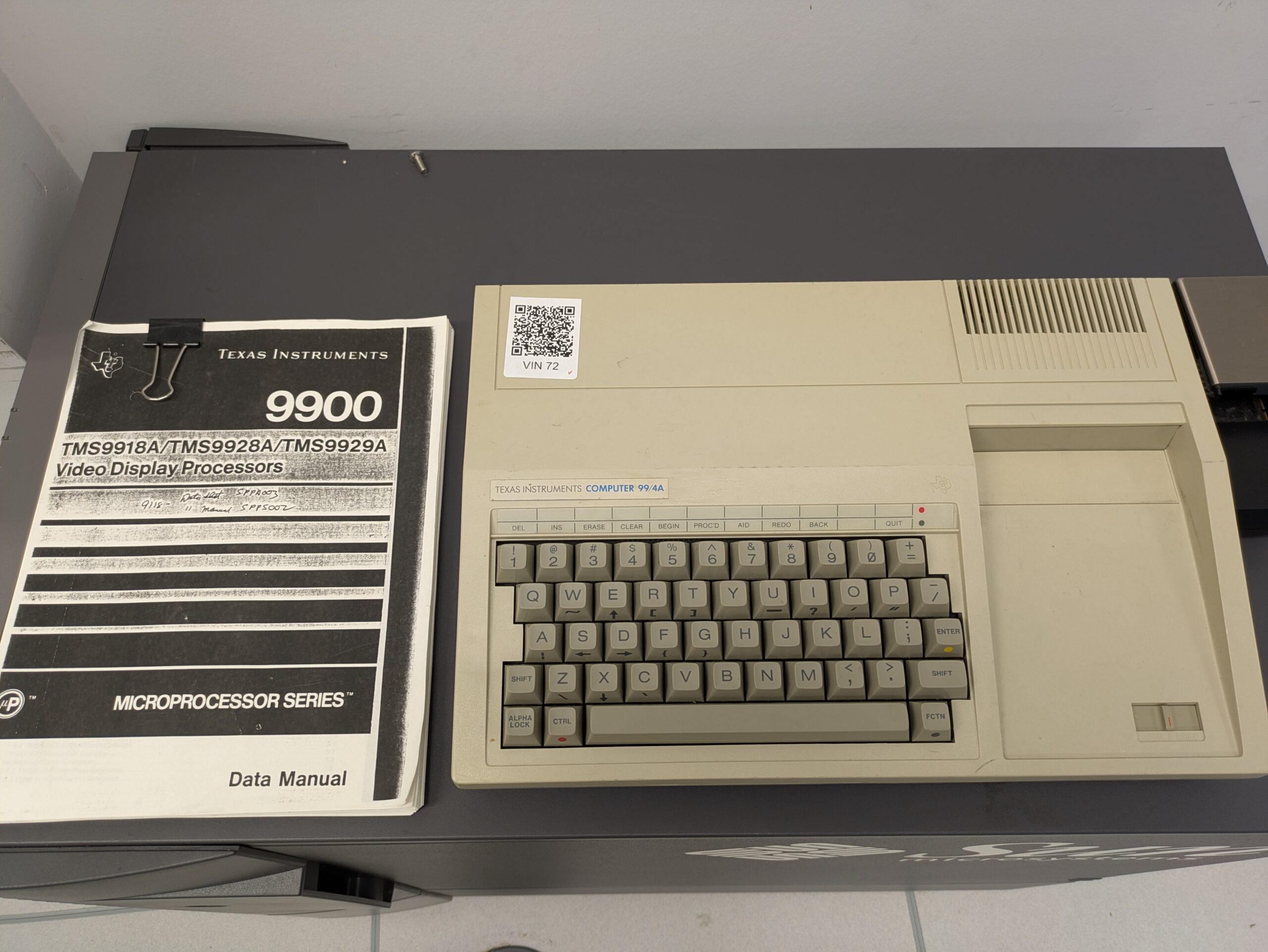
- Manufacturer: Texas Instruments
- Released: 1981
- Type: Home Computer
- Cost at release: USD $525 (CAD ~$2,000 adjusted for inflation)
- Cost with peripherals: USD $2,000 (CAD ~$7,850 adjusted for inflation
- MIPS: 0.136 (136 KIPS)
Hardware Specifications
- CPU: Texas Instruments TMS9900, 16-bit, running at 3 MHz
- RAM: 256 bytes scratchpad RAM (CPU), 16 KB Video Display Processor (VDP) RAM, expandable up to 52 KB with expansion cards
- ROM: 8 KB system ROM, 18 KB GROM (Graphic ROM) for TI BASIC and OS support
- Graphics: TMS9918A VDP, supporting 256 × 192 pixel graphics mode (up to 16 colors)
- Sound: TMS9919 sound chip, 3 sound channels plus 1 noise channel (white or periodic), square wave generation from 110 Hz to ~115 kHz
- Keyboard: Full-stroke QWERTY keyboard, 48 keys with function, shift, and control keys
- Expansion: Cartridge slot for software, Peripheral Expansion Box (PEB) for memory, disk drives, RS-232, and more
- I/O Ports: Cassette interface, video output (RF modulator), joystick ports (2), cartridge slot
- Weight: 2.15 kg (4.74 lbs)
Operating System & Programming Languages
- Operating System:
- The TI-99/4A ran a built-in, ROM-based console operating system that managed hardware resources and provided the user interface.
- Its primary user environment was TI BASIC, an ANSI-compliant BASIC interpreter integrated into the system ROM, which acted as both the default operating system shell and programming interface.
- Alternative operating systems included UCSD p-System (via a peripheral card), which provided a Pascal-oriented environment, and various third-party disk operating systems for advanced users
- Programming Languages:
- TI BASIC (built-in): The default language, based on Dartmouth BASIC, for general programming and learning.
- TI Extended BASIC: An enhanced cartridge-based version offering more commands, structured programming features, and improved graphics and sound support.
- Assembly Language: Programmable via the Editor/Assembler cartridge and expansion memory, allowing direct access to the TMS9900 CPU.
- GPL (Graphics Programming Language): An internal bytecode language used for system routines and some cartridges.
- LOGO: Available via cartridge for educational and graphical programming.
- Forth: Supported through third-party cartridges for more advanced, stack-based programming.
- Pascal: UCSD Pascal was available with the UCSD p-System card, providing a structured, high-level language environment.
- FORTRAN: Supported via third-party software for scientific and engineering applications.
- Other Languages: Additional options included My Little Compiler (MLC), TML (The Missing Link), and various third-party BASIC dialects and compilers
Notables
- First 16-Bit Home Computer: The TI-99/4A was the world’s first 16-bit home computer, using the TMS9900 CPU originally designed for minicomputers.
- Speech Synthesis Pioneer: It was among the first home computers to offer a speech synthesizer peripheral, enabling games and educational software to “talk” to users.
- Daisy-Chained Expansion: Peripherals connected in a daisy-chain from the side, resulting in a famously long, unwieldy row of add-ons when fully expanded.
- Solid State Software: TI branded its ROM cartridges as “Solid State Software,” a term unique to their marketing.
- Market Price War: The TI-99/4A was central to a fierce price war with Commodore, leading to dramatic price drops from $525 to under $100, and ultimately selling at a loss.
- “Plug and Play” Hardware: The system featured early plug-and-play capabilities with its cartridge and peripheral support.
- Limited Third-Party Software: TI tightly controlled software development, resulting in a limited library compared to competitors
Donated By: Arlen Michaels