Zenith Z-Star 433VL
The Zenith Z-Star 433VL was a notable 1990s notebook computer recognized for its compact design, portability, and impressive processing power for its time, featuring a 33 MHz 486SLC microprocessor that offered strong performance and efficient power management. Its claim to fame included innovative features such as the “J-Mouse” (a keyboard-integrated mouse control) and a removable nickel-cadmium battery that provided up to three hours of use, making it especially attractive for mobile professionals.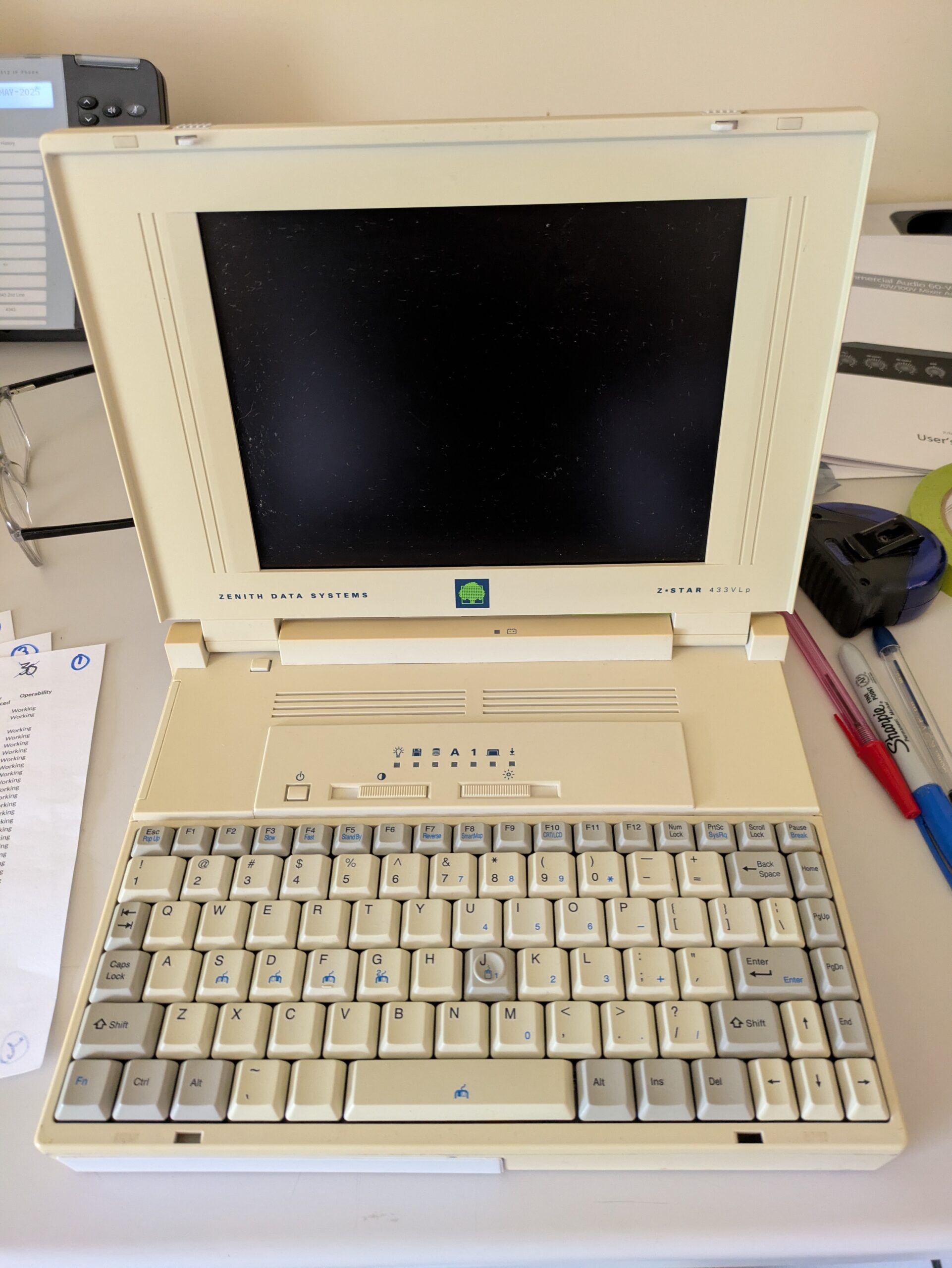
- Manufacturer: Zenith
- Type: Laptop
- Release Date: 1993
- Cost at release: USD $1,500 (CAD ~$3,650 adjusted for inflation)
- MIPS: 8-10
Hardware Specifications
- CPU: Cyrix Cx486SLC, 33 MHz
- Memory (RAM): 4 MB standard, expandable up to 12 MB
- Storage: Hard Drive 200 MB, 3.5-inch, 1.44 MB floppy drive
- Display: 9.5-inch monochrome or color LCD (model dependent)
- Graphics: VGA-compatible
- Pointing Device: Integrated J-Mouse (keyboard-based pointing device)
- Battery: Removable nickel-cadmium, up to 3 hours usage
- Ports: Serial, parallel, external VGA, PS/2 keyboard/mouse
- Weight: Approximately 7 pounds (3.2 kg)
Operating System & Programming Languages
- Operating System: Shipped with MS-DOS 6.0 and Windows 3.1
- Supported Languages: BASIC (such as GW-BASIC, QBasic), Pascal (Turbo Pascal, Borland Pascal), C and C++ (Borland C++, Microsoft C), Assembly language (using MASM, TASM), FORTRAN, COBOL, and other DOS/Windows compilers and interpreters of the era
Notables
- The Zenith Z-Star 433VL was also sold as the Packard Bell Statesman, highlighting its dual branding and market reach.
- It featured the unique “J-Mouse,” which allowed the “J” key on the keyboard to function as a built-in mouse, an unusual and innovative pointing device for laptops at the time.
- The Z-Star 433VL used a Cyrix 486SLC processor, notable for its power efficiency and hybrid 386/486 architecture, making it advanced for early 1990s notebooks.
- Its modular design included a removable nickel-cadmium battery and PCMCIA slot, supporting portability and expandability.
- The system was recognized for its durability and reliability, with many units reportedly lasting several years without major issues.
- While not a mainstream icon, the Z-Star 433VL holds a place in computing history as a representative of early affordable, portable 486-based notebooks and for its innovative input device, preceding more famous solutions like IBM’s TrackPoint