Kaypro II
[Vin76]
The Kaypro II, introduced in 1982, was a pioneering “luggable” computer known for its rugged, all-metal aluminum case and portability, weighing approximately 26 pounds (11.8 kilograms). It featured a 2.5 MHz Zilog Z80 microprocessor, 64 KB of RAM, and two 5¼-inch double-density floppy disk drives, paired with a bright 9-inch green monochrome CRT display that was notably larger and clearer than many contemporaries. The computer ran the CP/M operating system, which supported a vast library of software, making it a versatile and practical choice for business and professional use. The Kaypro II helped popularize the concept of “turnkey” portable computers that were ready to use out of the box, influencing the design and marketing of later portable and laptop computers.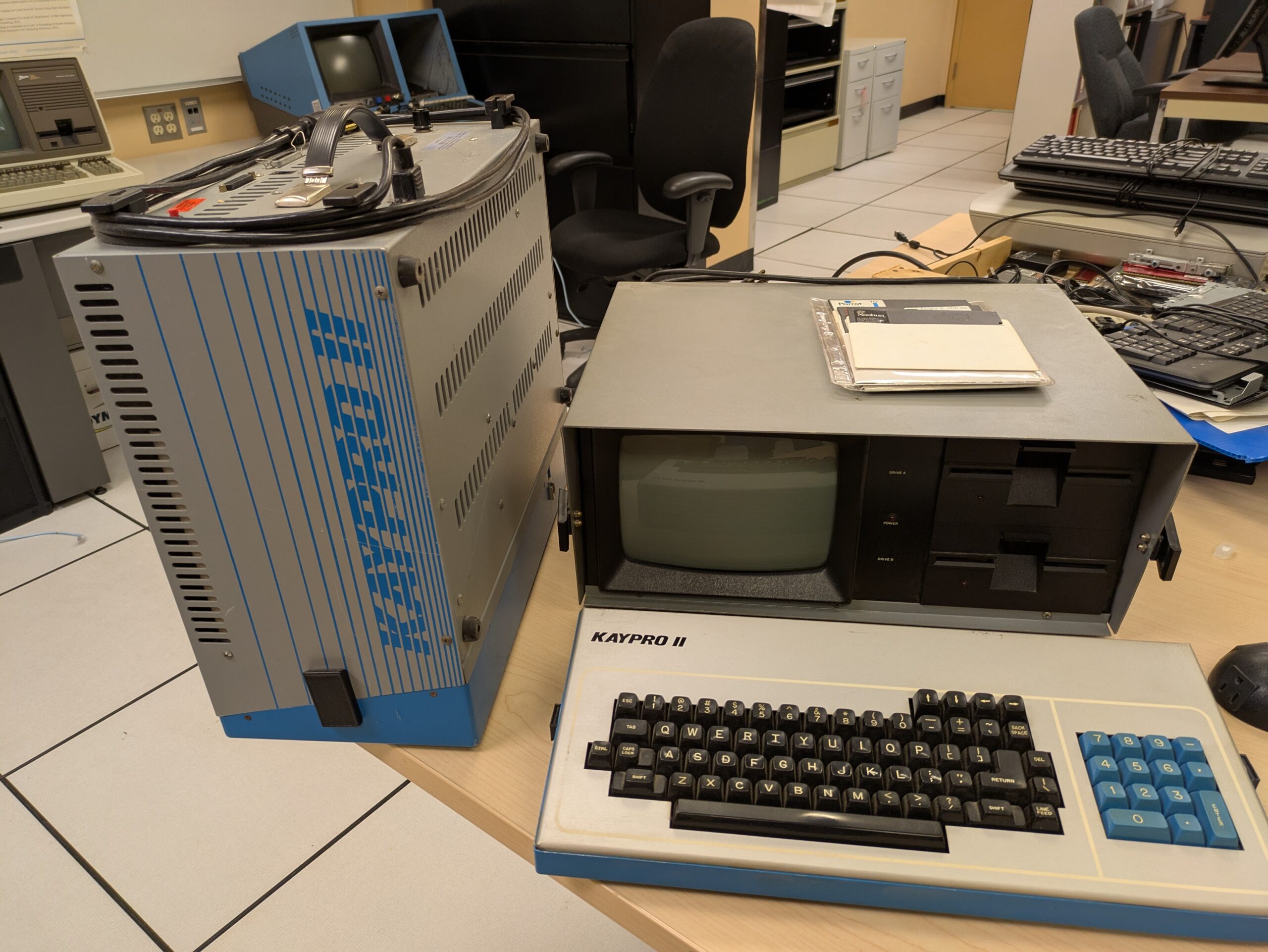
- Manufacturer: Non-Linear Systems (NLS), founded by Andy Kay. The computer division was later spun off as Kaypro Corporation
- Released: 1982
- Type: Luggable/Personal Computer
- Cost at release: USD $1,795 (CAD ~$6,500 adjusted for inflation)
- MIPS: 0.1 (100 KIPS)
Hardware Specifications
- CPU: Zilog Z80, 2.5 MHz
- RAM: 64 KB dynamic RAM
- ROM: 2 KB system ROM
- Display: 9-inch green phosphor CRT, 80 columns × 24 lines text-only
- Storage: Two internal 5.25-inch single-sided, double-density floppy disk drives (approx. 191–195 KB each)
- Keyboard: Detachable, full-stroke keyboard with numeric keypad (typically 76 keys)
- Weight: 26 lbs (approx. 11.8–13 kg)
Operating System & Programming Languages
- Operating System: CP/M 2.2 (Control Program for Microcomputers) operating system, a widely used OS for 8-bit microcomputers of the early 1980’s
- Programming Languages:
- S-BASIC: A structured, compiled BASIC language supplied by Kaypro, suitable for both beginners and advanced users.
- MBASIC (Microsoft BASIC): The de facto standard interpreted BASIC for CP/M systems, widely used for general programming and education.
- C-BASIC: A bytecode-compiled BASIC available for more advanced programming needs.
- Assembler (Z80 Assembly Language): CP/M included tools for assembly language programming, allowing direct access to the Z80 CPU.
- Other CP/M Languages: Because the Kaypro II could run any standard CP/M software, users could install and use a variety of third-party languages, such as:
- FORTRAN
- COBOL
- Pascal
- dBase II (database programming)
- C (via third-party compilers)
- Utility and Scripting Languages: CP/M also supported scripting and batch file automation for advanced users
Notables
- All-Metal Construction: The Kaypro II was famous for its rugged, all-metal aluminum case, making it exceptionally durable and giving it a “built like a tank” reputation.
- Luggable, Not Portable: Weighing about 26 pounds, it was marketed as portable, but users often called it “luggable” due to its hefty size.
- Appliance/Turnkey Machine: It was one of the first computers marketed as a complete, ready-to-use system, bundled with a large suite of productivity software.
- User Groups: Its popularity led to the formation of numerous user groups across North America for support and community.
- “The Tank”: Due to its heavy, metal case and durability.
Donated By: Arlen Michaels