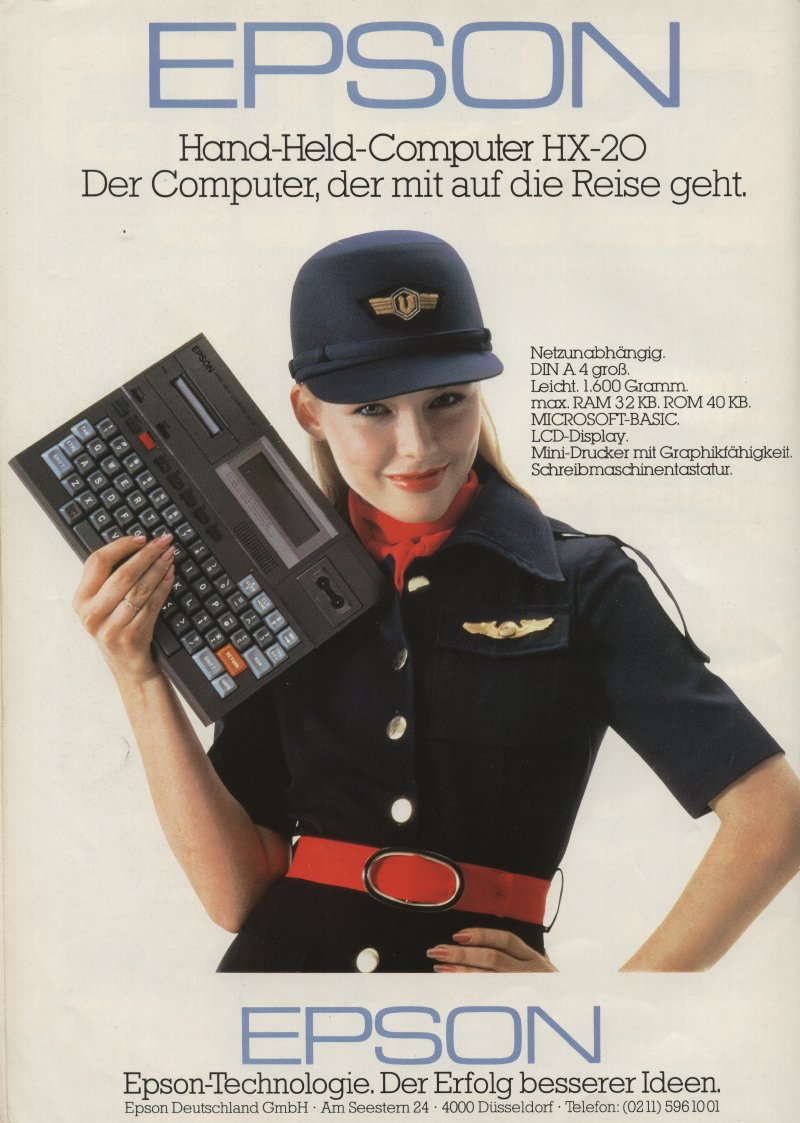
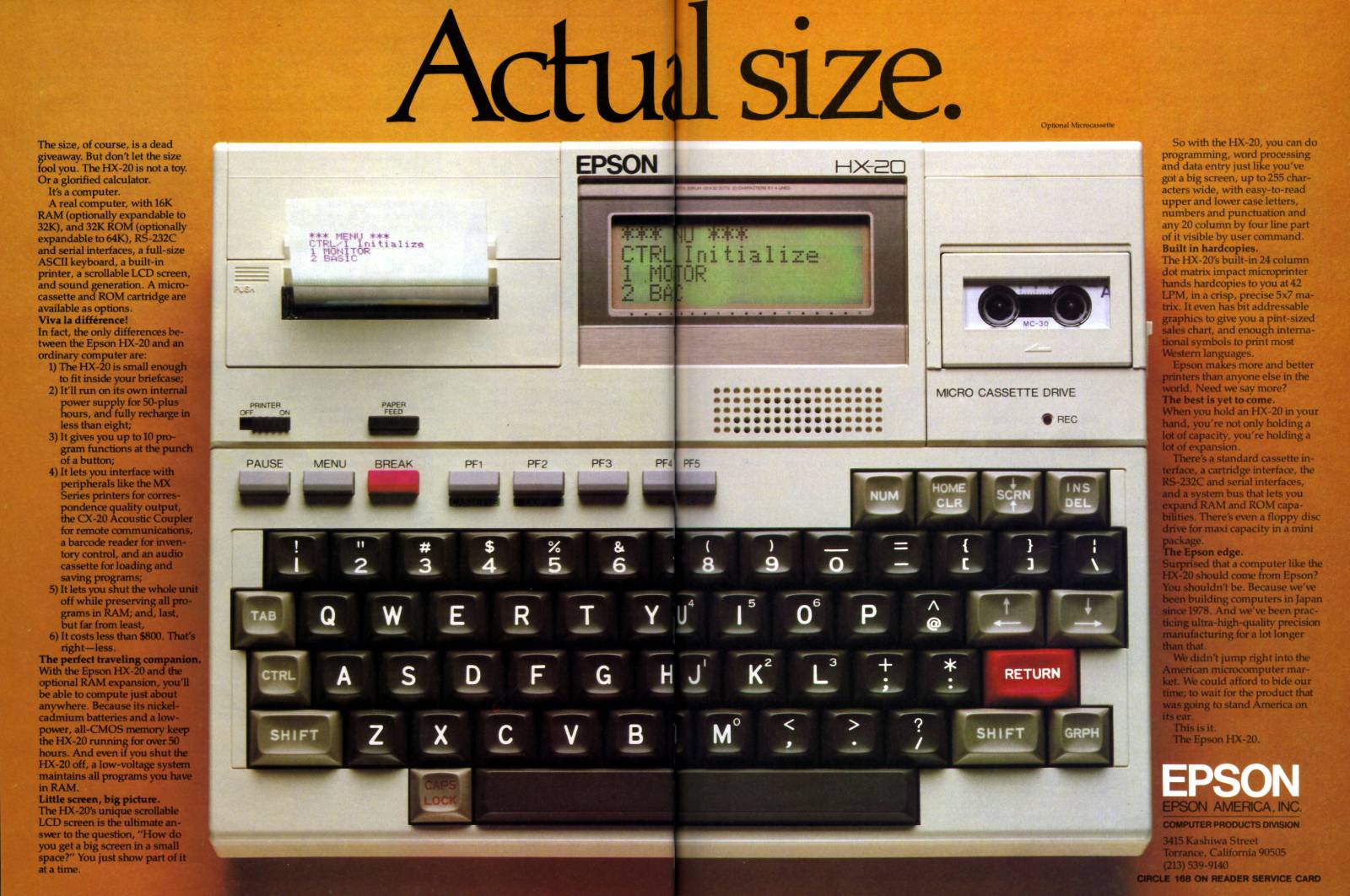
Epson HX-20
[Vin80]

The Epson HX-20, released in 1982, is recognized as the world’s first truly portable, notebook-sized computer, “the first laptop”, featuring a full keyboard, built-in LCD display, integrated dot-matrix printer, and rechargeable batteries that allowed up to 50 hours of use on a single charge. Its claim to fame was pioneering the “laptop” form factor, compact and lightweight (about 1.6 kg, A4-sized) with all essential computing features, making it a forerunner of modern mobile PCs and earning it the title of “the fourth revolution in personal computing” by BusinessWeek. It sold a remarkable quarter of a million units worldwide and was influential in shaping future portable computers.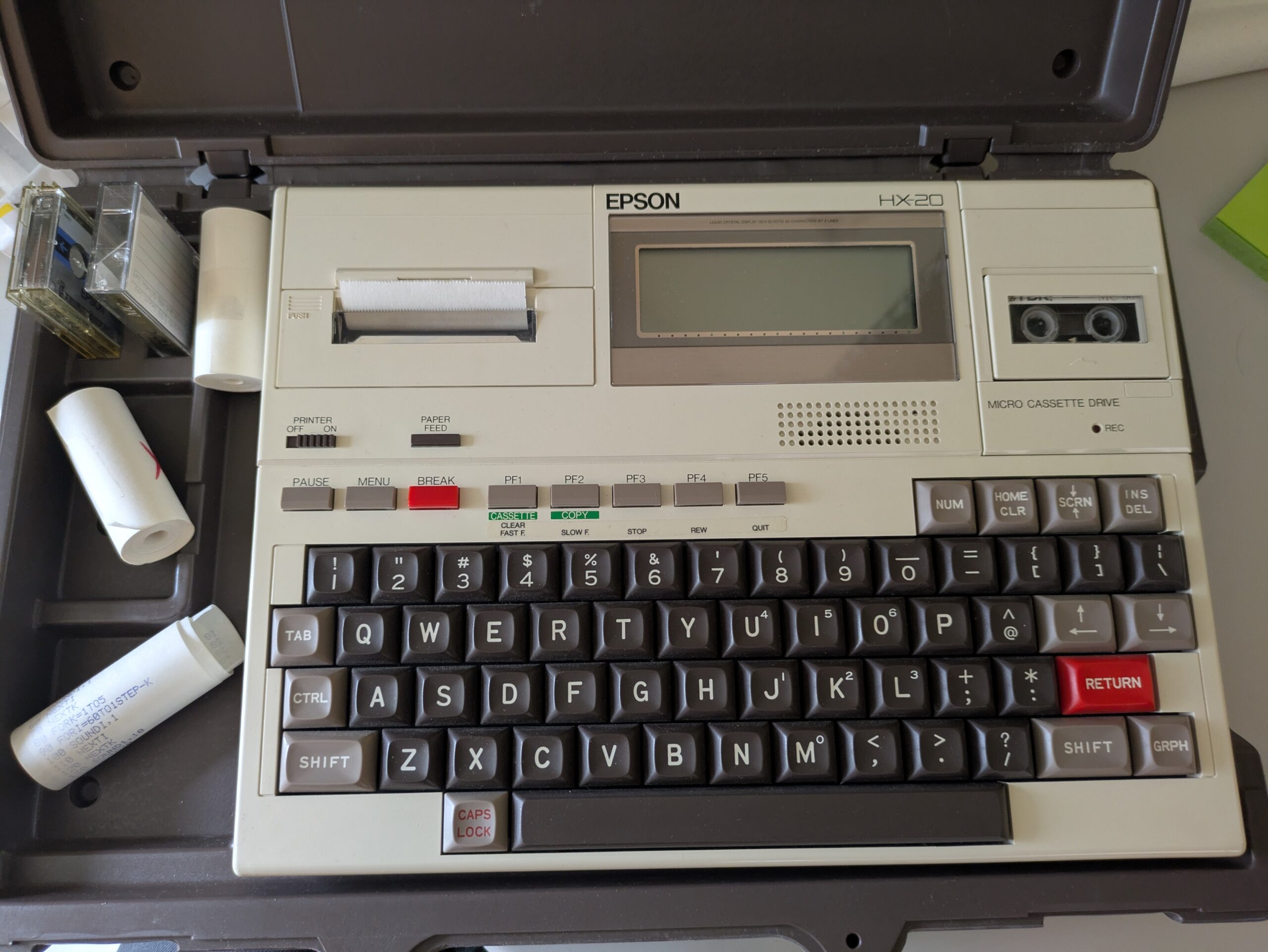
- Manufacturer: Epson (then Shinshu Seiki Co., Ltd.)
- Type: Laptop
- Model: HX-20
- Release Date: 1982
- Cost at release: USD $795 (CAD ~$2,900 adjusted for inflation)
- Cost with peripherals: USD $1,180 (CAD ~$4,300 adjusted for inflation)
- MIPS: 0.05 (50 KIPS)
Hardware Specifications
- CPU: Dual Hitachi 6301 microprocessors at 614 kHz each
- RAM: 16 KB (expandable to 32 KB)
- ROM: 32 KB
- Display: : 4-line by 20-character LCD (monochrome)
- Keyboard: Full QWERTY, 68 keys
- Storage: Built-in microcassette tape drive (optional)
- Printer: Integrated 24-column dot-matrix printer
- Power: Rechargeable nickel-cadmium battery (up to 50 hours use)
- Size/Weight: A4-sized, approximately 1.6 kg (3.5 lbs)
- Ports: RS-232 serial, external cassette, barcode reader, expansion connector
- Sound: Piezoelectric beeper
Operating System & Programming Languages
- Operating System: Proprietary Epson operating system, consisting of the EPSON BASIC interpreter and a monitor program
- Supported Languages: EPSON BASIC (an extended version of Microsoft BASIC, built-in and primary language). Machine code (via the monitor program, allowing direct memory and register access for low-level programming and debugging)
Notables
- It was the world’s first notebook-sized portable computer, earning nicknames like “the first laptop” and being hailed as the “fourth revolution in personal computing” by BusinessWeek.
- Its unique features included a built-in dot-matrix printer and microcassette drive—rare for any portable computer, even today.
- The HX-20’s A4-sized footprint and lightweight design (about 1.6 kg) made it truly portable, with up to 50 hours of battery life.
- It featured dual Hitachi 6301 CPUs, a full-stroke keyboard, and a 4-line LCD display, though the display was notably small and had a narrow viewing angle.
- The HX-20 was available in both silver and cream/beige colors, with some prototypes in dark grey.
- It introduced early concepts like a docking station and supported peripherals such as an acoustic coupler, barcode reader, and external floppy drive.
- Despite its technical innovation and initial acclaim, it was not a major commercial success outside Japan and is now a prized collectible among vintage computer enthusiasts.
- The HX-20 paved the way for later portable computers, influencing the design of future laptops and mobile PCs
Donated by: Arlen Michaels