Data General/One (DG-1)
[Vin91]
 The Data General/One (DG-1), released in 1984, was notable as one of the first truly portable, battery-powered, IBM-compatible laptops, featuring a nine-pound chassis, MS-DOS compatibility, 3.5-inch floppy drives, and a full-sized LCD screen capable of CGA graphics, an advanced feat for its time. Its claim to fame was establishing the template for future PC laptops with its clamshell design, integrated LCD, and portability, making it a milestone that shifted the market’s conception of what a “laptop” could be. Despite these innovations, the DG-1 achieved only modest commercial success due to its high price and use of 3.5-inch disks, which, at the time, were not yet industry standard limiting its widespread popularity.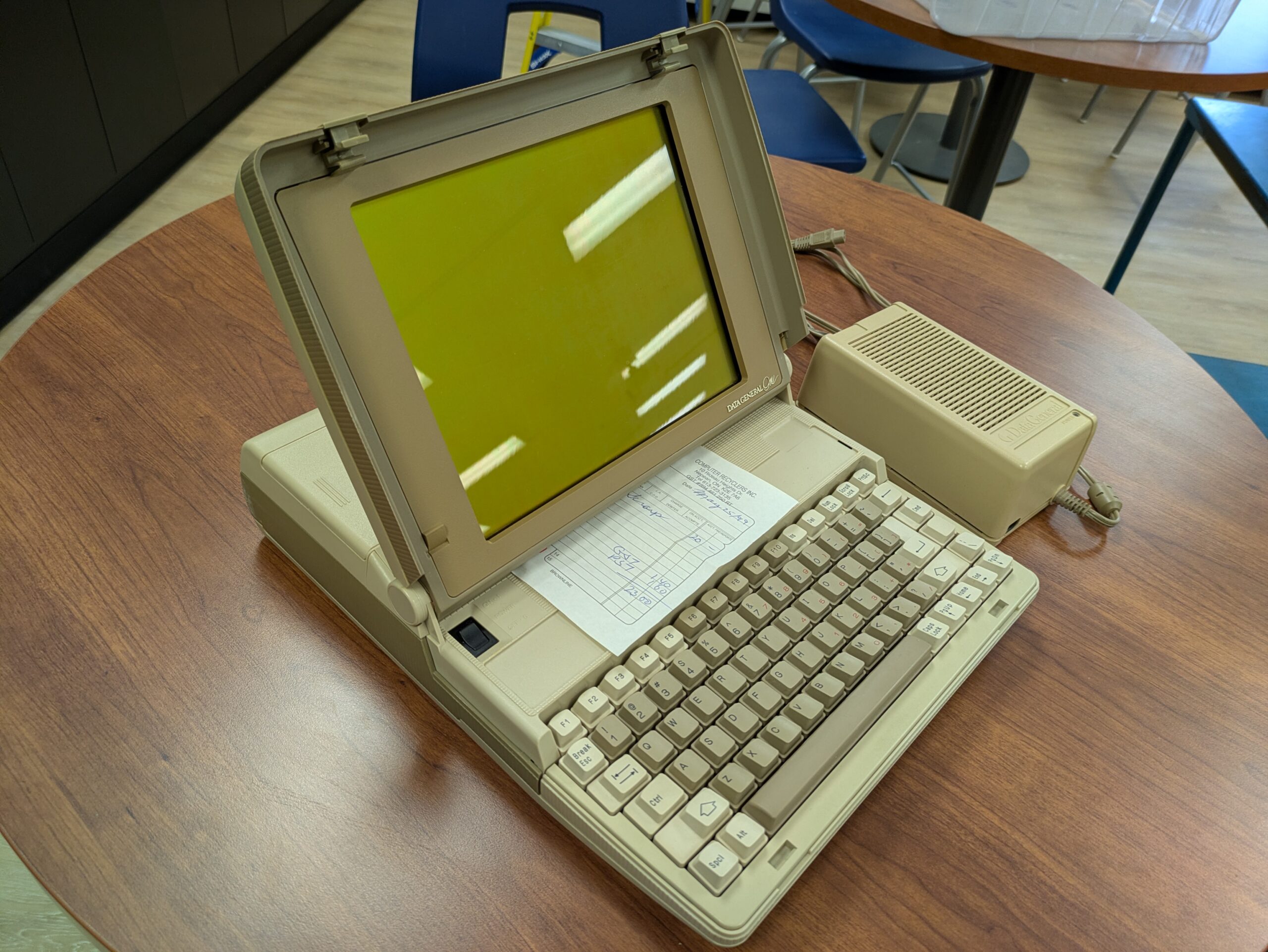
- Manufacturer: Data General Corporation
- Type: Laptop
- Model: DG-1
- Release Date: 1984
- Cost at release: USD $2,895 (CAD $10k adjusted for inflation)
- Cost with peripherals: USD $5,835 (CAD $20k adjusted for inflation)
- MIPS: 0.3 (300 KIPS)
Hardware Specifications
- CPU: Intel 80C88, 4 MHz
- RAM: 128 KB (expandable to 512 KB)
- Storage: One or two internal 3.5-inch floppy disk drives (720 KB each)
- Display: 11-inch monochrome LCD, 80×25 text or up to 640×200 (CGA) graphics
- Keyboard: 79-key full-stroke keyboard
- Ports: Serial, parallel, system bus, telephone port (for optional modem)
- Battery: Rechargeable battery pack (up to 8 hours operation)
- Modem: Optional 300 baud internal modem
- Weight: 9 pounds (approximately 4.5 kg)
- Expansion: External 5.25-inch floppy drive supported; expansion chassis available for up to five IBM-PC compatible cards
Operating System & Programming Languages
- OS: MS-DOS 2.11 as its default operating system, making it fully compatible with most IBM PC software of its era
- Programming Languages:
- BASIC: Likely included GW-BASIC (or IBM BASICA), with users also able to run other DOS-compatible BASIC interpreters such as MS-BASIC and QuickBASIC.
- Pascal: Turbo Pascal and similar DOS versions were compatible.
- C: Popular compilers like Microsoft C or Manx Aztec C would run under MS-DOS on the DG-1.
- FORTRAN: DOS-compatible FORTRAN compilers, such as Microsoft FORTRAN, were supported.
- COBOL: Both Microsoft and third-party COBOL compilers available for MS-DOS could be used.
- Assembler (Assembly Language): x86 assembly development was possible with programs like MASM.
- Database and Scripting Languages: Tools like dBASE and scripting within applications could also be used.
- Others: Any software and language environments that required only IBM PC/MS-DOS compatibility (and not special graphics or expanded memory beyond the DG-1’s limitations) would generally run, including utilities and business languages such as RPG and Data General Business Basic
Notables
- The DG-1 was one of the very first battery-powered, IBM-compatible laptops, released in 1984. It weighed just 9 pounds, a significant reduction from bulkier “luggable” portables of the time.
- It was the first portable system to feature dual internal 3.5-inch floppy drives, introducing Sony’s then-new disk format, years ahead of its widespread adoption.
- Featured an 11-inch monochrome LCD display (80×25 characters or CGA graphics) then the world’s largest on a portable, despite its infamous poor contrast and mirror-like finish.
- Carried a luxury aesthetic: the included carrying bag was designed by Pierre Cardin, targeting style-conscious executives and upmarket buyers.
- The DG-1 set the template for modern laptops: its clamshell design, LCD, and keyboard remain industry standards today.
- Although innovative, the DG-1’s advanced features outpaced the market: mainstream software still shipped on 5.25-inch disks, making compatibility an early issue.
- It included a built-in terminal emulator, catering to organizations needing portable access to minicomputer or mainframe systems
- Known among retro computing enthusiasts for having “the worst LCD in the world” due to its readability problems and fixed display positions
- Receipt (in photo): Looks like Arlen picked this one up at Computer recyclers for $23 – what a steal!
Donated by: Dr. Arlen Michaels