Connected Architecture: Lunenburg, Nova Scotia
By Peter Coffman
During my current sabbatical, I am gathering material from across the country for a new course we’ll be offering on Canadian architecture. I’ll occasionally use this blog to think out loud about some of the places I visit and the issues they raise.
The foot bone’s connected to the leg bone.
The leg bone’s connected to the knee bone.
The knee bone’s connected to the thigh bone.
Doin’ the skeleton dance.(The Skeleton Dance)
I remember singing this ditty as a little kid. More than half a century later, it strikes me as a great metaphor for architecture. And my recent trip to Lunenburg, Nova Scotia, put this into sharp focus.
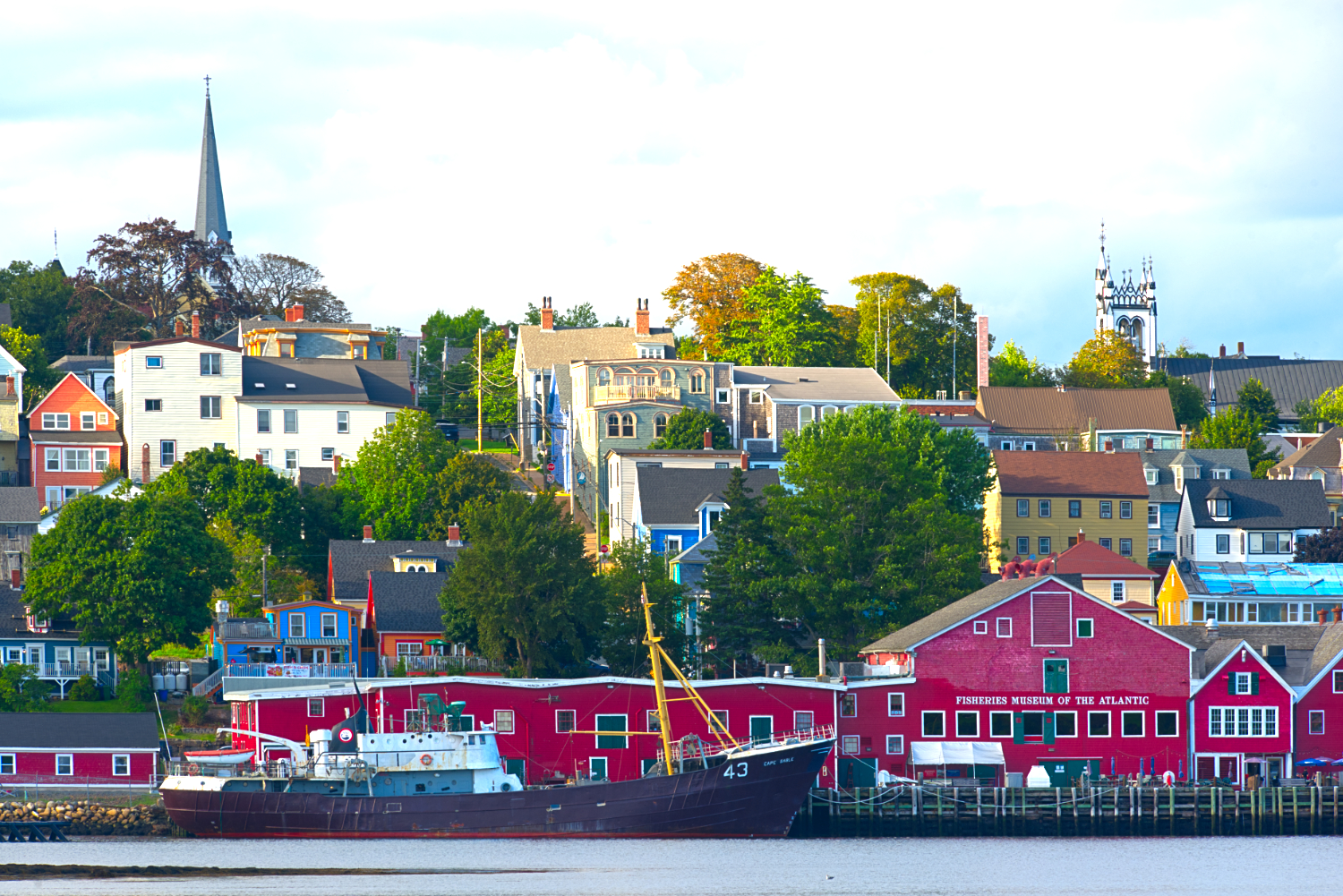
We think of Lunenburg as a ‘fishing town’, and for good reason. Founded in 1753 as an agricultural community, the inhabitants fairly quickly realized that the sea yielded far more than the soil. By the later nineteenth century, Lunenburg had grown into one of the busiest fishing ports in Canada.
What really struck me was the complex web of built things needed to support the fishing industry – a whole eco-system of structures, each of which functions like an organ within an organism that we call a ‘fishing town’.
Most obviously, perhaps, are the fishing boats themselves. It may seem odd to consider these as ‘architecture’, but given that men lived in them for weeks (or sometimes months) at a time, they have to be included as crucial parts of the built environment of the fishing industry.
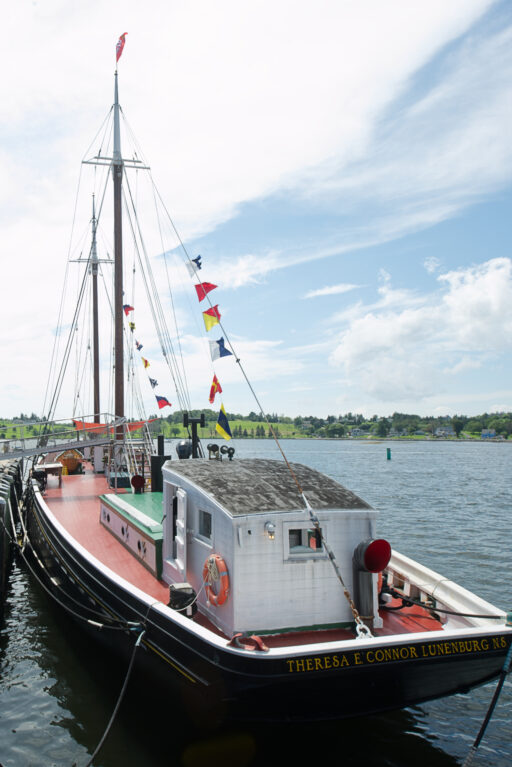
For generations, the most celebrated boat in the Lunenburg fleet was the schooner. This one, the Theresa E. Connor, was launched in 1938 and served until 1966. She could carry up to 425,000 pounds (193,000 kg) of fish.
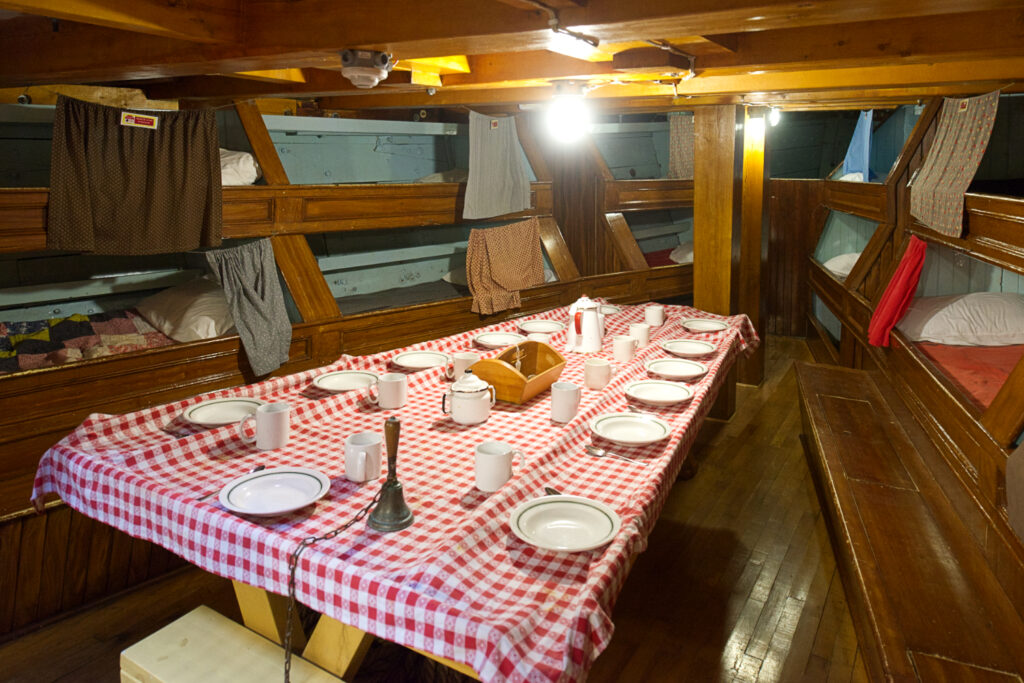
The schooner’s job was to bring fish back to market, but this was also where the crew of nearly 30 lived, ate, slept and entertained themselves for weeks at a time. Yes, those sleeping bunks look more like coffins than bedrooms to us. But for the crew, this floating warehouse was ‘home’.
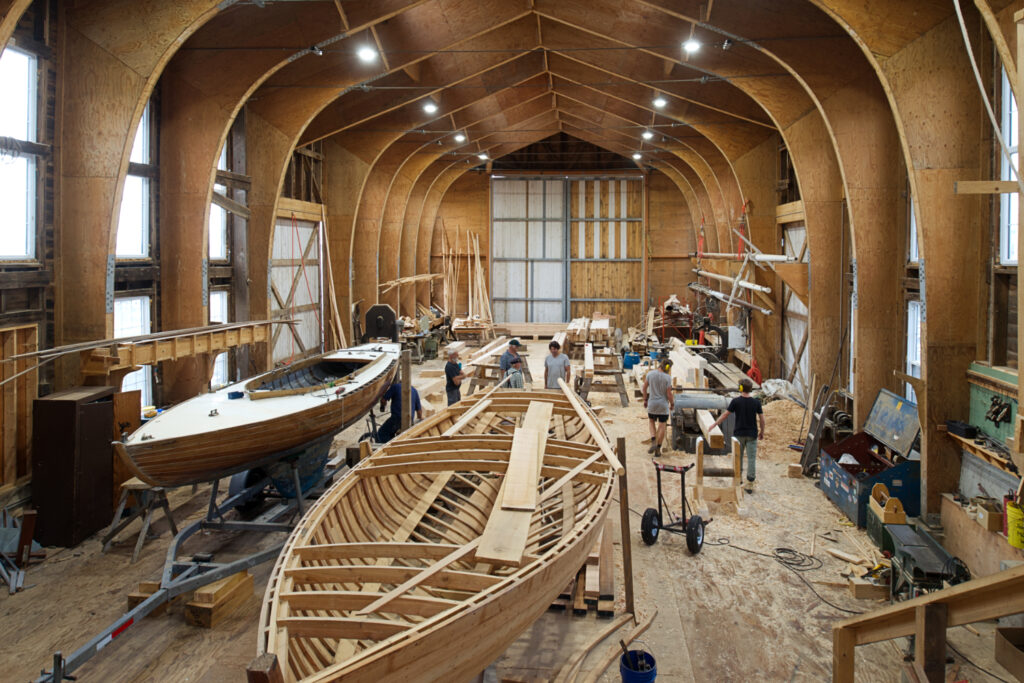
But to have schooners, you have to build schooners. The Teresa E. Connor was built in Lunenburg by Smith and Rhuland, also famous for building the Bluenose, Bluenose II, and the replica of the Bounty. Shipyard require boat sheds, and Smith and Rhuland’s was recently restored and enlarged by the Lunenburg Marine Museum Society.
The schooner was the most glamorous member of the shipping fleet, but the real work was done by the humble dory. In fact, you could argue that the schooner wasn’t even a fishing boat. It was the vessel that carried the real fishing boats – dories – to the fish, and brought the catch back into harbour. It was in dories that fishermen rowed out to lay the fishing lines, and then to haul the catch in and bring it to the schooner. It was an incredibly grueling and perilous occupation. The Teresa E. Connor carried twelve dories, stacked on deck like bowls on a shelf, in two piles of six.
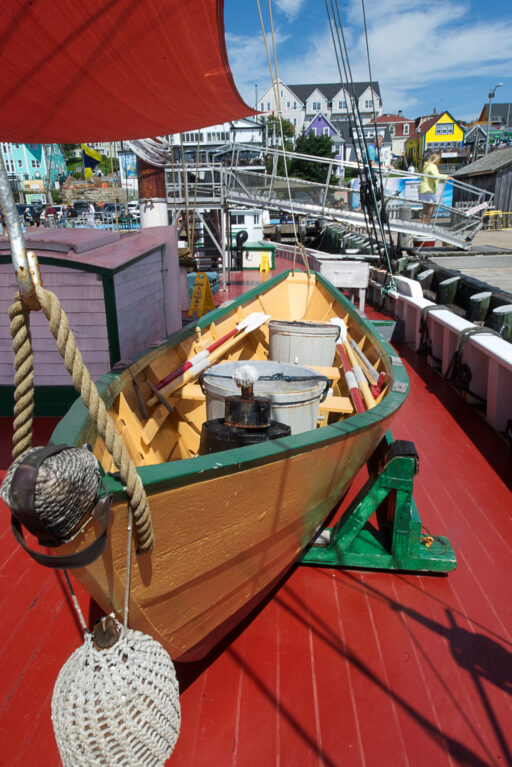
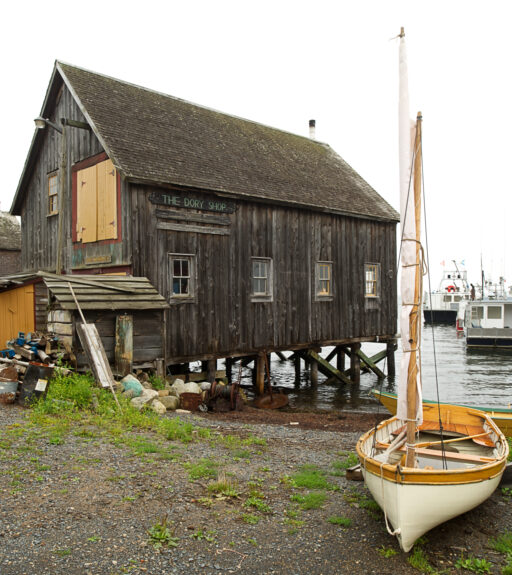
But dories have to be built too, so Lunenburg had buildings for that as well. This one was founded by Henry Rhuland in 1917, and is still used for its original purpose.
Once brought to harbour, the catch had to be processed and made ready for market. This required fish processing facilities, built right next to the harbour to make the transfer of the catch as easy and fast as possible. Lunenburg’s Fisheries Museum of the Atlantic is housed in a complex of buildings originally used for this purpose.
The fish plant needs to ship thing in and out, and so needs to have ready access to transportation infrastructure. The harbour was one crucial means of transportation, but in the later nineteenth century another hugely important one arose: the railway.
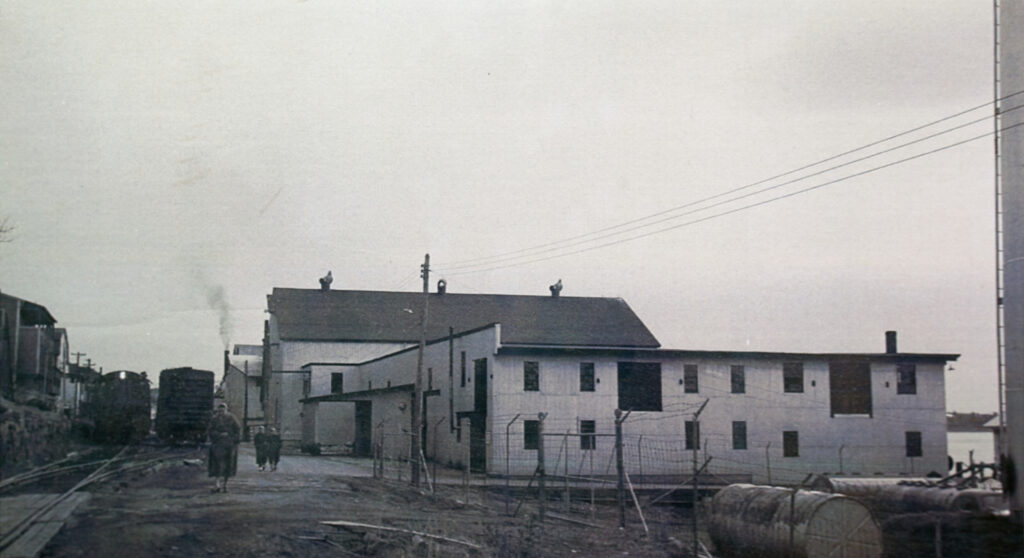
The railway is long gone from Lunenburg, but in this archival photo you can clearly see that the processing plant (now the Fisheries Museum) was sandwiched by the harbour on the right and the railway on the left.
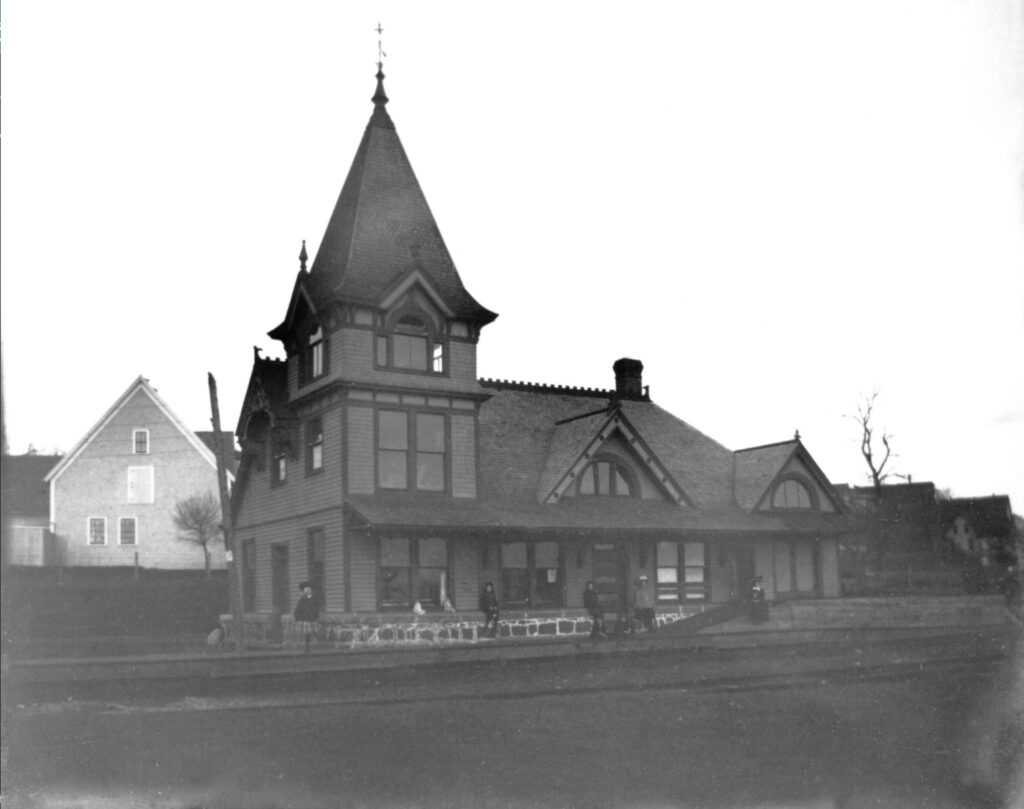
The railway, of course, brings its own infrastructure and architecture, including stations for passenger service. Here’s Lunenburg’s station, also long gone.
At the top of the social pyramid were those who benefited most from the thriving web of industries that fed the fishery. They lived in some of the houses for which Lunenburg is famous – and which formed part (but only part) of the reason why it received UNESCO World Heritage Site designation in 1995.
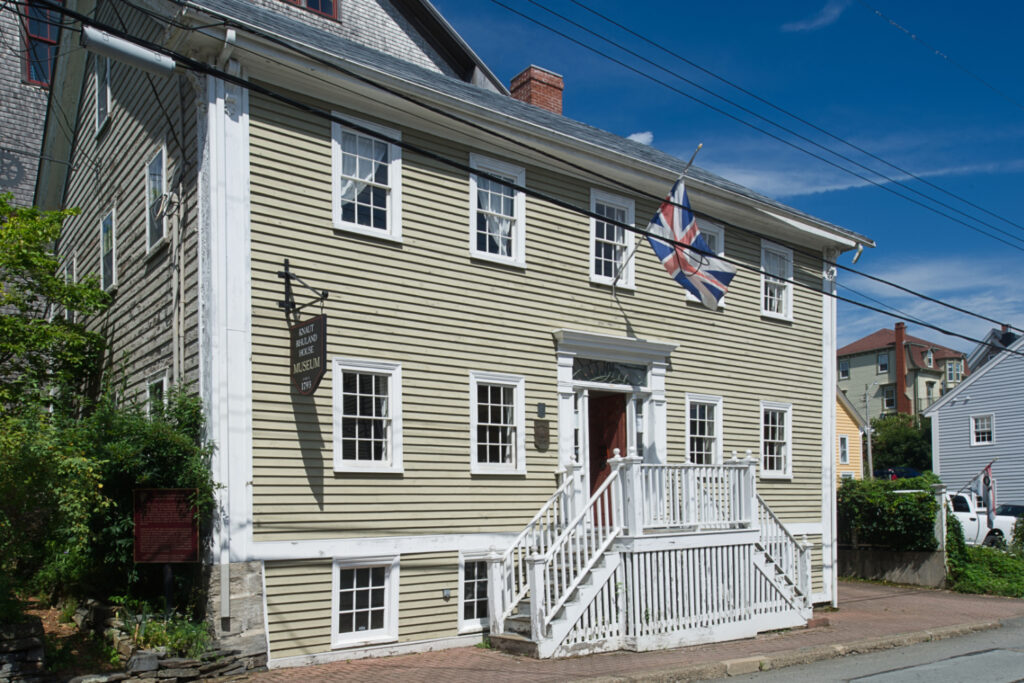
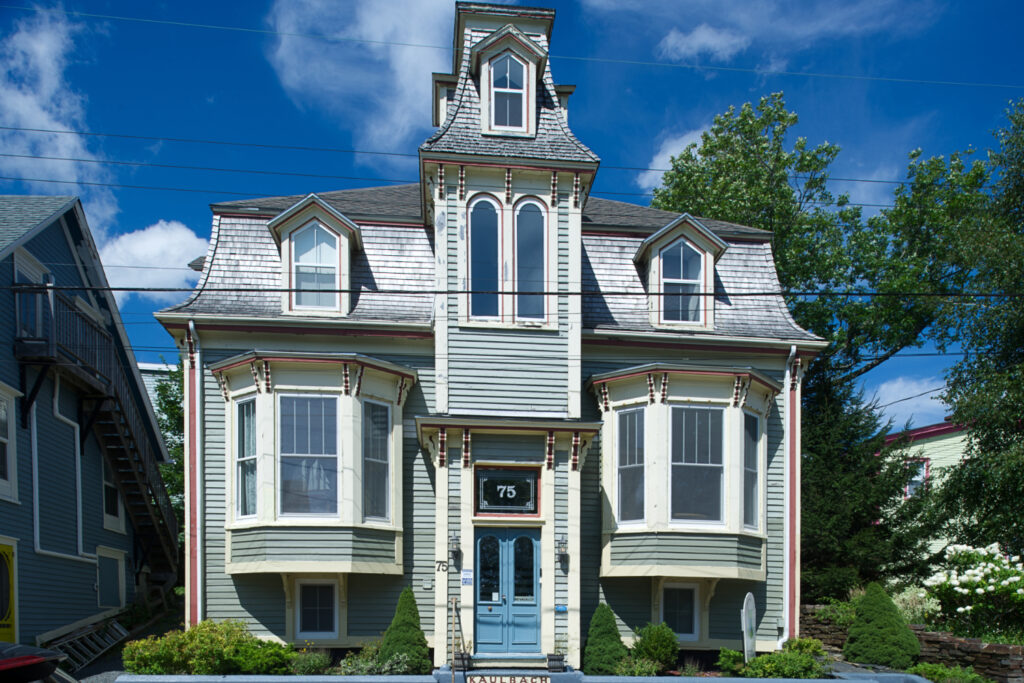
These buildings (and built things) are very different from one another, but like the foot bone and the thigh bone, they’re inextricably connected. None of them could exist without the others. When we study architectural history, we tend to isolate and analyze individual, iconic buildings. But architecture is a complex system, not a collection of independent objects. Looking under the hood of that system, and exploring its intricate interrelations, shows just how lively and dynamic our built environment is.
Peter Coffman
peter.coffman@carleton.ca
@petercoffman.bsky.social