Classicism without Soul
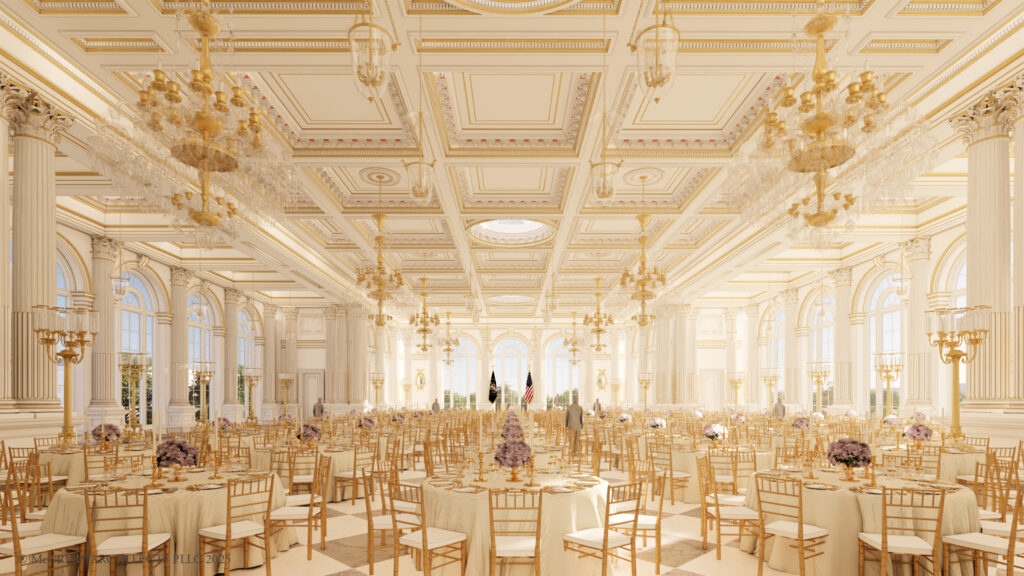
Good design requires expertise, creativity, discipline, and judgement. Donald Trump’s ballroom exhibits none of these qualities.
By Peter Coffman
A couple of weeks ago, a U.S. federal judge ordered that construction on Donald Trump’s controversial new White House ballroom be halted. This happened for legal, not aesthetic reasons – the judge ruled that the project required the approval of Congress. But it came as a huge relief to those who opposed the ballroom because they thought the design, frankly, sucked.
I agree that it sucks. But I think it’s important not just to say that it sucks, but analyze why it sucks. Because it’s not merely a matter of good or bad ‘taste’. Good design requires expertise, creativity, discipline, thoughtfulness, and judgement. This design exhibits the opposite of those qualities.
The ballroom, like the White House itself, is Classical in style. It’s an architectural language that we’ve inherited from Ancient Greece and Rome. Most people would recognize its most obvious features: columns, carved blocks on top of the columns (called capitals), shallow triangular roofs (called pediments), etc. Some people may know a few of the finer details: that the columns come in different types like Doric, Ionic or Corinthian (called ‘orders’), or that they’re linked by horizontal beams (known as ‘entablatures’).
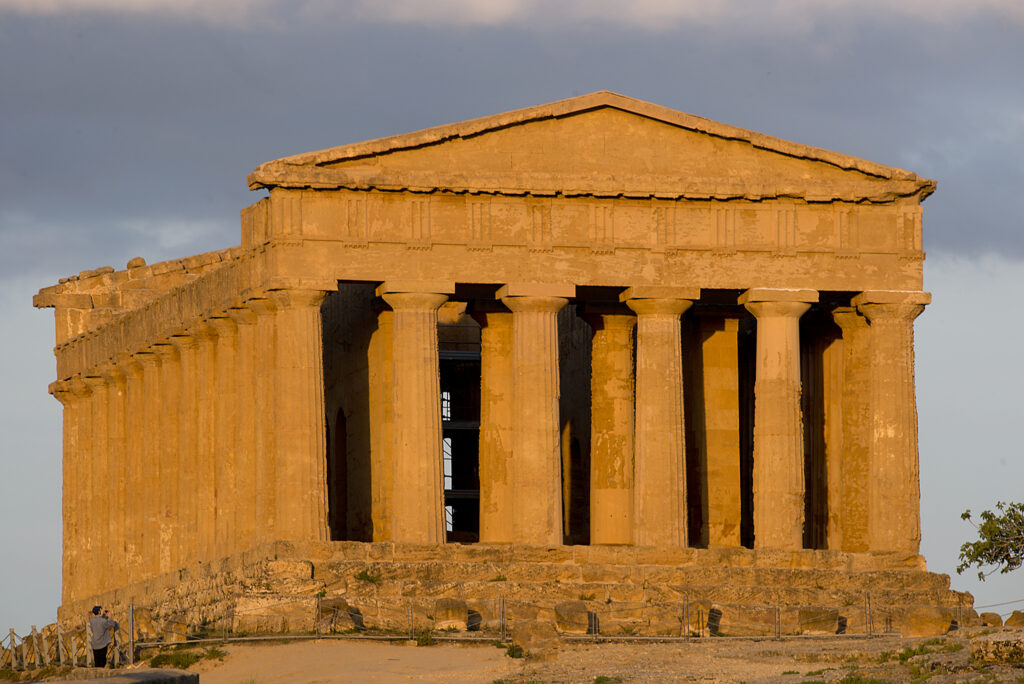
These features and many others give us the ‘body’ of Classicism, but the style also has a soul. That soul is animated by principles and values like moderation, balance, and harmony. Columns, capitals, and pediments have to be combined in carefully disciplined ways to create a harmonious whole. The point isn’t just to stick a pile of Classical features onto a box. It’s to create a demonstrably, intelligibly beautiful whole that will uplift those who experience it.
Trump’s ballroom mimics the body of Classicism, but it is clueless about the soul.
Why do I say that? Let’s start by looking at the façade. It is, in a word, huge. Deliberately huge. But huge is all it is. It has no subtlety, no nuance, no hint of understanding of the complex, sophisticated visual language that is Classical architecture.
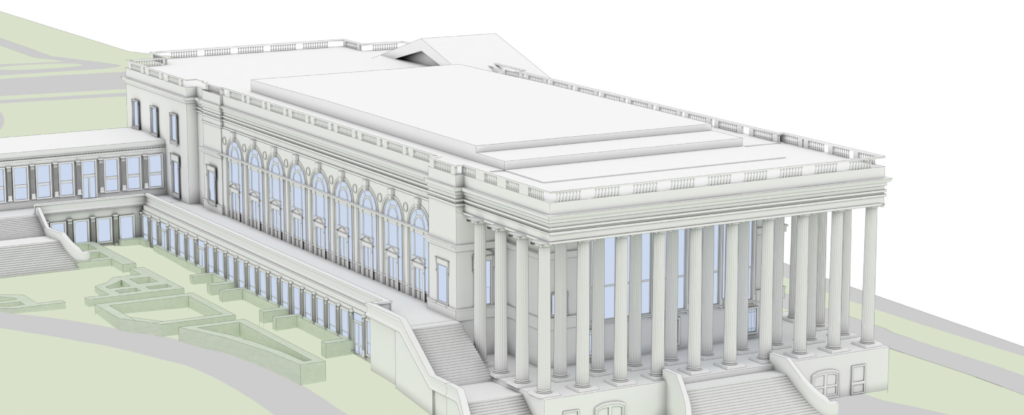
Ten columns sprawl across the façade. That number is significant, because it exceeds – maybe deliberately – the number found on even the biggest Classical temples.
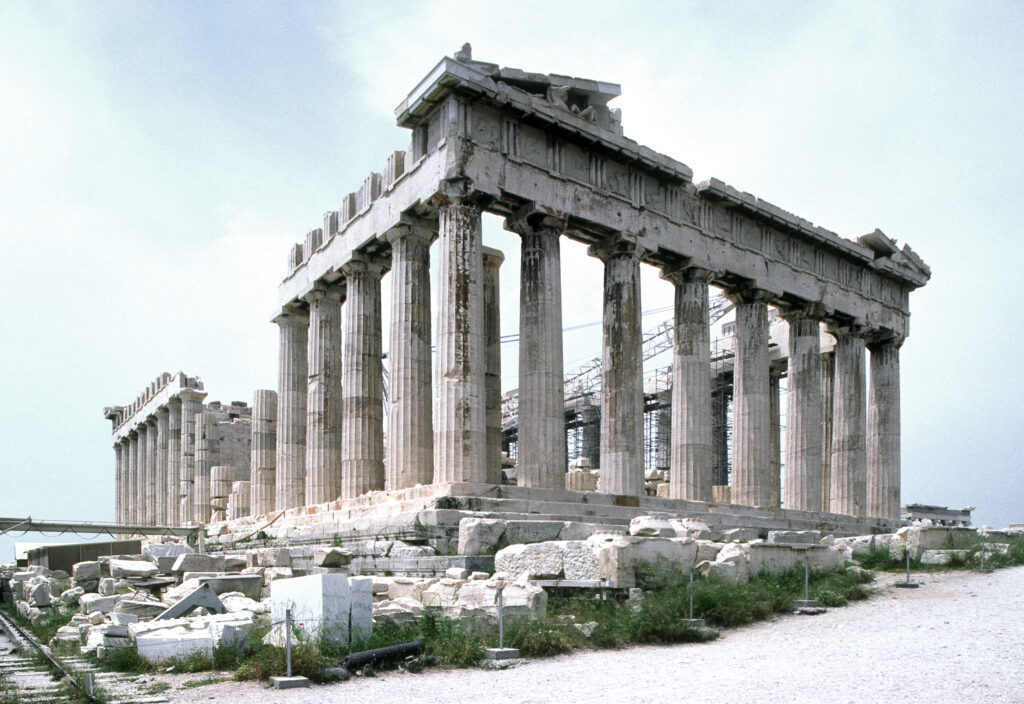
The now-ruined Temple of Zeus in Agrigento, Sicily, was one of the biggest Classical temples ever built. But even it reached for balance rather than excess. Its façade was seven columns wide; its length was 14 columns. In other words, a nice, harmonious proportion of 1:2.
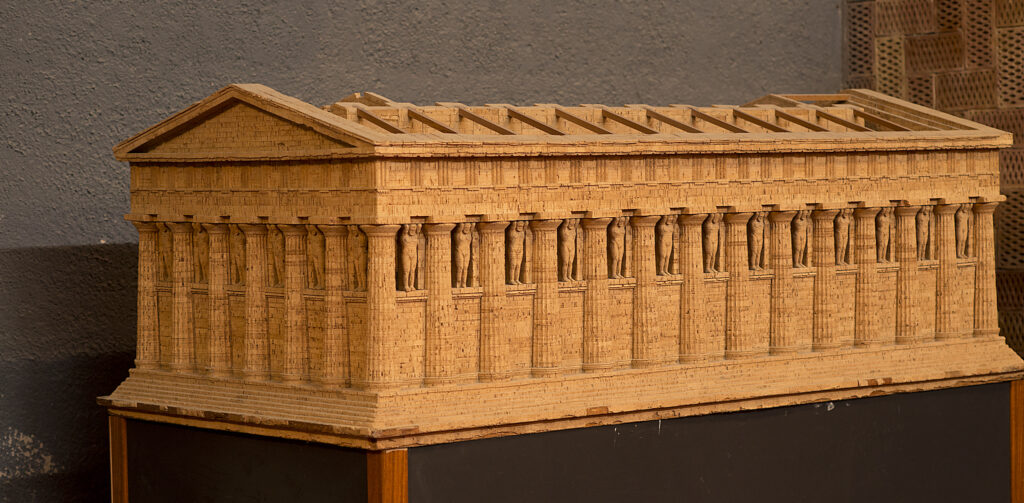
The Parthenon in Athens – probably the most iconic building in Classical history – really wanted to give an impression of strength and grandeur. So, its façade was eight columns wide, and its length was not sixteen, but seventeen columns. A ratio of 1:2+1. It conveys large scale not by blowing everything else out of the water, not by bombarding our senses with excess, but by adding one unit to what we would normally expect to see. It succeeds in communicating grandeur, but never loses the delicious sense of self-discipline, of restraint, of controlled power that is so fundamental a hallmark of Classicism.
How does the façade of Trump’s ballroom relate to its length? Don’t know. Can’t tell. The grand entrance portico is in front of a wall with no entrance. The front of the building has no coherent, intelligible relationship at all the sides. Those sides are a confused jumble of windows and wall spaces that don’t even have a coherent relationship to one another. Have a look at this illustration that was reproduced recently in the New York Times:
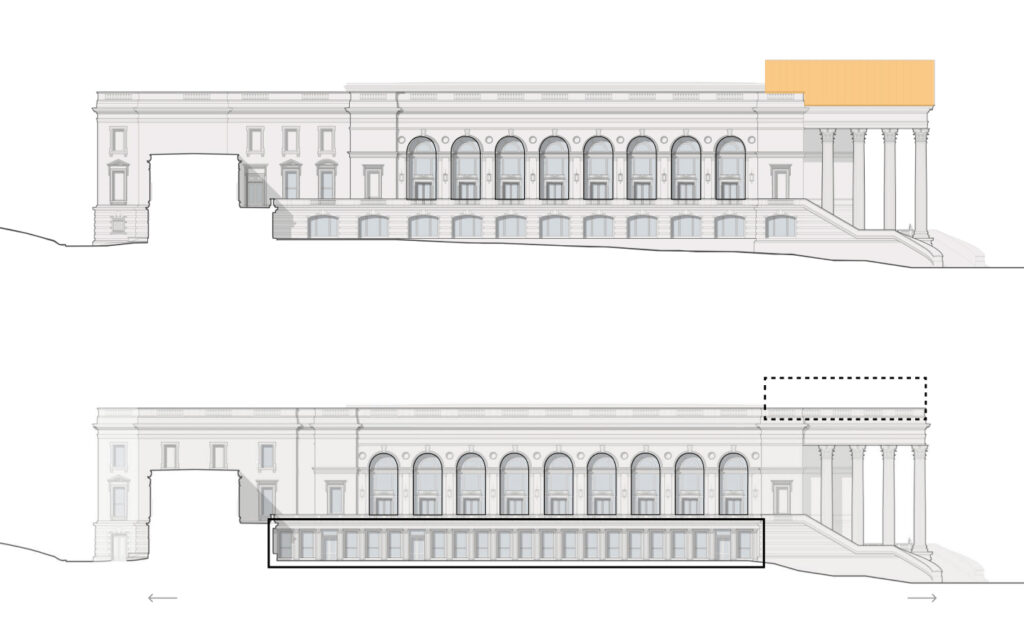
The design above is from January of this year, the design below from February. Remarkably, it gets worse with each revision. The main story windows no longer align with – or bear any relationship to – the lower story windows. A pediment (shown in yellow) has inexplicably disappeared. The façade, the side wall, and the upper and lower stories are all bolted together like Frankenstein’s monster, with no sense that they were conceived as parts of the same building. The number of round-headed windows has inexplicably increased from eight to nine. This alone is a huge red flag. Classical harmony depends on the interaction of every part with every other. It’s like a Rubik’s Cube; you can’t change one thing without having to change a bunch of other things too. Sir Edwin Lutyens, one of the last great English Neo-Classical architects, explained it well:
“You alter one feature, then every other feature has to sympathise and underdo some care and invention. Therefore it is no mean game, nor is it a game you can play lightheartedly.”
If you play this game lightheartedly – if you take the careful striving for harmony away from a Classical design – what are you left with? Ornament without substance. A shiny surface with no depth. A derivative bauble. Monumental, gold-plated bling. Lipstick on a pig.
The ballroom is Classical architecture at its worst. It’s no longer striving for beauty and harmony. It’s merely seeking to impress, to overawe. It wants to put us in our place, not uplift us. It’s an empty imitation of greatness.
This is precisely the danger that architectural historian Pierre du Prey, an internationally renowned expert on Classical architecture, warned against in a podcast I did with him for my first-year introductory survey course:
“A lot of people have tapped into the orders of architecture on a very superficial level, and the orders of architecture for them become a rather superficial or hollow symbol of authority.”
Pierre goes on to say:
“Architecture can be distorted in this way. There have been instances in which the trappings are purely and simply that: they’re nothing more than trappings. They’re empty symbols, without the underlying belief in the importance of this to elevate our spirits without subjugating us in some way. That’s when it becomes a little bit dangerous.”
(I encourage you to listen to the whole podcast here.)
Pierre made that comment years before the White House ballroom was even an idea, but his words are prophetic. What he describes is exactly what we see – and all we see – at Trump’s ballroom: trappings, empty symbols, superficial and hollow symbols of authority. That’s hardly a surprise. It’s what happens when an architecture that aspires to moderation, balance, restraint, and harmony is used and abused by an administration that has utter contempt for all those qualities.
Peter Coffman, History & Theory of Architecture program
peter.coffman@carleton.ca
@petercoffman.bsky.social