From Aircraft Maintenance to New Horizons: Finding Community and Opportunity at Carleton
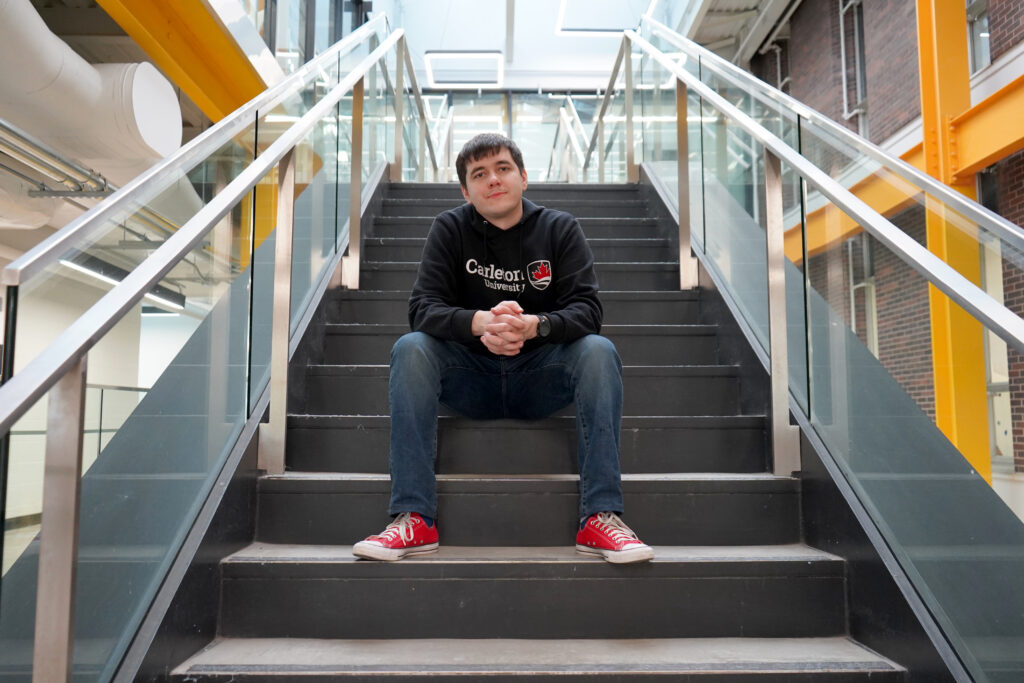
When Nikita Patkin arrived at Carleton University in Fall 2025, he brought with him years of experience working on aircraft — and a desire to move beyond maintaining complex machines to designing them. Now a student in the Mechanical stream of Carleton’s Master of Engineering Practice (EP) program, Nikita is building new technical skills while embracing student life in residence, forming friendships across cultures, and discovering what it means to be part of a campus community. We sat down with Nikita to talk about his journey to Canada, his experience in EP, and how living on campus has shaped his time at Carleton so far.
You come from a family with a strong engineering background. How did that influence your path?
I was born in Samara, Russia – a city where one of the main symbols is a rocket that launched the first cosmonaut into space, so engineering was always part of the environment around me. My grandfather was a mechanical engineer, and my father founded his own car maintenance business. Growing up, I spent time helping him repair engines, which sparked my interest early on. I knew I wanted to continue that legacy — but I was drawn to aircraft because they represent some of the most complex and powerful machines in the world.
After completing your aerospace degree, you worked as an aircraft maintenance engineer. What was that experience like?
It was a very important period in my life. The work requires precision and responsibility, because safety always comes first. You also learn to work closely with a team to diagnose and solve problems, often under time pressure and in difficult conditions. That experience taught me how engineering decisions directly affect real people. It also made me curious about the design side — not just how to fix systems, but how they are created in the first place.
What motivated you to pursue further studies abroad?
While working in maintenance, I realized I wanted to contribute at an earlier stage — to help design new technologies. I’ve always been fascinated by aircraft engines, and I wanted to deepen my understanding of the mechanical principles behind them. To do that, I knew I needed to expand my knowledge and gain new skills that would allow me to move into a design-focused role.
Why did you choose Canada for that next step?
Canada stood out because of its strong aerospace sector and its connection between universities and industry. For example, some of the aircraft I worked on used Pratt & Whitney engines developed in Canada. Canadian education is also recognized worldwide, and graduates are known for having both technical knowledge and practical skills. It felt like the right place to grow professionally.
What led you to Carleton and the Engineering Practice program specifically?
As an experienced engineer, I was looking for a program that would help me transition into mechanical and design engineering while enhancing my knowledge. Carleton stood out for its balance between fundamental theory and practical application, and Engineering Practice specifically emphasizes professional skills like communication, professional ethics, and project management. Since I knew Carleton had a strong engineering culture and international reputation, it felt like the right place to prepare for the next stage of my career.
You’re now in your second term. What has it been like adjusting to student life in Canada?
At first, it was quite a change. The academic system is different, and everything was new. But over time, I found my rhythm. The library became one of my favourite places to study, and I also discovered the tunnel system, which makes getting around campus much easier during the winter. Now I feel much more comfortable and confident navigating both campus and day-to-day student life.
You chose to live in residence at Leeds House. Why was that important to you?
For me, university is not only about studying — it’s also about building connections. Living in residence gives you the opportunity to meet people from different countries, cultures, and academic backgrounds. These relationships help you grow in ways that go beyond the classroom.
What has stood out most about living in residence?
The sense of community. I’ve made friends, joined activities, and shared experiences with people I wouldn’t have met otherwise. In residence, everyday spaces become places where you can engage with others.
You’ve mentioned the dining hall as a place where connections begin. How so?
When you sit down to eat, you often meet new people outside your usual social circle. Sometimes they introduce you to Canadian food, or you learn something new from them. One student helped me discover the correct proportion of gravy for poutine and even taught me a few French words, which inspired me to start learning French myself, as it is an important part of Canadian culture. These small interactions help you feel like part of the community.
You also share your residence space with a PhD student in linguistics. What has that been like?
It’s been a great cultural exchange. We help each other with language learning — he teaches me colloquial English, and I help him with Russian. We’ve even found similarities between idioms in different languages. It’s amazing how living together can connect people from completely different backgrounds.
How have activities outside the classroom helped you adjust to life in Ottawa?
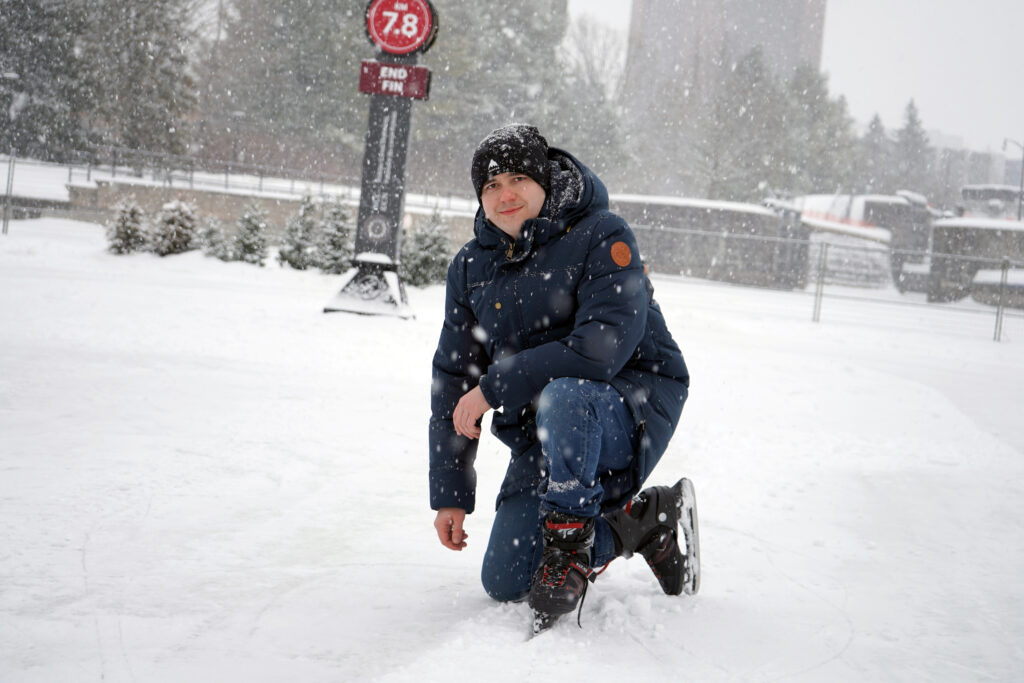
They’ve made a big difference. For example, I went skating on the Rideau Canal with friends from residence. It was my first time skating on a natural canal, and they helped me figure out everything — where to get skates, how to prepare, and what to expect. Experiences like that make you feel more at home.

How has being immersed in campus life helped you grow professionally?
Being on campus gives you access to career fairs, networking events, and conversations with other students and professors. Through these experiences, you learn about new opportunities, exchange ideas, and build relationships that can help shape your future. These connections are incredibly valuable, because you never know when a conversation today might lead to an opportunity tomorrow.
Looking ahead, how do you hope to use what you’re learning in Engineering Practice?
An engineer is someone who can solve complex problems, and that requires a strong foundation across many areas, including mechanics, mathematics, and project management. Engineering Practice is helping me strengthen that foundation while also developing the professional skills needed in the real world. It’s preparing me to move into design engineering and contribute more directly to the development of new technologies.
Finally, what advice would you give to future international students coming to Carleton?
University is one of the most exciting periods in your life, and my strongest recommendation is to be bold and take advantage of every opportunity. Don’t hesitate to participate in activities, meet new people, and try new experiences. For me, Engineering Practice and living on campus have helped me grow both professionally and personally. In many ways, it has made me feel 10 years younger and reminded me why I chose engineering in the first place. Focus on your goals — but also enjoy the journey.