From Classroom to Construction Site: An Engineering Practicum Journey
By Adam Landry
When Parth Chauhan arrived in Ottawa to begin the Master of Engineering Practice (EP) program at Carleton University, he was driven by a clear vision – to build the skills and experience needed to launch a career in Canada’s engineering sector. What he didn’t anticipate was how quickly that goal would connect him with one of the capital’s most complex and high-profile infrastructure projects in its history.
Today, Parth is a Building Systems intern with PCL Construction, working on Ottawa’s Light Rail Transit (LRT) project. The role puts him directly inside an active construction environment, where engineering decisions have immediate, tangible impact — exactly the kind of real-world experience he had hoped to gain when he chose the EP program.

Parth’s path began in India, where he completed a bachelor’s degree in mechanical engineering. From early on, he was drawn to understanding how machines function and, more broadly, how multiple systems come together within large-scale projects. When it came time to pursue graduate studies, Ottawa emerged as a natural next step, with his sister already living in the city. But just as important were the professional opportunities within the capital — a strong engineering ecosystem with close ties to government, research institutions and industry.
As he explored his options, Carleton’s EP program stood out for its focus on helping students transition into professional engineering roles.
“The EP team was very responsive and supportive from the beginning,” says Parth. “That gave me confidence that I could make the transition academically and into the Canadian engineering workplace.”
He enrolled in the mechanical engineering stream, which aligned with both his academic background and a growing interest in the construction industry. As the program unfolded, Parth found that its blend of advanced engineering coursework, professional skill development and workplace-focused learning helped bridge the gap between what he had learned previously and what would be expected of him in real-world industry.
“Academically, it’s been a really enriching experience,” he says. “The courses helped prepare me for the work I’m doing now.”
Through coursework in data analytics, Parth strengthened his ability to interpret and work with complex information, while his applied fluid mechanics course reinforced technical concepts directly relevant to building systems.
At the same time, the program helped him build confidence — something that proved just as critical as technical knowledge once he entered a live construction environment.
Turning Persistence into Opportunity
EP’s practicum pathway was introduced in Fall 2025 — giving students the opportunity to gain paid, full-time work in their engineering field while earning academic credit. Integrated directly into the program’s curriculum, the pathway allows students to apply classroom learning in real workplace settings, build career-ready skills and expand their professional networks.
Parth began searching for a practicum opportunity shortly after arriving in Canada, but the process required patience. Nearly a year passed before he found the right fit.
“There were moments I doubted myself,” he admits. “But persistence kept me going.”
Rather than casting a wide net, he narrowed his focus to construction-related roles he was genuinely interested in, refining his resumé, tailoring each cover letter and treating every application as part of the learning process.
Parth’s persistence paid off when he applied to PCL Construction. After completing a multi-stage hiring process that included a recorded interview and a formal interview, he was offered a practicum placement in the company’s Building Systems department.
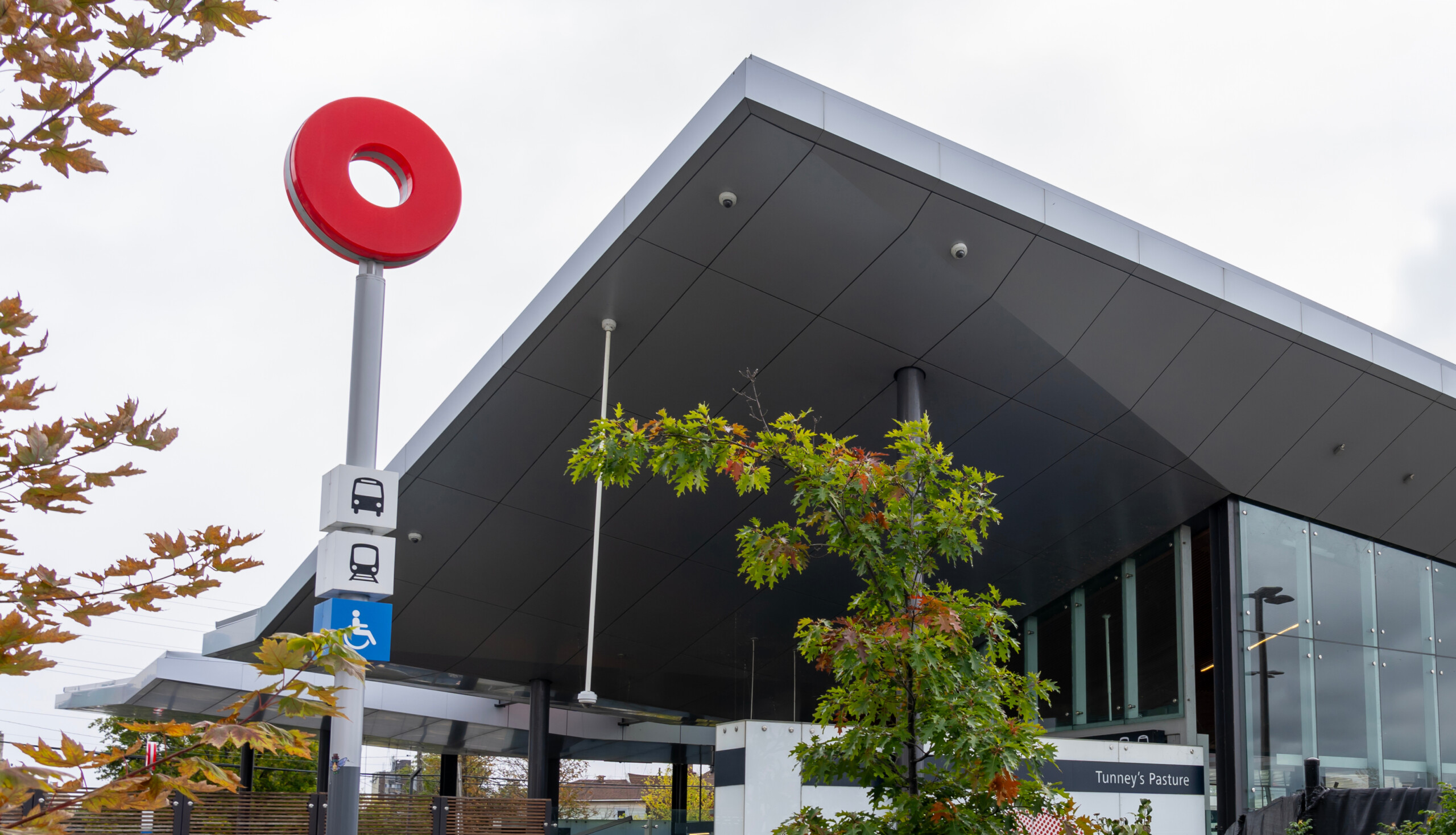
Now embedded on Ottawa’s LRT project, Parth supports teams working on stations currently under construction. His work spans documentation, site visits and system testing — all focused on ensuring building systems operate safely and efficiently.
“What I enjoy most is being close to the project,” he says. “You see things happening in real time and watching the site change every day is incredibly motivating.”
His impact was quickly noticed, as PCL extended Parth’s practicum by an additional four months, allowing him to take on greater responsibility and deepen his involvement in building systems coordination. As his team wraps up work on Ottawa’s LRT project, he is preparing to contribute to the construction of what will become the tallest residential building in the capital — a new challenge that reflects both the scale of the projects he is involved in and the confidence placed in him.
Building Toward What’s Next
The experience has helped clarify Parth’s long-term direction. He hopes to continue working in the construction industry and contribute to a range of large-scale projects as his career develops.
“This work term has been a great starting point,” he says. “I’m doing work I enjoy and it’s helping me build the foundation for the career I want.”
Beginning in Fall 2026, the EP’s practicum pathway will transition to a co-op education option, continuing to build on the same foundation of hands-on, industry-embedded learning.
For future EP students, his advice is practical and direct: be intentional, stay adaptable and don’t lose momentum when the process feels slow.
“Strong applications matter and preparation matters,” he explains. “And persistence matters most of all. If you keep pushing forward and focus on opportunities you’re genuinely interested in, the right one will come.”
From his early studies in mechanical engineering in India to contributing on one of Ottawa’s most ambitious infrastructure projects, Parth’s journey reflects the kind of growth the EP program is designed to support — not just developing capable engineers, but helping students step confidently into professional roles. For Parth, that path is already taking shape, one project at a time.