Triumphal Arches of the Mighty and Modest
Everyone knows that Donald Trump wants to build a triumphal arch. Not so many realize that a Canadian prime minister beat him to it by almost a century.
By Peter Coffman
People are talking about Donald Trump’s Triumphal arch again. I can see why. It’s a shockingly overwrought monument. What kind of person builds such a bombastic tribute to himself?
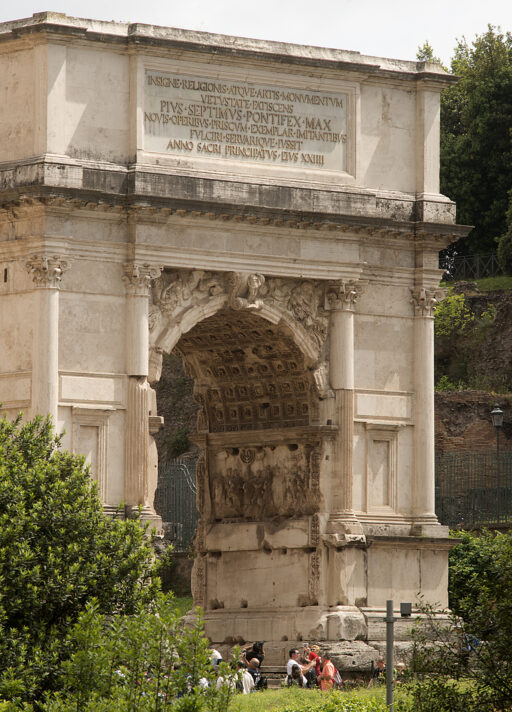
Trump, of course, wants to join a millennia-long list of overlords who have erected triumphal arches. That list includes emperors like Titus, Constantine, Charlemagne, and Napoleon. Surprisingly, it also includes a Canadian prime minister, William Lyon Mackenzie King.
Wait – does this make King and Trump kindred spirits, fellow-plunderers of built history in search of self-aggrandizing baubles? Not so fast. King had a very substantial opinion of himself, but he was no proto-Trump. And nothing shows that more clearly than their respective triumphal arches.
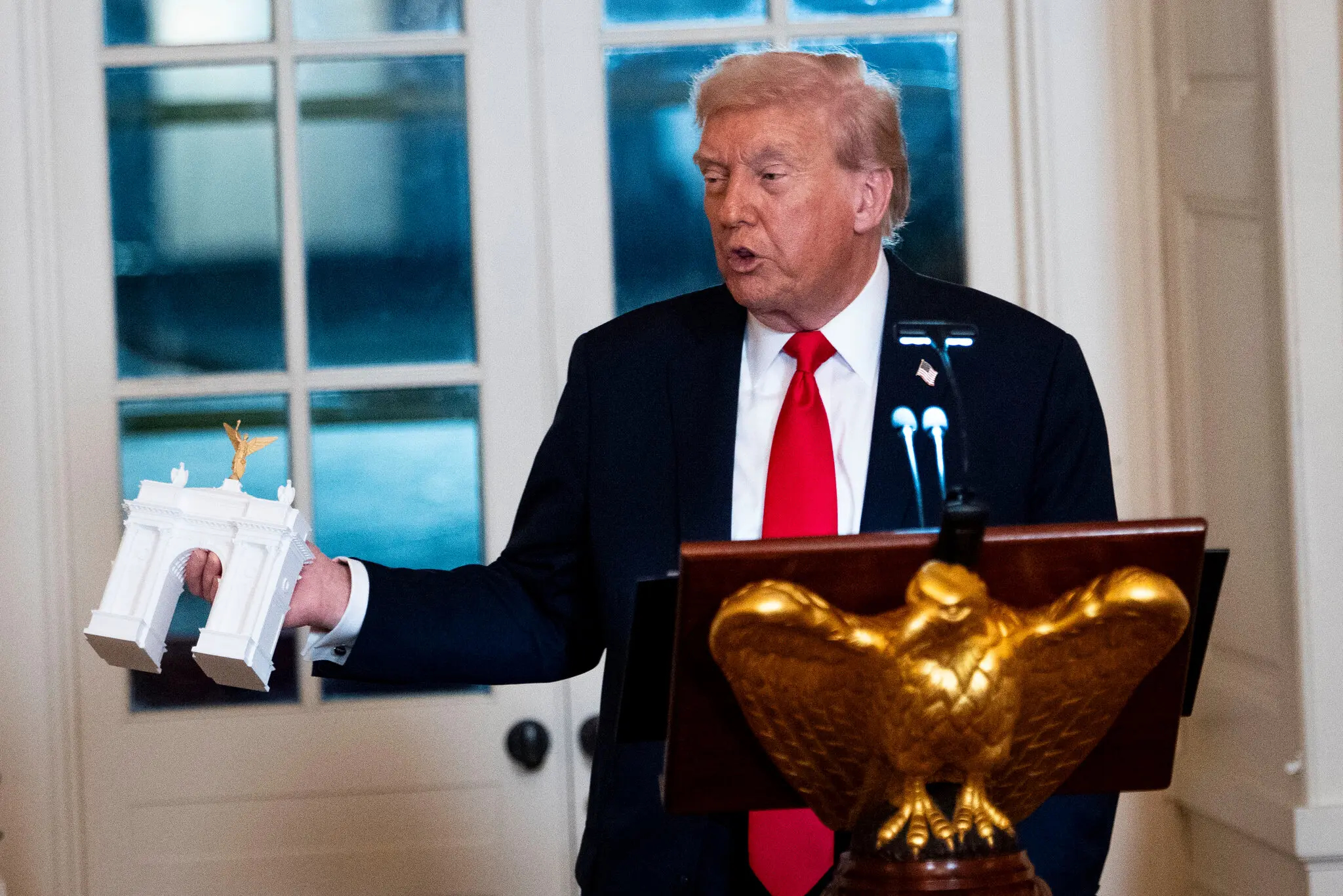
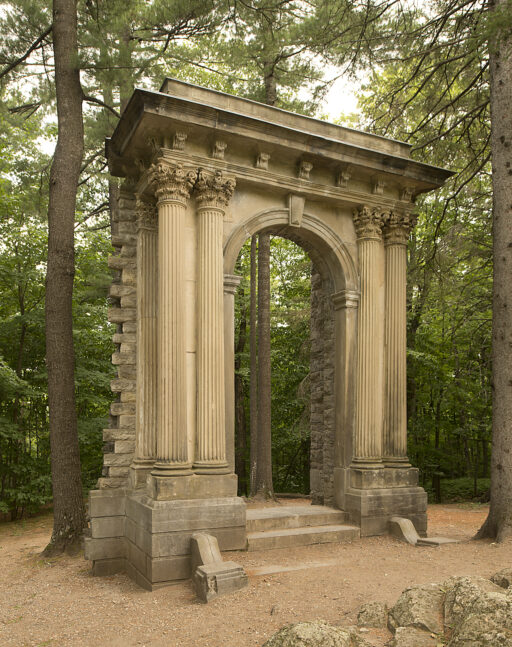
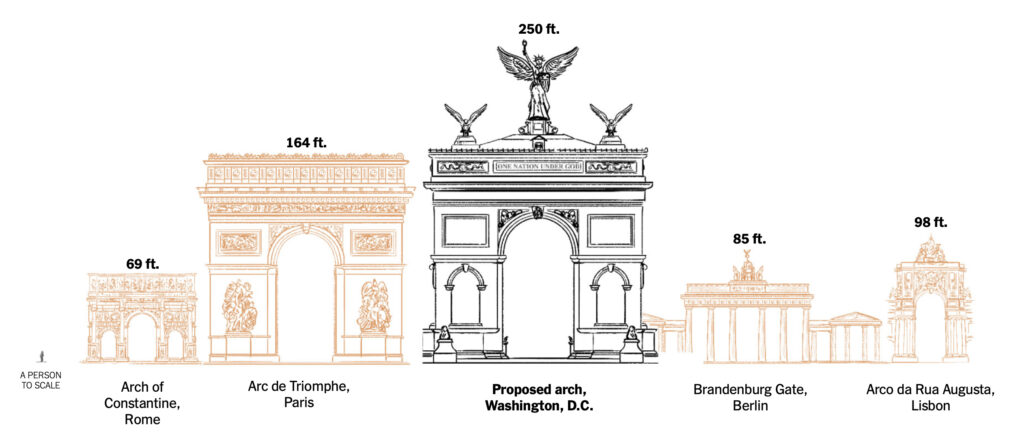
Trump’s arch is a huge, florid public monument, intended to dominate one of the most important public places in Washington DC. King’s arch is a small, private monument on his country estate known as Kingsmere, around twenty kilometres from Parliament Hill.
Although the triumphal arch has a lineage that goes back to the emperors of ancient Rome, both Trump’s and King’s arches were more directly inspired by Paris’s Arc de Triomphe, which Napoleon had begun in 1806 to celebrate his victory at the Battle of Austerlitz.
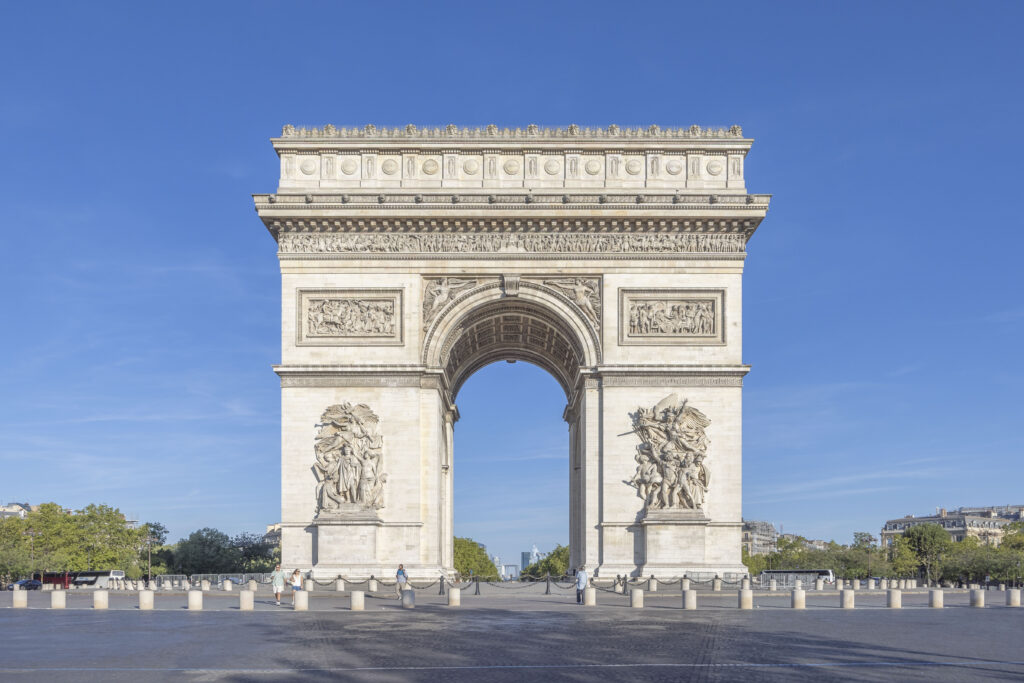
But the two men’s responses to that prototype show just how much the inspiration and aspirations of their two arches diverge. Here are Trump’s thoughts on Paris’s Arc de Triomphe:
“The one that people know mostly is the Arc de Triomphe in Paris, France, and we’re going to top it by, I think, a lot. The only thing they have is history.”
And here are King’s thoughts upon visiting the Arc in 1934:
“As I stood there [at the Arc] I prayed earnestly to God to help me to triumph over all my faults and limitations till come to the light eternal – I prayed for power to help my own country – to help France & Europe & the British Empire, power to help mankind & to save it from further wars, power to help my fellow-men.”
These are two very obviously different reactions from two very different men. King and Trump look at history very differently. King saw the past as something that set a standard to which he should aspire, as a source of inspiration that he must strive to live up to. Trump sees the past as something to vanquish, something that he must demonstrably surpass, even if only in the most crass quantifiable terms. One of the challenges of studying history is our tendency to look to the past and merely see our own reflections. King’s and Trump’s arches illustrate that with particular clarity.
It follows from this that the two arches are materially very different. Trump’s is, first and last, big and shiny (i.e. lots of gold). It’s pretty obviously derivative, but the upside of this is that it’s much less historically illiterate than his ballroom (see my thoughts on that here). That said, Vitruvius would spit blood at the scale of the golden statues – Classicism values good proportions above all else. The only ‘proportion’ of interest to Trump is how much bigger his arch is than its historical predecessors. Nothing else matters.
By this measure, King’s arch at Kingsmere fails miserably. It’s a tiny fraction of the size of Napoleon’s and Trump’s. It’s not even a purpose-built monument – it’s a recycled doorway from the Bank of British North America in downtown Ottawa, which had been demolished the previous spring. Trump would undoubtedly laugh at King’s arch if he saw it, and ridicule it as ‘weak’ (the ultimate Trumpian insult). But it does exactly what King needed it to do: it provides an unexpected moment of beauty, a place for the imagination to come out to play, and a gentle reminder that the greatest power of material objects is their ability to transport us from the material world. He finished it on July 1st, 1936, and showed it off to his friends for the first time at a party three days later:
“When I saw them in front of the arch I was in raptures – the beauty of the figures in their light garments about the stone was like a Roman or a Grecian tableau. Sir George [Perley] was visibly dumbfounded with the beauty of the Arc de Triomphe.”
It’s easy to imagine King’s arch surrounded by nymphs, dryads and spirit creatures. Trump wants his arch to be surrounded by snipers and drones. Different folks, different strokes.
What can we make of these very different triumphal arch projects? Well, the two men were obviously very different personalities. King was an introvert, who abhorred public displays of ostentation and wealth. He also had a rich (if strange) inner life, and was on a constant quest to find meaning in his life. His arch was a modest monument on private property, intended to regenerate the spirit and take the imagination to places it might otherwise never go. Trump is a narcissistic extrovert; his arch is all about ostentation and wealth, and nothing more. He shows no signs of having an inner life at all; his acts seem calculated not to nurture his soul, but to diminish others. To him, modesty is not the hallmark of the gentleman – it’s a fatal flaw of the weak.
Dare we take one step further, and assert that these arches and their patrons tell us something about not just the patrons, but about the countries that elected them? Maybe. It’s not impossible to imagine an American president (other than the present one) building something like King’s arch for their private pleasure. But it would be inconceivable for a Canadian Prime Minister to build anything like Trump’s arch. If you want proof of that, just compare the current controversy around 24 Sussex Drive with the controversy around the White House (maybe I’ll go down that rabbit hole in a future blog).
Both arches (should Trump’s be built) will, I suppose, be ‘triumphs’ in that they will succeed in achieving their goals. King’s is a Triumph of the Spirit. Trump’s would be a Triumph of the Will – his will – and yes, that too is a historical allusion.
Peter Coffman, History & Theory of Architecture program
peter.coffman@carleton.ca
@petercoffman.bsky.social
For a deeper dive into Mackenzie King’s arch and his other ruins at Kingsmere, you can watch the virtual public lecture I gave on the topic to Heritage Ottawa at this link.