Intel iPDS-100
Intel iPDS-100
[Vin102]

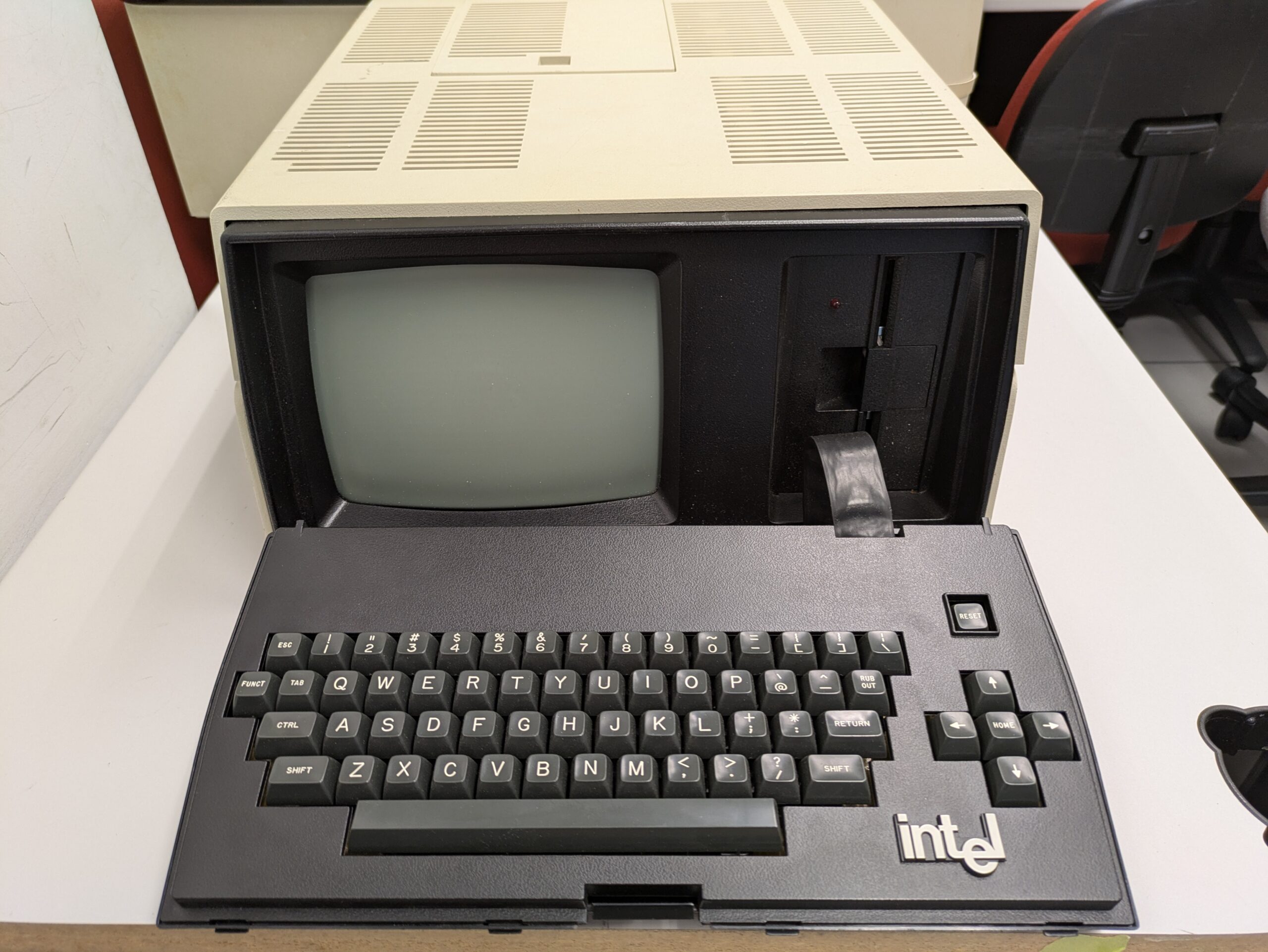
The Intel iPDS-100, introduced in the early 1980s, was a pioneering portable personal development system designed primarily for 8-bit microprocessor and microcontroller software and hardware development. Its most notable features included dual 8085 CPUs capable of running two programs concurrently on a split-screen display, integrated EPROM programming capabilities, and support for hardware emulation of processors like the 8051 and 8085. The iPDS-100’s flexibility as a multi-purpose development computer allowed simultaneous use of editors, assemblers, and compilers, which was advanced for its time.
Its claim to fame in computing history lies in being one of the first truly portable integrated development systems, combining software development tools and hardware emulation in a single unit. This made it important for engineers and developers working on early microprocessor systems before personal computers became ubiquitous. While it had some reliability issues with OEM components and was eventually overshadowed by IBM PCs for development systems, it remains a notable example of early “luggable” computers with advanced development features. The iPDS-100 was a specialized, moderately popular system primarily used within industrial and engineering environments rather than mass consumer markets.
- Manufacturer: Intel Corporation
- Type: Luggable (portable) computer
- Release Date: 1982
- Cost at release: USD $4,500 (CAD ~$16,000 adjusted for inflation)
- MIPS: 0.3 (300 KIPS)
Hardware Specifications
- CPU: Dual Intel 8085
- Display: Split-screen CRT display allowing concurrent running of two programs
- Memory: Included support for EPROM programming and optional bubble memory boards
- Peripherals: Configurable with emulator pods and additional development hardware
- Weight: Approximately ~23 kg (50.7 pounds)
Operating System & Programming Languages
Operating System: Intel’s ISIS (Intel System Implementation Supervisor) operating system and also supported the widely used CP/M-80 operating system.
Supported Languages: It was designed primarily as a development system for Intel microprocessors, and as such, it supported programming languages and tools tailored for that purpose, including assemblers and compilers for the 8085, 8088, and 8051 microprocessors. Developers could write code in assembly language for these processors, and higher-level languages such as PL/M and possibly C were used in conjunction with the system for efficient programming.
Notables
- The Intel iPDS-100 holds a unique place in computing history as one of the industry’s first truly portable personal development systems for 8-bit microprocessors, debuting in 1982
- It featured dual Intel 8085 CPUs which could run two programs simultaneously on a split-screen CRT—a rare capability at the time.
- Its nickname, “PDS” standing informally for “Pretty Darn Slick,” reflects its reputation for compact yet advanced design, combining EPROM programming, microprocessor emulation, and dual-processing all in one “luggable” unit.
- Its place in history is as a pioneering portable development platform that predated the dominance of IBM PCs for such tasks.
- In summary, the iPDS-100 was a remarkable, multi-functional development system with innovative dual-CPU split-screen operation, early adoption of bubble memory, and strong development tool integration—earning it a notable if niche place in vintage computing history.
Donated by: Arlen Michaels