IBM PS/2
The IBM PS/2, introduced in 1987, was a pivotal yet paradoxical system in computing history: technologically advanced but commercially constrained designed to reclaim IBM’s dominance by introducing proprietary Micro Channel Architecture (MCA) and establishing new hardware standards.
[Vin110]

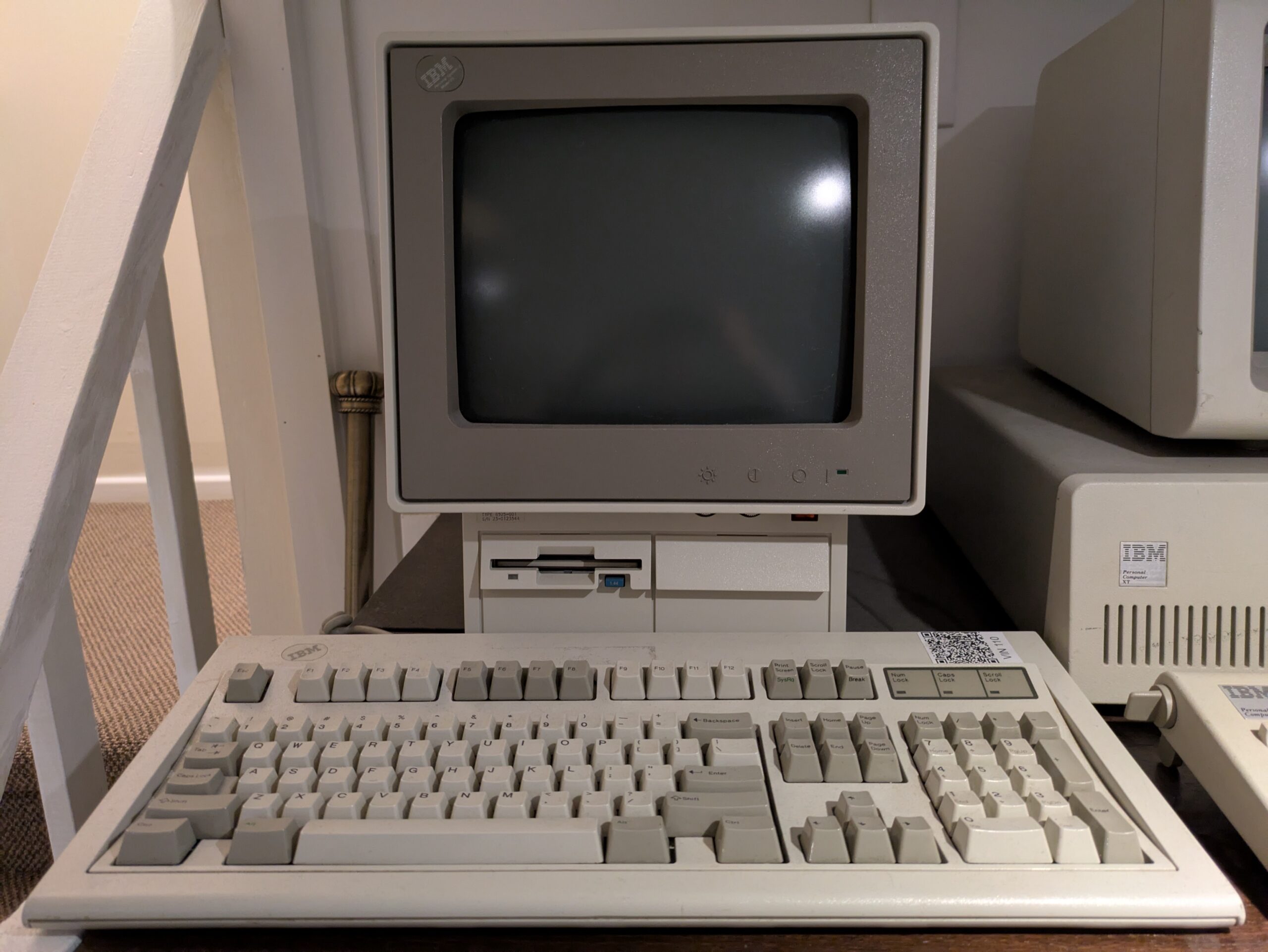
Despite limited consumer adoption due to high costs and incompatibility with existing PC clones, the PS/2 left an enduring legacy through innovations like VGA graphics, 72-pin SIMMs, and the PS/2 keyboard/mouse ports, many of which became industry standards. It found strong traction in corporate and academic environments, where its reliability and IBM’s support made it a trusted platform.
- Manufacturer: International Business Machines (IBM)
- Type: Desktop Personal Computer (PC)
- Release Date: 1987
- Cost at release: USD $1,695 (CAD $5,300 adjusted for inflation)
- Cost with peripherals: USD $10,995 (CAD $34,500 adjusted for inflation)
- MIPS: 5-7
Hardware Specifications
- CPU: Intel 80286 (10 MHz) or Intel 80386 (16-20 MHz) in higher-end models
- Coprocessor: Optional Intel 80287 (for 80286 models) or 80387 math coprocessor socket for 80386 models
- Bus: Micro Channel Architecture (MCA) 16 or 32-bit depending on model
- RAM: Typically from 1 MB up to 2-8 MB on system board; expandable to 16 MB via SIMM modules (72-pin SIMM memory)
- ROM: 128 KB
- Graphics: VGA (Video Graphics Array) standard with 640×480 resolution in 16 colors or 320×200 in 256 colors
- Storage: 3.5-inch floppy disk drive (1.44 MB), hard drives from 20 MB up to 120 MB depending on model and options
- Expansion slots: 3-5 slots (more limited on MCA compared to ISA bus)
- Ports: PS/2 keyboard, PS/2 mouse, serial, parallel, VGA video out
- Power supply: Auto-sensing 110-240 VAC
- Weight: Approximate range 9.5 kg to 10.9 kg (21 to 24 lbs) for desktop models; portable models varied
Operating System & Programming Languages
Operating System: IBM PC DOS 3.3
- Supported Languages:
- IBM Personal Computer BASIC (built-in interpreter on some models)
- Assembly language (x86 machine code)
- C and C++ (with IBM and other vendors’ compilers)
- Pascal
- Fortran
- COBOL
- Other languages supported under DOS, OS/2, or AIX such as RPG and PL/I
Notables
- Introduced standards: first mainstream use of VGA video, the 3.5″ 1.44 MB floppy as a standard, and 72‑pin SIMM memory modules.
- Micro Channel Architecture (MCA): IBM’s proprietary 32‑bit bus intended as a technical and licensing pivot to regain control of the PC market.
- “PS/2 It!” marketing: high‑profile ad campaign (TV spots including MAS*H cast and prime‑time commercials) that pushed the PS/2 brand heavily in 1987–88.
- Firsts and unusuals: early plug‑and‑play–like automatic device configuration via MCA, and shipping OS/2 (the PS/2’s intended OS partner) alongside the hardware effort.
- Nicknames and reputation: sometimes jokingly called “Proprietary System/2” or “Micro Channel mammoth” by enthusiasts and press due to MCA and heavy corporate
- Market impact: sold ~3 million units in the first 18 months but ultimately accelerated industry standardization around competing, cheaper standards (EISA, enhanced ISA and later PCI) rather than MCA.
- Technological leadership (many lasting standards) plus a cautionary tale about proprietary platforms and market dynamics
Media
Donated by: Andrew Miles