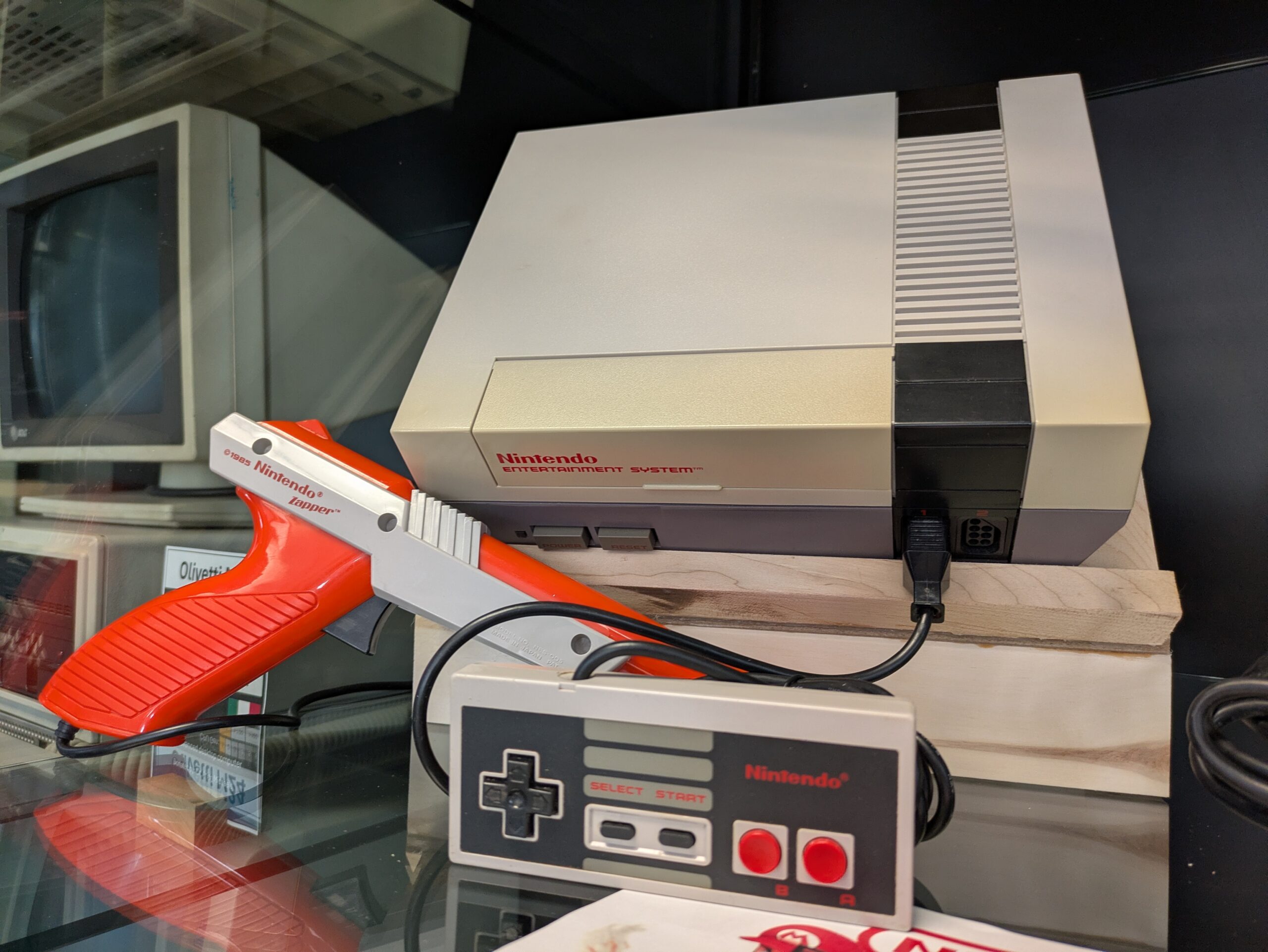
The original Nintendo Entertainment System (NES) is historically significant as the platform that restored confidence in consumer computing and interactive media after the 1983 video game industry crash, using strict hardware control and software licensing as a new economic model. Its efficient 8-bit design, extensible cartridge hardware, and standardized D-pad controller influenced both game console engineering and broader human-computer interface design. With nearly 62 million units sold worldwide, the NES became one of the most popular computing devices of the 1980s and established Nintendo’s dominance in global digital entertainment. Its simple but robust 8-bit architecture, iconic controller design, and unforgettable first-party titles made it one of the most influential consumer computing platforms of the 1980s. The NES defined modern console gaming economics, aesthetics, and developer–publisher relationships.
Manufacturer: Nintendo (Nintendo Co., Ltd., Japan)
Output: RF video (composite via later accessories)
Operating System & Programming Languages
Operating System: The NES hardware itself handled tasks like graphics, sound, and input, so there was no general-purpose OS managing resources.
Supported Languages:
NES games were primarily written in 6502 assembly language (for the Ricoh 2A03 CPU).
A few early development kits allowed C or C-like high-level languages, but these were rare and much less efficient than assembly due to the very limited CPU speed (1.79 MHz) and 2 KB of RAM.
Developers also used custom game engines and graphics/sound routines built specifically for the NES hardware.
Notables
Revived the North American video game market after the 1983 crash.
Sometimes called the “Famicom” in Japan (short for Family Computer).
Introduced the D-pad controller, now standard in gaming.
First widespread use of a hardware lockout chip (10NES) to enforce software licensing.
Popularized cartridge-based expandable games, with memory mappers allowing larger, more complex titles.
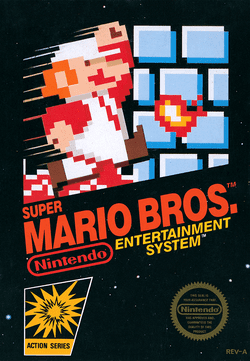
Launched iconic franchises like Super Mario Bros., The Legend of Zelda, and Metroid.
Front-loading “VCR-style” design to make it look like consumer electronics rather than a toy.
Bundled R.O.B. the Robot with early deluxe sets to make it appeal to parents and avoid “video game stigma.”
Popularity: ~61.9 million units sold worldwide, defining 1980s home entertainment.