Lost 45-Year-Old Canadian Computer Resurfaces, Heads to Carleton for Unboxing
Vintage computing has a history of legendary rediscoveries and this one might be the most quietly Canadian of them all. In 2023, the retro-computing world was electrified when roughly 2,200 NABU computers surfaced from a collapsing barn in Massachusetts, a cache that turned out to be a forgotten chapter of Canadian tech history, since NABU Network was engineered in Ottawa in the early 1980’s. Just a few months later, house-clearing staff in London stumbled onto two Q1 microcomputers buried under boxes at Kingston University, machines now widely regarded as the true first microcomputer, predating the famous Altair 8800 by two years, with only three examples known to survive anywhere in the world.
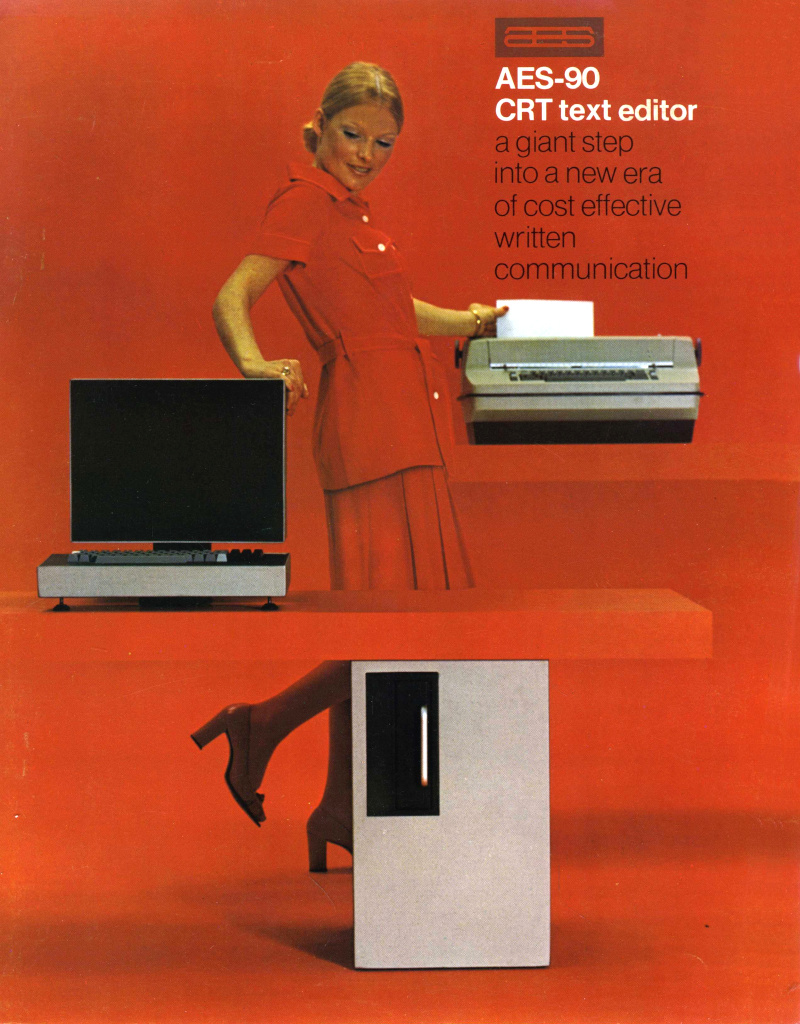
Sitting untouched since its days at the Northern Alberta Institute of Technology (NAIT), this AES Alphaplus 12, built by Montreal’s AES Data Ltd. and launched in, most likely, 1981, spent decades forgotten in a rural Edmonton barn before its rescue. The Alphaplus 12 is a descendant from the company’s landmark AES-90, a machine later called “the world’s first programmable video screen word processor” for genuinely pioneering the CRT-based text editing we now take for granted. Features standard in every word processor today, like word wrap-around, automatic text justification, and numeric alignment, were novel enough in 1972 that the press called it an “electronic editor” that “raises eyebrows,” and its design was influential enough that competitors across the industry copied it outright . By 1978 AES was competing directly with IBM as Canada’s largest word-processing supplier, and in a fitting twist, the company was eventually acquired in 1987 by Kinburn Technology Corporation of Ottawa, quietly linking this machine’s corporate lineage right back to the region where it’s now headed.
Tracking down the AES Alphaplus 12 history has proven remarkably difficult: the only documentation we could find anywhere is a single archived listing at a UK museum and a brief mention in a 1981 Canadian trade magazine. Even Ingenium, Canada’s own national science and technology museum, holds early AES word processors and software in its collection, but has no record of this specific Alphaplus 12 model. That makes this unit a genuine question mark and remarkable find, still sealed in its dusty barn-find shipping box, on its way to Carleton University’s Vintage Computing Collection for a live unboxing and identification event.
Stay tuned for our event DATE during Carleton’s fall 2026 academic term
-
Andrew Miles, Sr System Administrator, School of Computer Science, Carleton University