AES Alphaplus 12
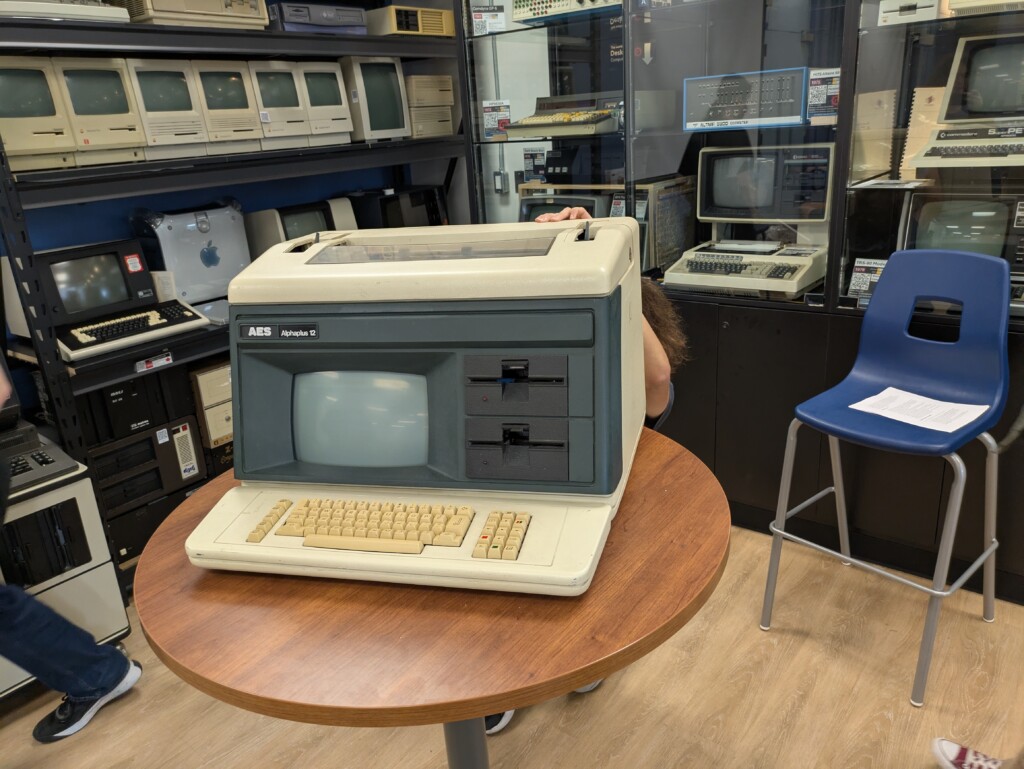
The AES Alphaplus 12 was a Canadian-built word-processing microcomputer developed by AES, a Montréal company specializing in dedicated word processors. AES helped pioneer several word-processing features that remain familiar today, and at its peak competed directly with IBM while holding a substantial share of the Canadian word-processing market.
[Vin217]
The Alphaplus is an especially distinctive machine. A line printer is integrated directly above its CRT monitor, creating a compact all-in-one workstation. It is also exceptionally robust: the complete system weighs approximately 80 pounds, while its keyboard enclosure is made of solid steel. Despite its weight and substantial construction, the motherboard is easily accessed through the rear of the machine by removing only two screws.
- Manufacturer: AES
- Model: Alphaplus 12
- Released: ~1981
- Type: Word-Processing Workstation
- CPU: Z80
- Storage: Dual 5.25″ Flopp drives
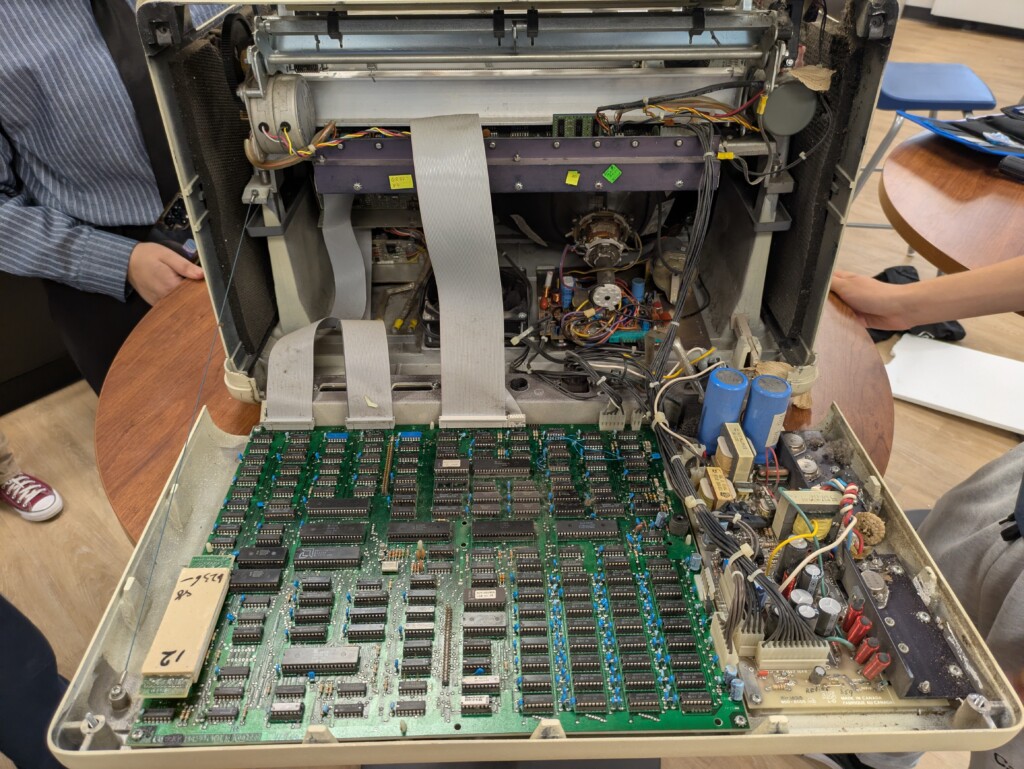
Inside are three Z80 CPUs, making the Alphaplus a genuine multi-microprocessor computer. However, it was not intended as a general-purpose personal computer; it was designed specifically as a dedicated word-processing system.
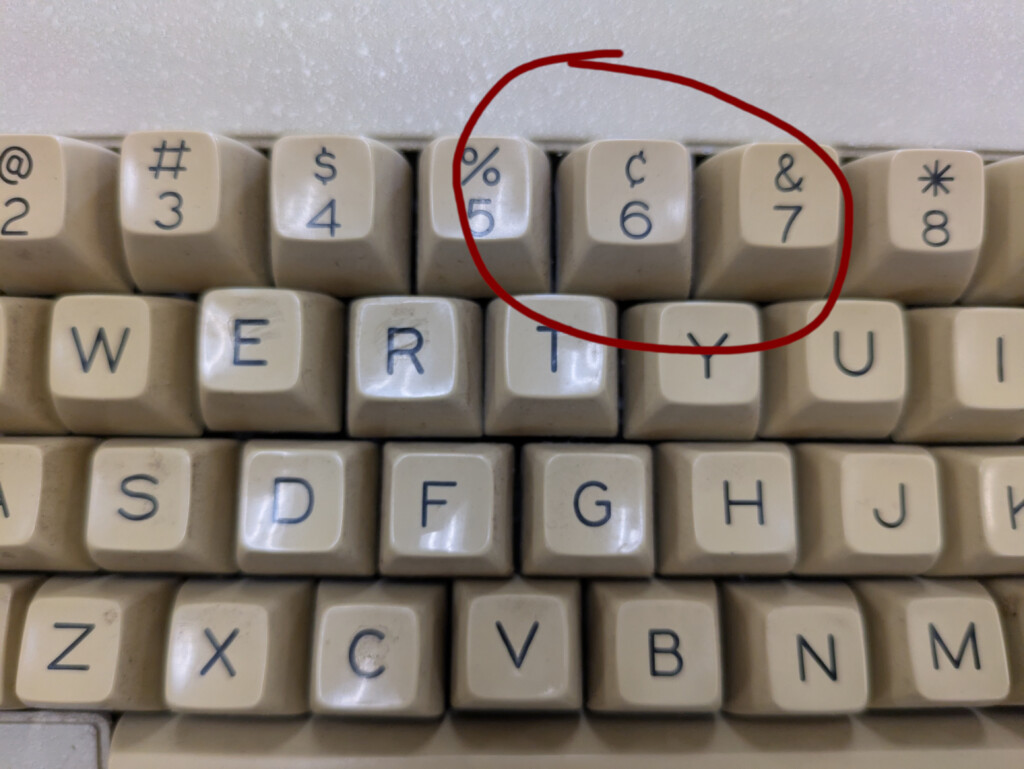
Its keyboard is equally unusual. It features distinctive coloured keys, including a cent symbol that is not part of the standard ASCII character set. It is among the largest, heaviest, and most solidly built keyboards we have encountered.
One surviving reference describes a UK linguist using an Alphaplus to typeset a lengthy book on linguistics. With two floppy drives, the system could keep up to 60 pages of manuscript text available without requiring the operator to swap disks. It also included an early form of a recycle bin, allowing accidentally deleted pages to be recovered which was a feature the author found particularly valuable.
This capability represented a major improvement over earlier text-preparation methods. The previous generation of systems often relied on punched cards, where editing an entry could be difficult and error-prone. In many cases, it was easier to re-punch an entire stack of cards than to identify, track, and correct changes within the existing set.

The AES Alphaplus 12 surviving example is especially significant because they document Canada’s once-prominent word-processing industry and the transitional period when specialised document systems preceded the dominance of IBM compatible personal computers. AES’s broader contribution to computing began with the AES-90 in the early 1970’s, among the pioneering systems that made text editable directly on a CRT before printing. AES combined on-screen editing with disk storage and functions such as insertion, deletion, movement, justification, and page-layout adjustment which dramatically reduced the need to retype whole documents after revisions. Crucially, its general-purpose processor and software-based design made the system upgradeable, unlike many earlier hard wired word processors. This “programmable word processor” model helped establish the screen and disk workflow that became standard in offices before word-processing software migrated to personal computers.