Carleton Celebrates Día de Muertos
Mike Barker, CALL Consulting Analyst for the School of Linguistics and Language Studies, recounts the Día de Muertos festivities hosted at Carleton University in October 2025
“Que tus recuerdos sigan viviendo.” (May your memories continue to live)
– Traditional Mexican greeting during Día de Muertos
The first vanload of students from a Mexico City high school arrived at Carleton on a Wednesday morning in the middle of Reading Week. The campus was quiet at the time, so no one really noticed them as they began to unpack boxes in the Nideyinàn Galleria.
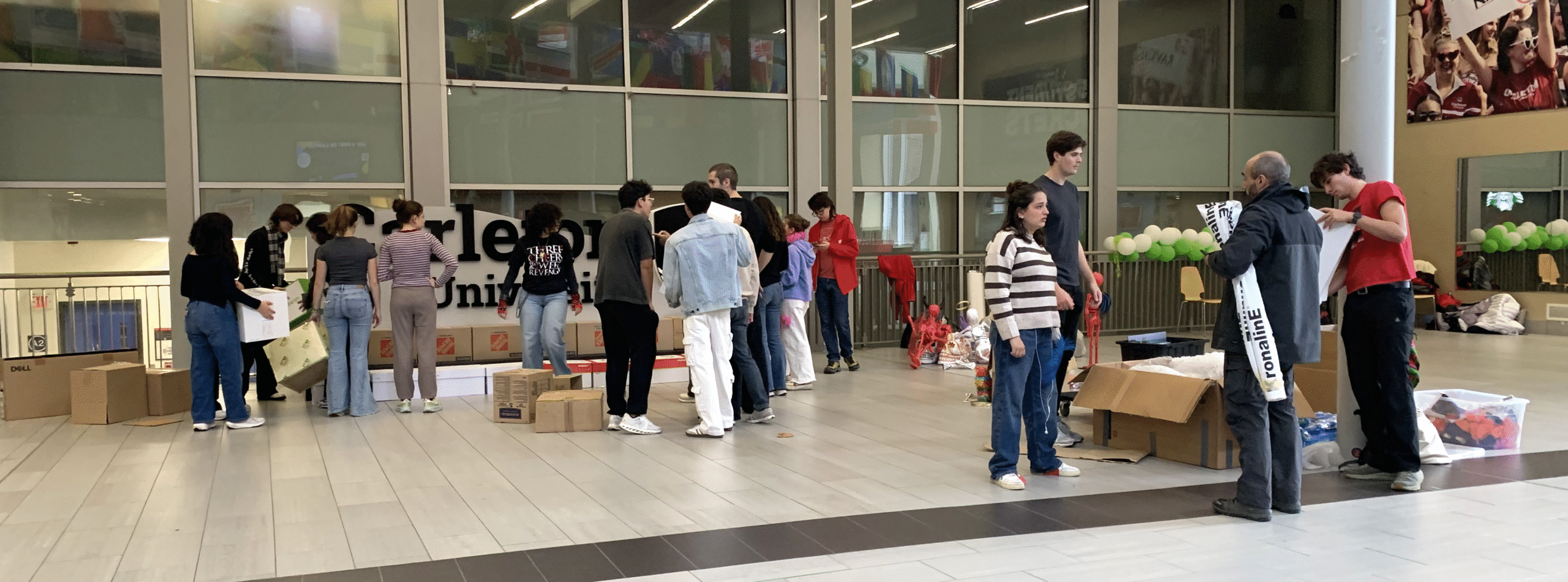
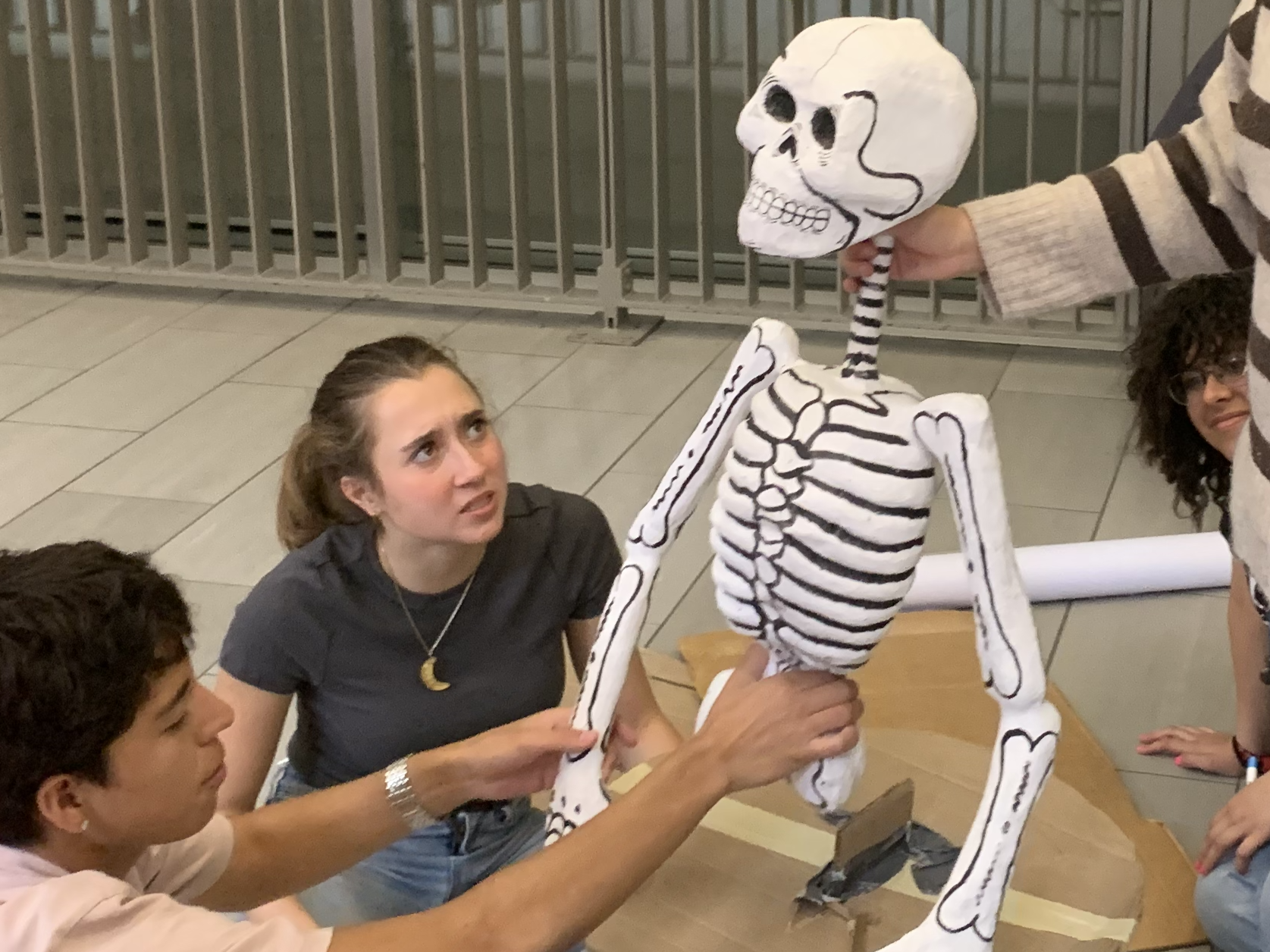
But if any one of those people walking by on their way to Rooster’s or the Campus Card Office had stopped to look more closely, they would have seen that the boxes being unpacked were filled with paper-mâché skeletons, stacks of delicate brightly-coloured crepe paper in vibrant golds, purples and reds, and a truly impressive number painted styrofoam skulls. Fresh off the plane from Mexico City, these were the components of a traditional altar for this year’s celebration of Day of the Dead.
When we were first contacted by the Embassy of Mexico in Canada back in April about getting involved in this initiative, we were unsure about what to expect, about which activities were going to happen, and about what was our role intended to be.
Now that the event is over and life has returned to its former rhythms, we are so glad we chose to say yes, because participation in this project has been such a fulfilling experience for all of us involved here at Carleton and such a culturally enriching experience for the University community as a whole.
First a little background. Day of the Dead, or Día de Muertos, is a traditional festival in Mexico. A blend of Indigenous cultures (e.g., Aztec) dating back thousands of years and more recent Catholic rituals adopted from the Spanish, the holiday celebrates the lives of loved ones who have passed on. In Mexico, the annual event brings together families and communities around shared memories and celebrations involving both the cleaning of (and vigils in) cemeteries as well as the erection of altars.
Altars, in particular, are key aspects of the holiday and each altar is dedicated to a person or group of people who are important to those creating it. It was in this capacity that we were first asked to contribute. After agreeing to host an altar here at Carleton, we were asked to put forward someone to commemorate.
Not being familiar with the holiday we were, at first, unsettled by the idea of proposing someone. It felt somehow insensitive. Who should we choose? How would we contact their loved ones? What would we say? How would we broach the idea of the altar at what would likely still be such a sensitive time? But after speaking with members of the organizing committee and coming to more clearly understand the intention of the holiday, we felt somewhat more at ease with the possibility.
And, as it turned out, we chose well.
In April of this year, eleven people died (and many more were injured) in a senseless attack on the Lapu Lapu Festival in Vancouver. This tragedy was a direct attack on the Filipino community and its impact resonated throughout the community, across the country, and around the world.
With this in mind, we reached out to the Carleton University Filipino Students’ Association (CUFSA) to ask if they felt such a dedication would be appropriate for our altar and, if so, would they like to collaborate with us on the project. They agreed and we moved ahead with the collaboration.
What we didn’t realize at the time was that, as a former Spanish colony, the Philippines too has a holiday to celebrate All Souls and All Saints Days (November 1-2). The event is called Undas and it shares many similarities with Mexico’s Día de Muertos. The serendipity of this decision to collaborate would later be reflected on the day of the unveiling in the heartfelt words from members of the CUFSA. But even before it was officially unveiled, the altar was already getting a lot of interest. It’s difficult to ignore a brightly coloured display involving skeletons and skulls, especially when it is taking up a quarter of the available floor space in the Galleria!
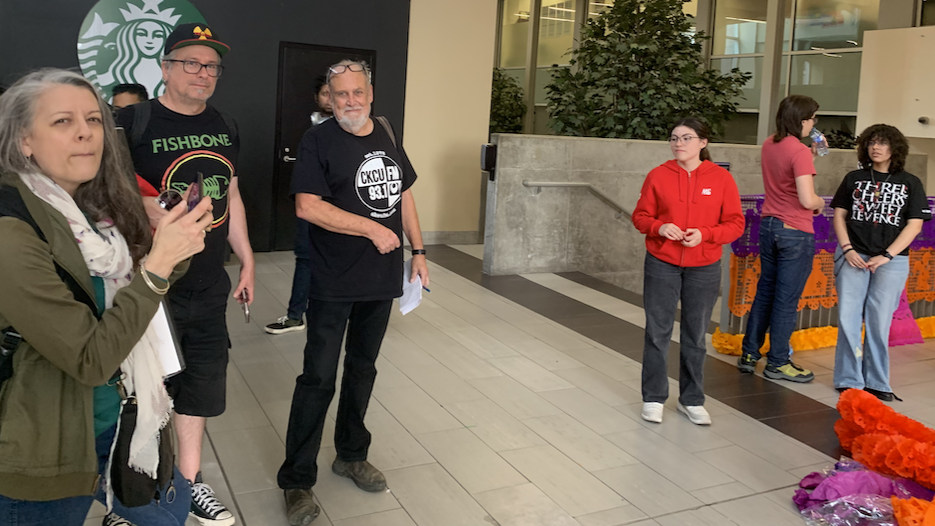
And, if they could have stayed long enough to hear them, the Mexican high school students who built it would certainly have enjoyed all the positive feedback the altar was receiving from passersby who stopped to look at their creation.
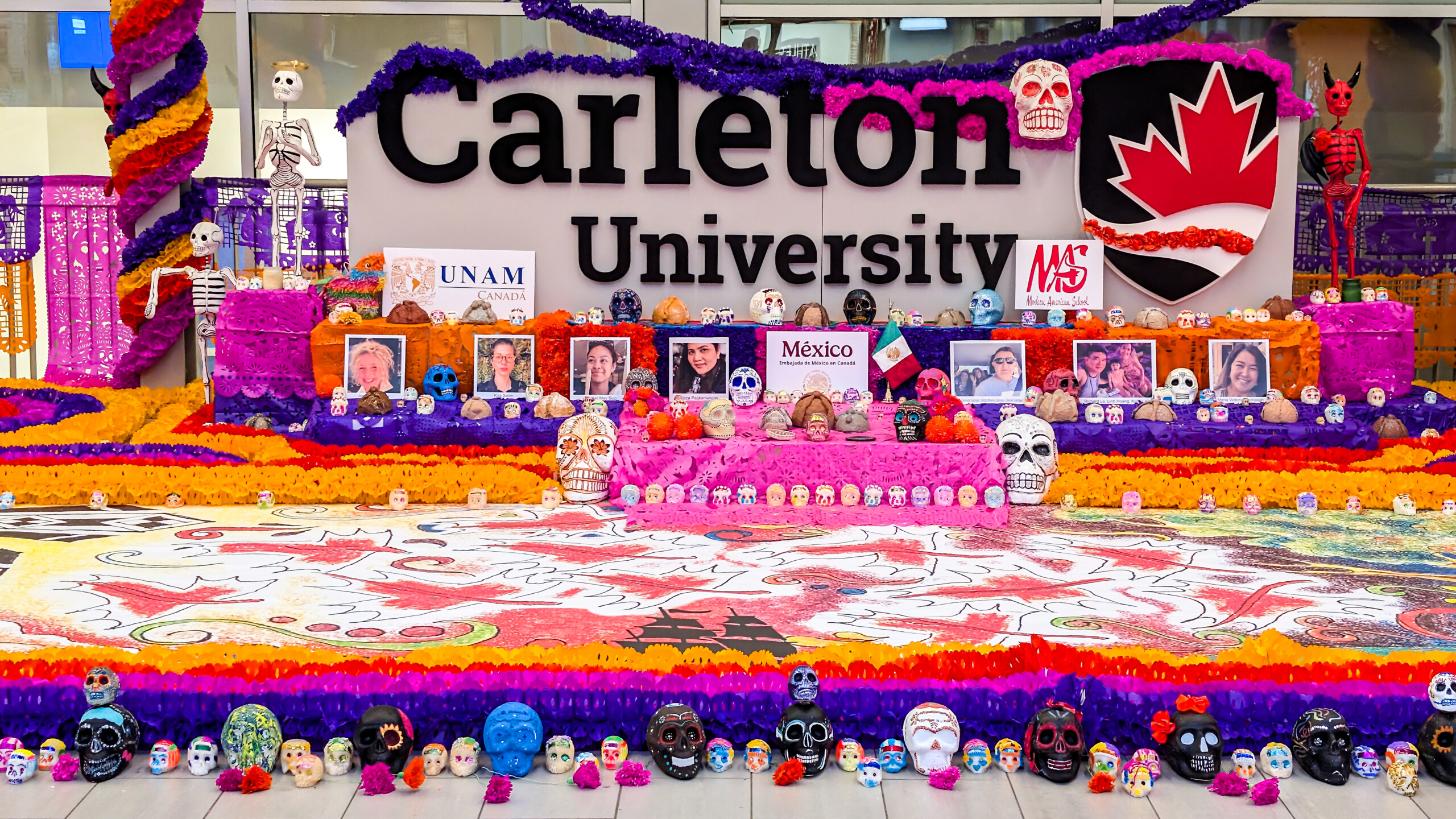
They would have also enjoyed answering all the questions about holiday itself, about the significance of the skulls, and about the photographs of the people displayed on top of the altar.
“After all my research, I came up with this design that represents, from right to left, a maple tree with all the leaves of its foliage symbolizing Canada’s people. The wind is blowing this tree and makes 11 leaves to fly away, they represent the souls of the people that unfortunately were killed at the Lapu Lapu Festival last April. These leaves are flying to the underworld which is represented by typical elements of the Mexican tradition of the Day of the Dead, such as the marigold flowers, the sugar skulls, and the “Pan de Muerto” (bread of the dead). This place is full of light and peace and this is represented with a sun designed with typical elements of the Philippine culture. All the design was made with total respect for the victims, the Philippine community and of course, Canadian and Mexican people.”
– Fernando Trigo, Altar designer and Architecture and Design teacher at Modern American School in Mexico City (MAS)
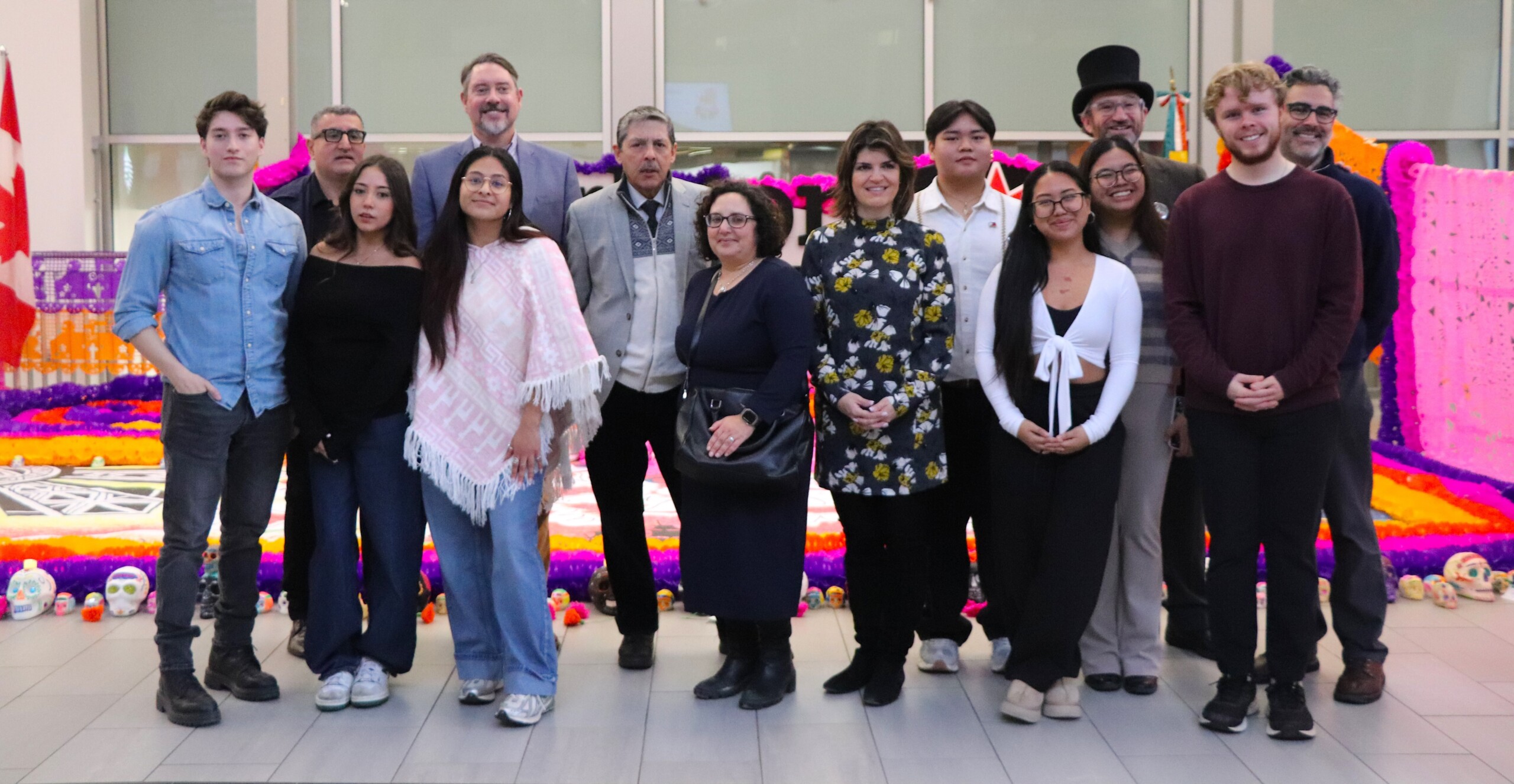
On the morning of the unveiling, these questions (and many more) were answered in speeches by Ingrid Berlanga Vasile, First Secretary; Head of Cultural and Tourism Promotion speaking on behalf of the Embassy of Mexico in Canada and Dr. Constantino Macías García, Director of the Extension School of Universidad Nacional Autónoma de México (UNAM-Canada). UNAM too hosted an altar on their campus in downtown Hull.
We even heard from the students themselves during the proceedings since, even though they had returned to Mexico City a few days earlier, the group had taken the time during construction to record an explanation of the holiday in both English and French as well as a time-lapse video showing creation of the altar start to finish.
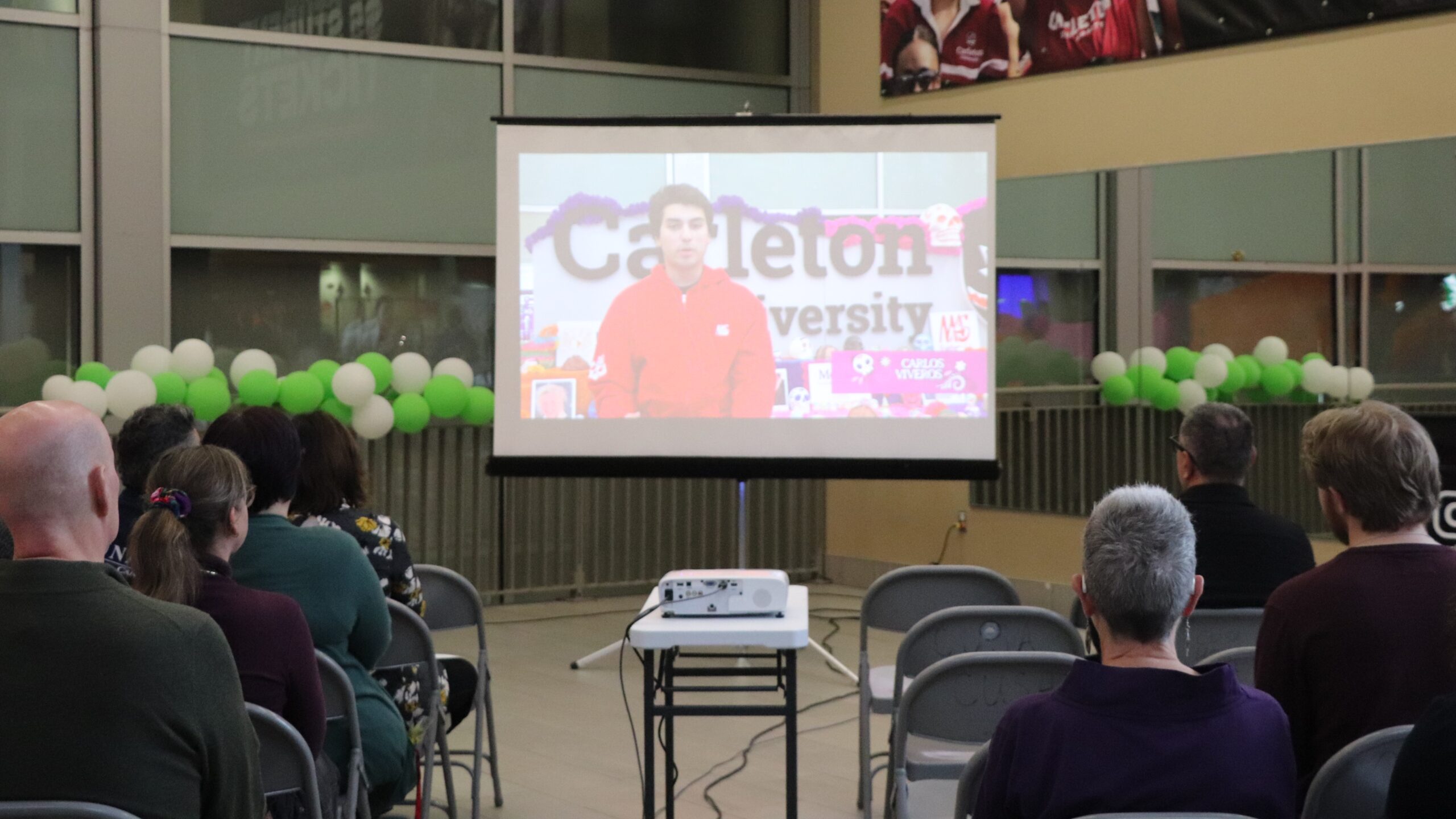
The morning was rounded out with words of welcome and appreciation from Carleton representatives:
- Aidan Kallioinen, Vice President Student Issues (Carleton University Student Association)
- Betina Appel Kuzmarov, Associate Vice-President and Vice-Provost (International Student Experience and Strategic Partnerships)
- Carlos Valdez, Assistant Director (Modern Languages) from the School of Linguistics & Language Studies (SLaLS)
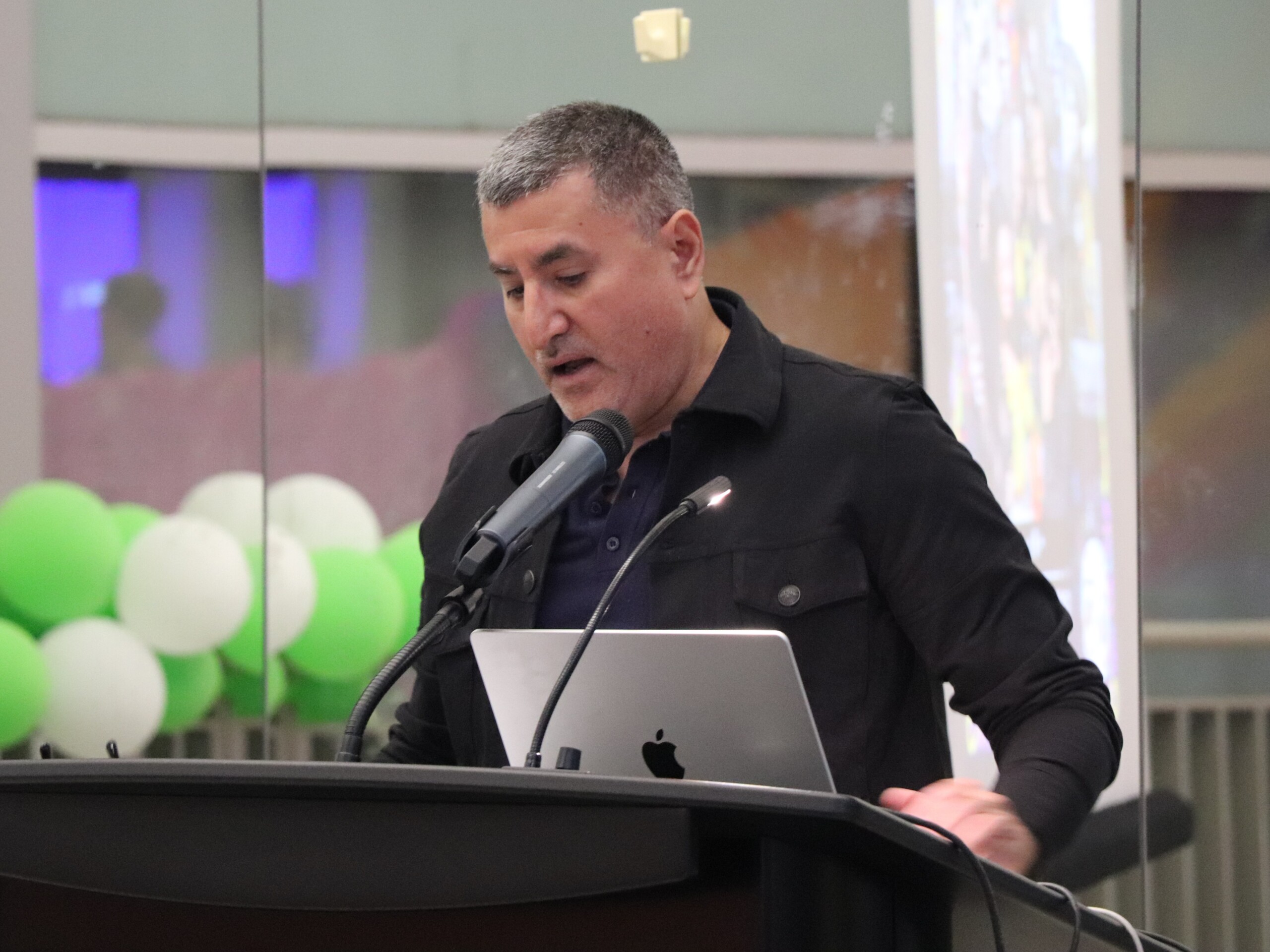
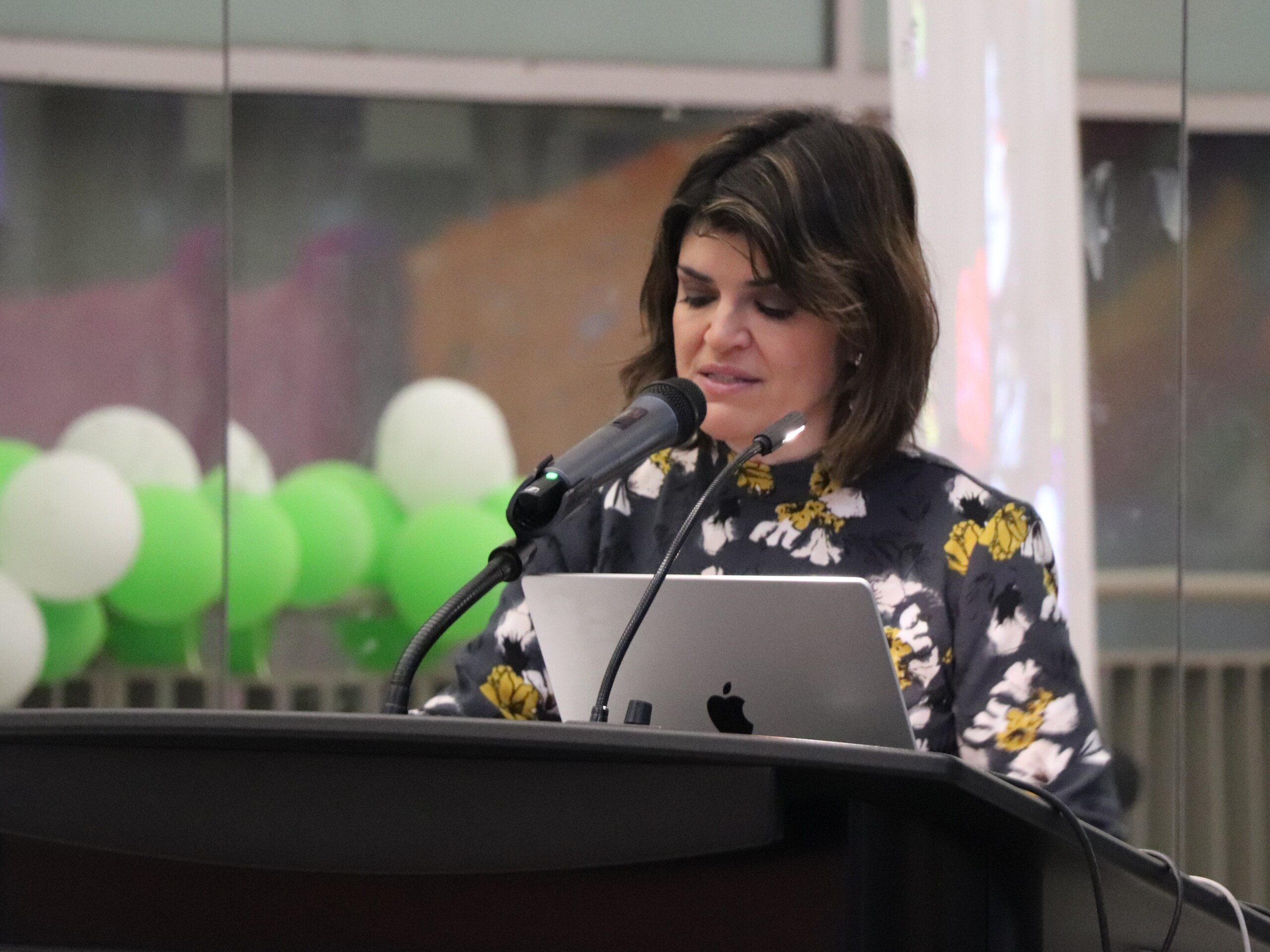
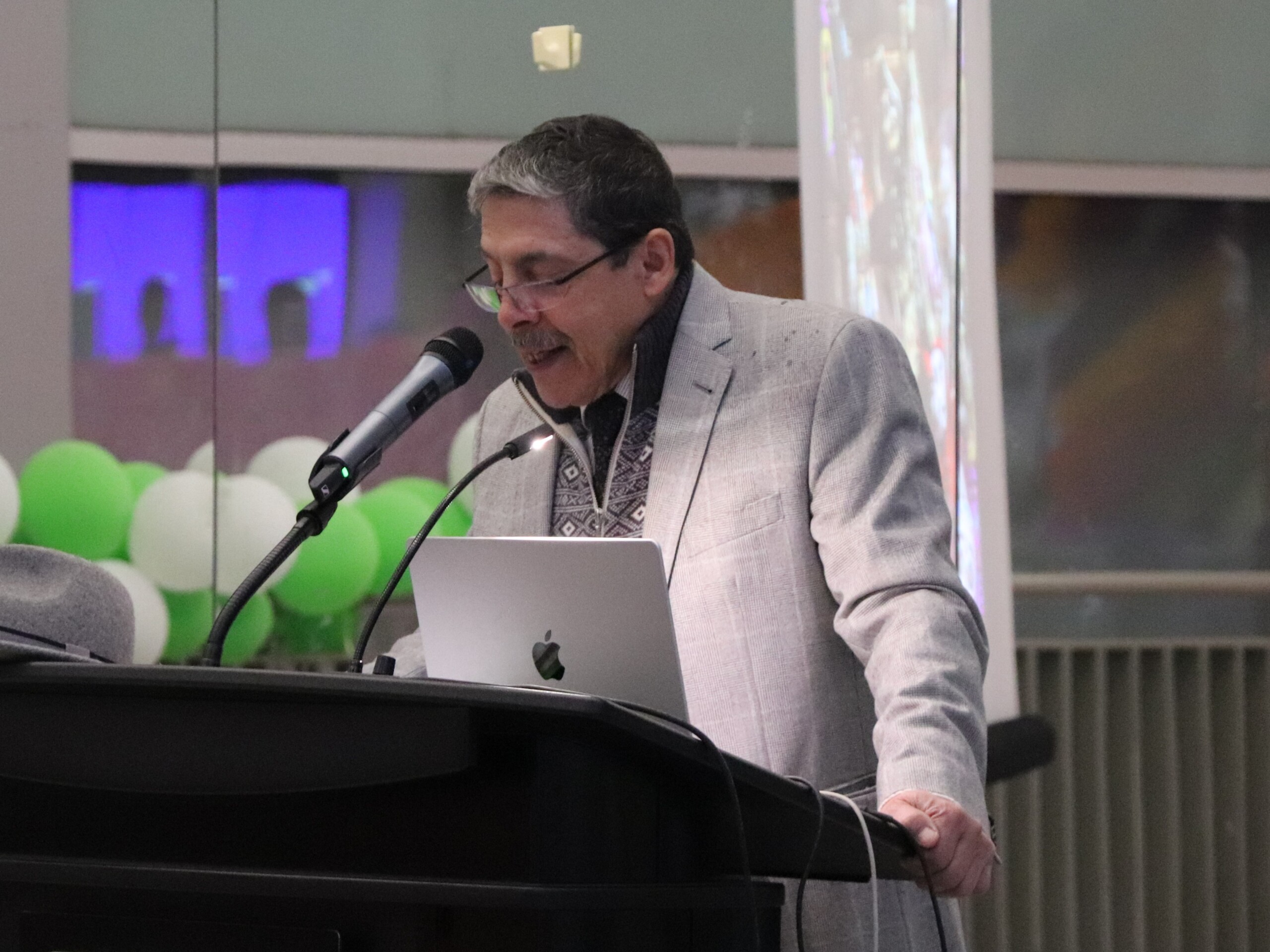
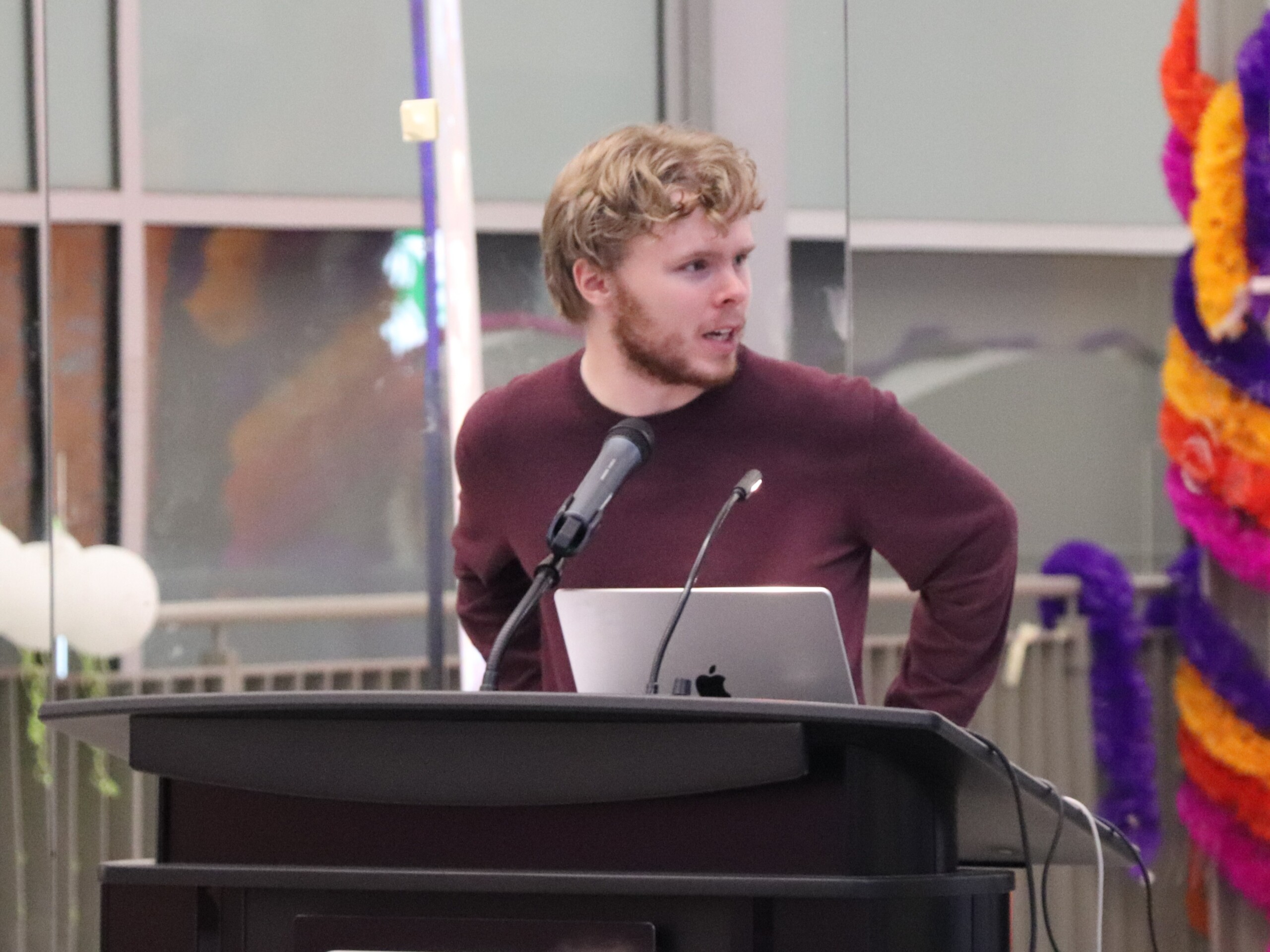
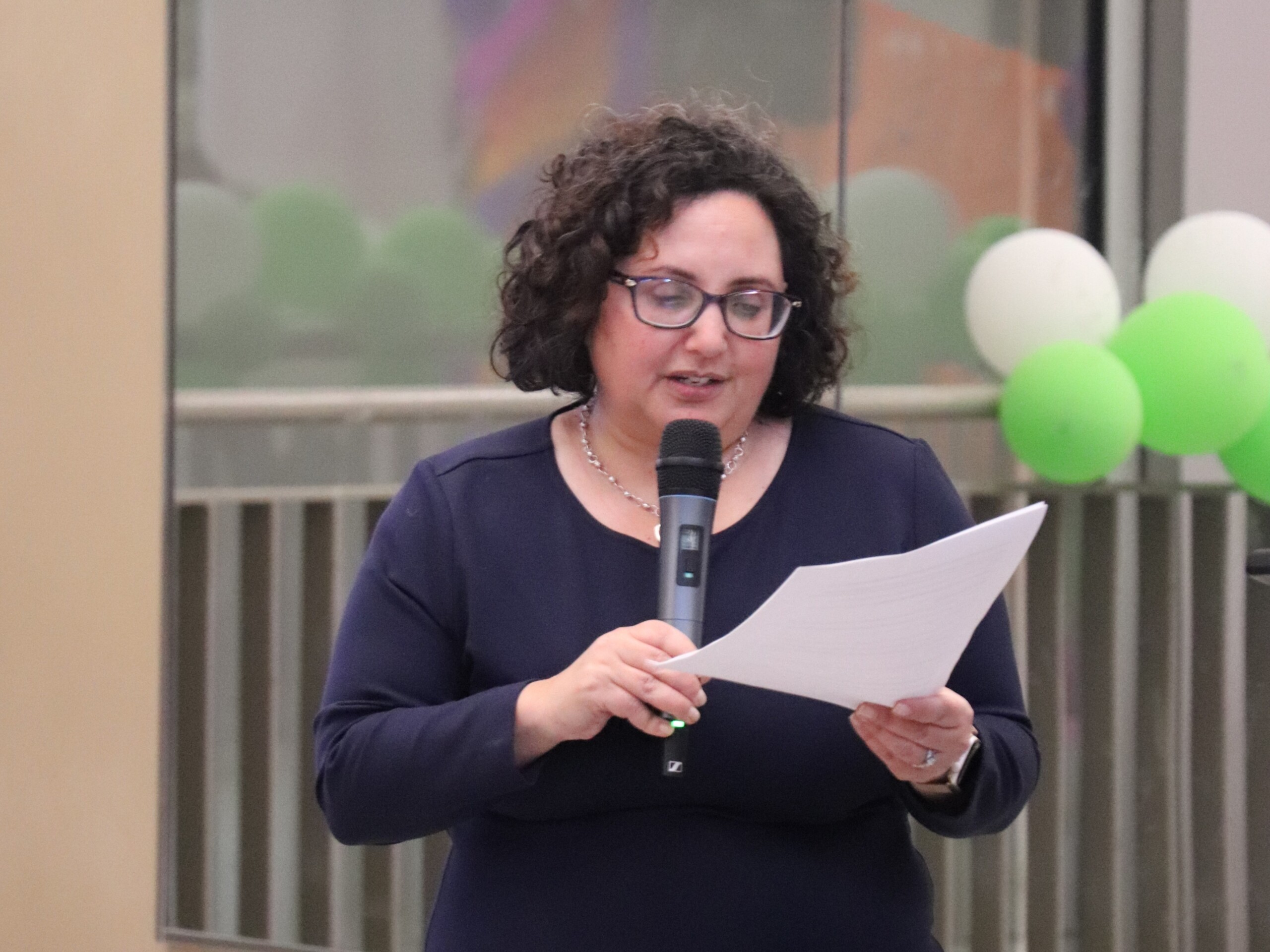
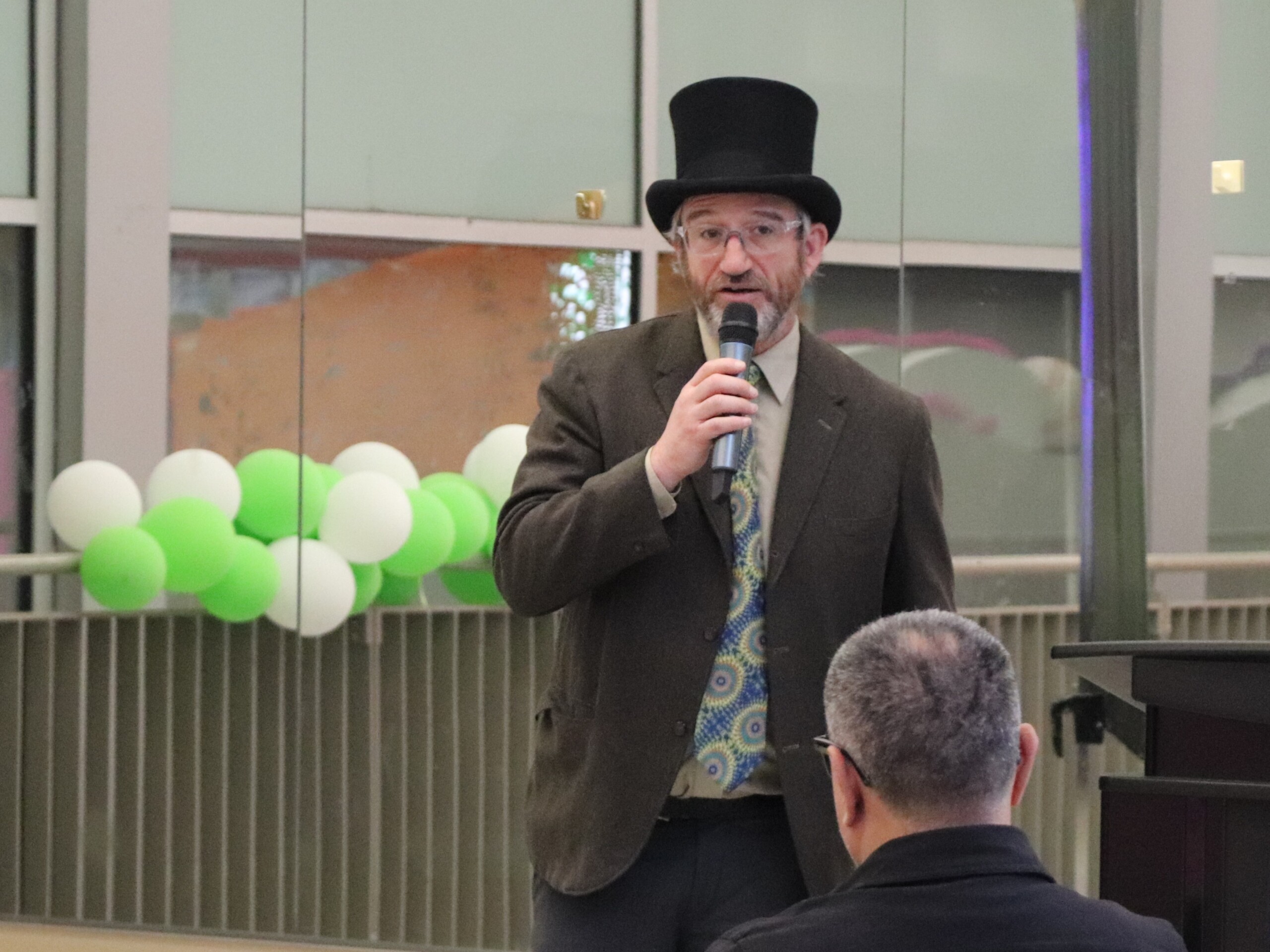
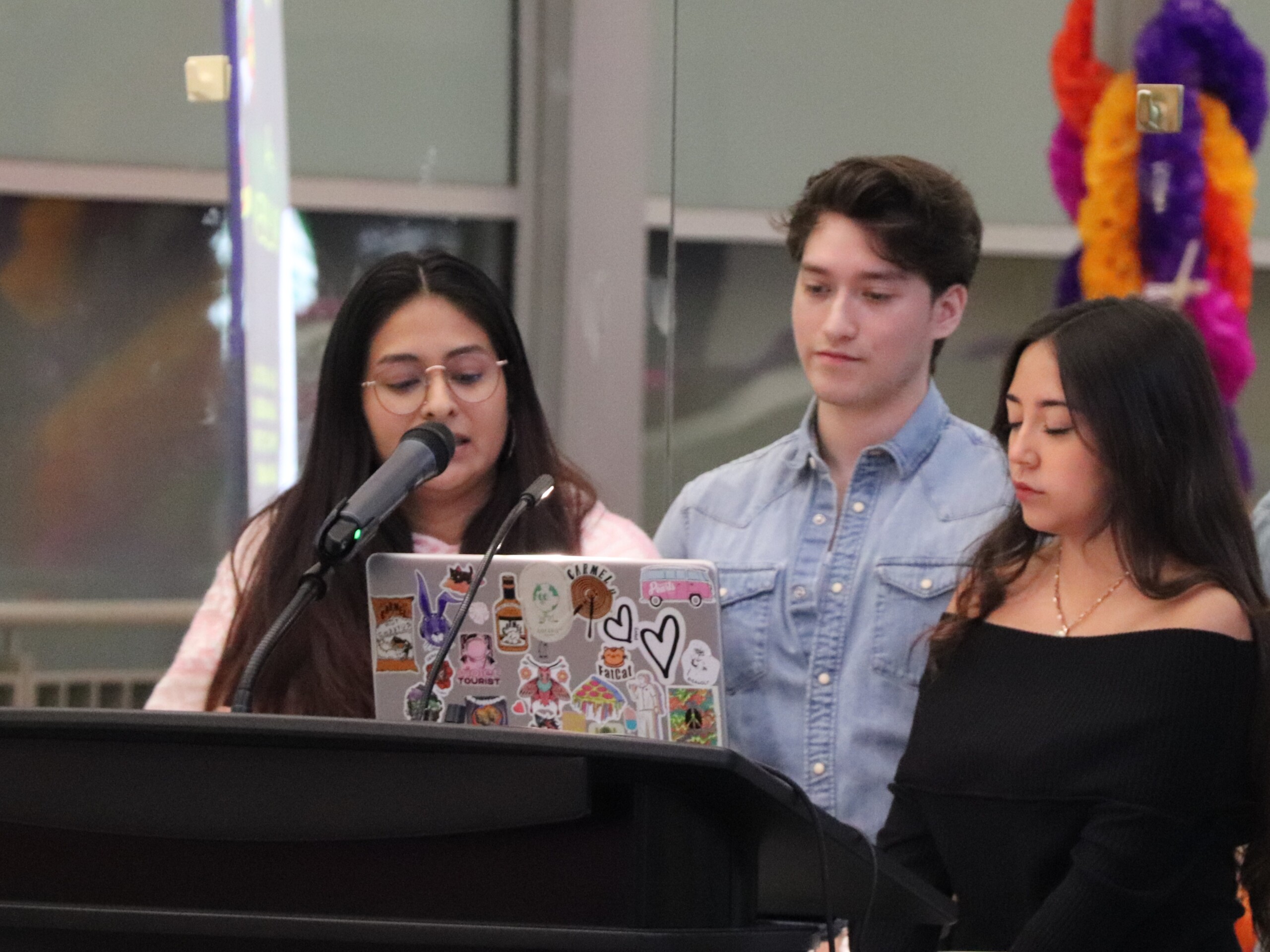
Also joining presenters on the stage, the Executive Team of Carleton club H.O.L.A.S (Humanitarian Organization of Latin American Students) who shared reflections on the holiday and provided information about their club.
The ceremony closed with a solemn dedication of the altar and a prayer from members of the Carleton University Filipino Students’ Association along with a reminder that those who died on April 26 live on in our memories.
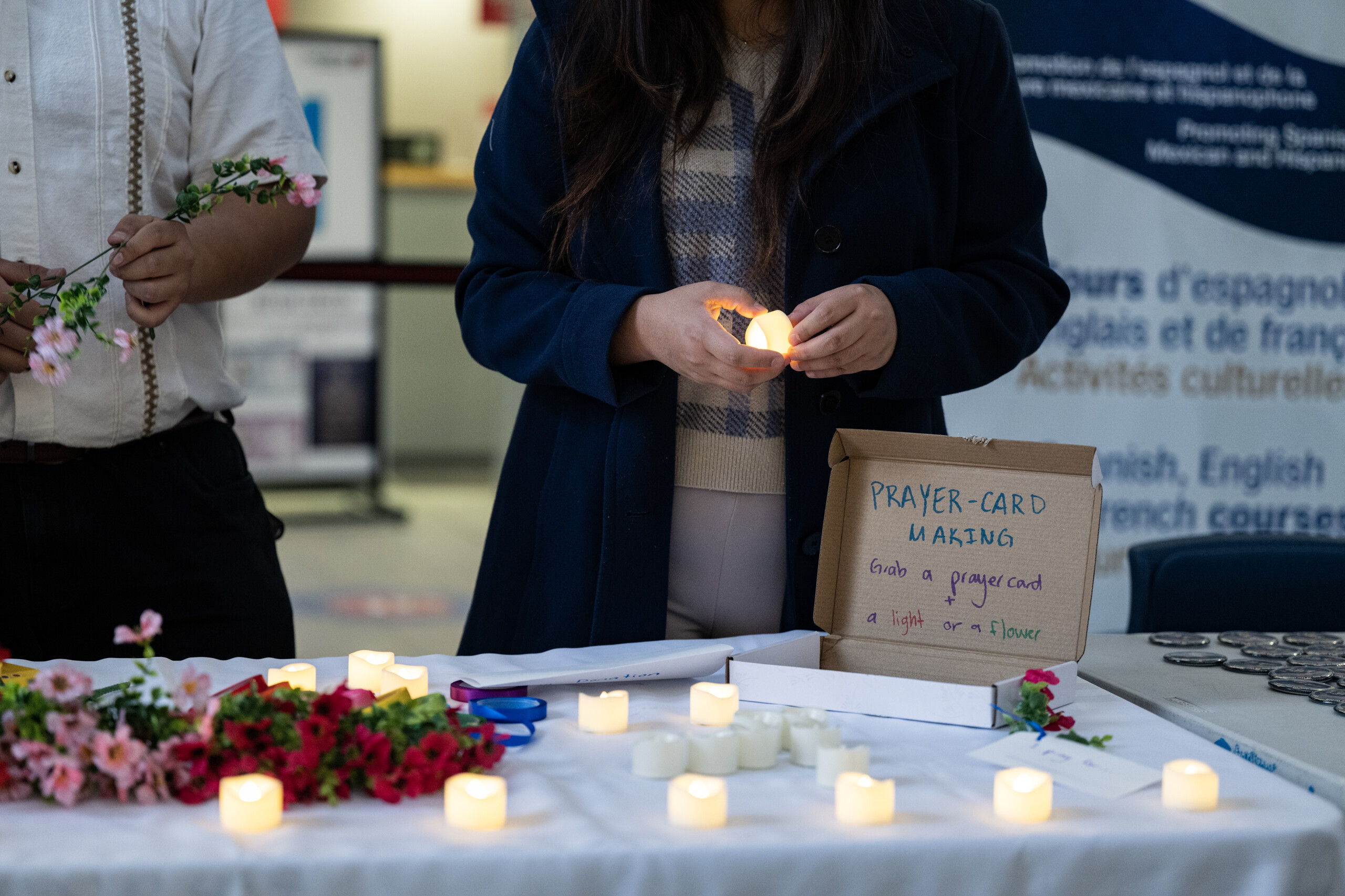
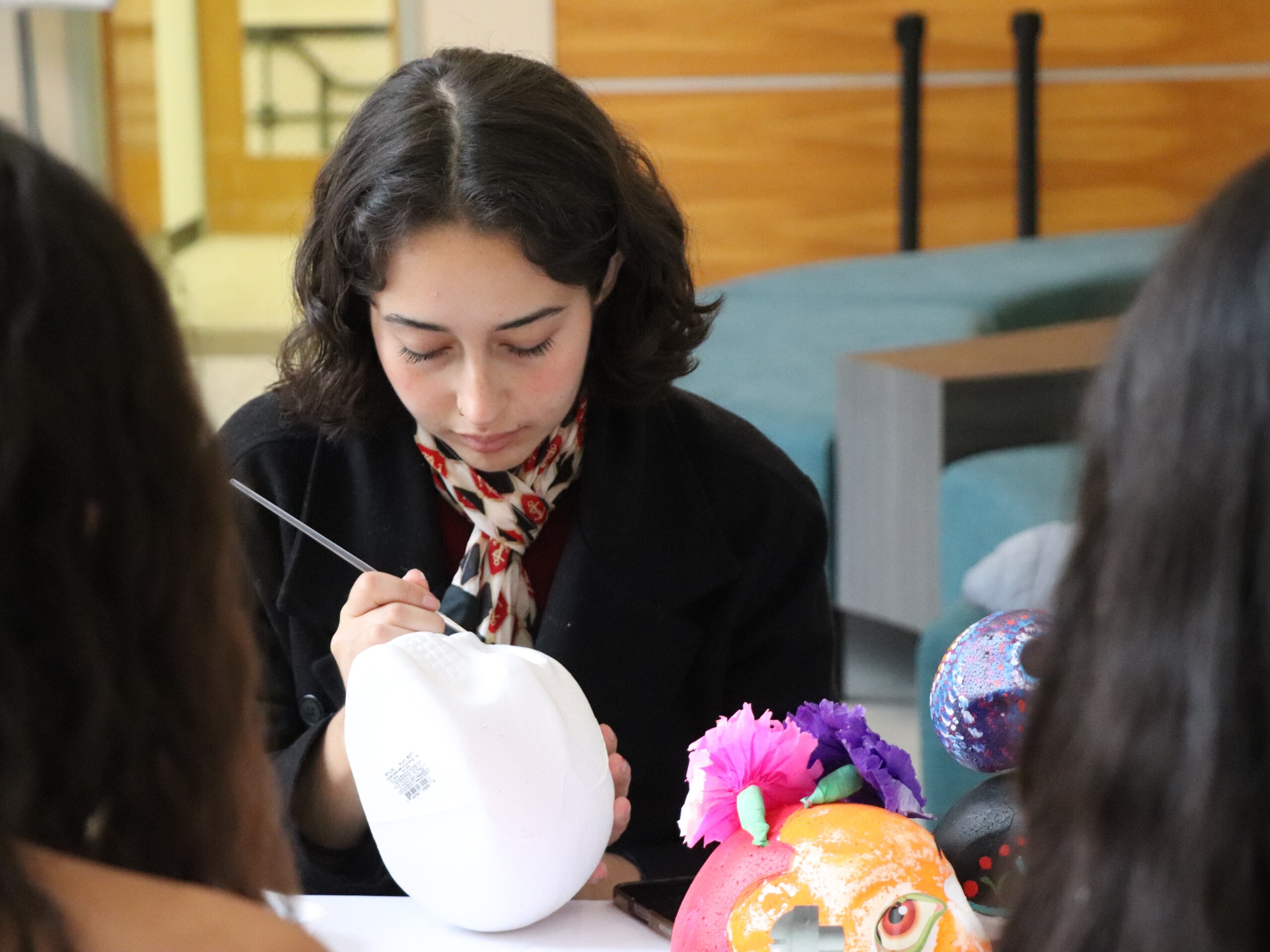
After the official proceedings wrapped up, the audience dispersed to paint Styrofoam skulls, try Pan de Muertos (Bread of the Dead) and chili-spiced hot chocolate, and participate in a Day of the Dead trivia contest organized and run by Spanish language minors Karissa Giles and Emily Gurth, and Mike Barker from the SLaLS Modern Languages program.
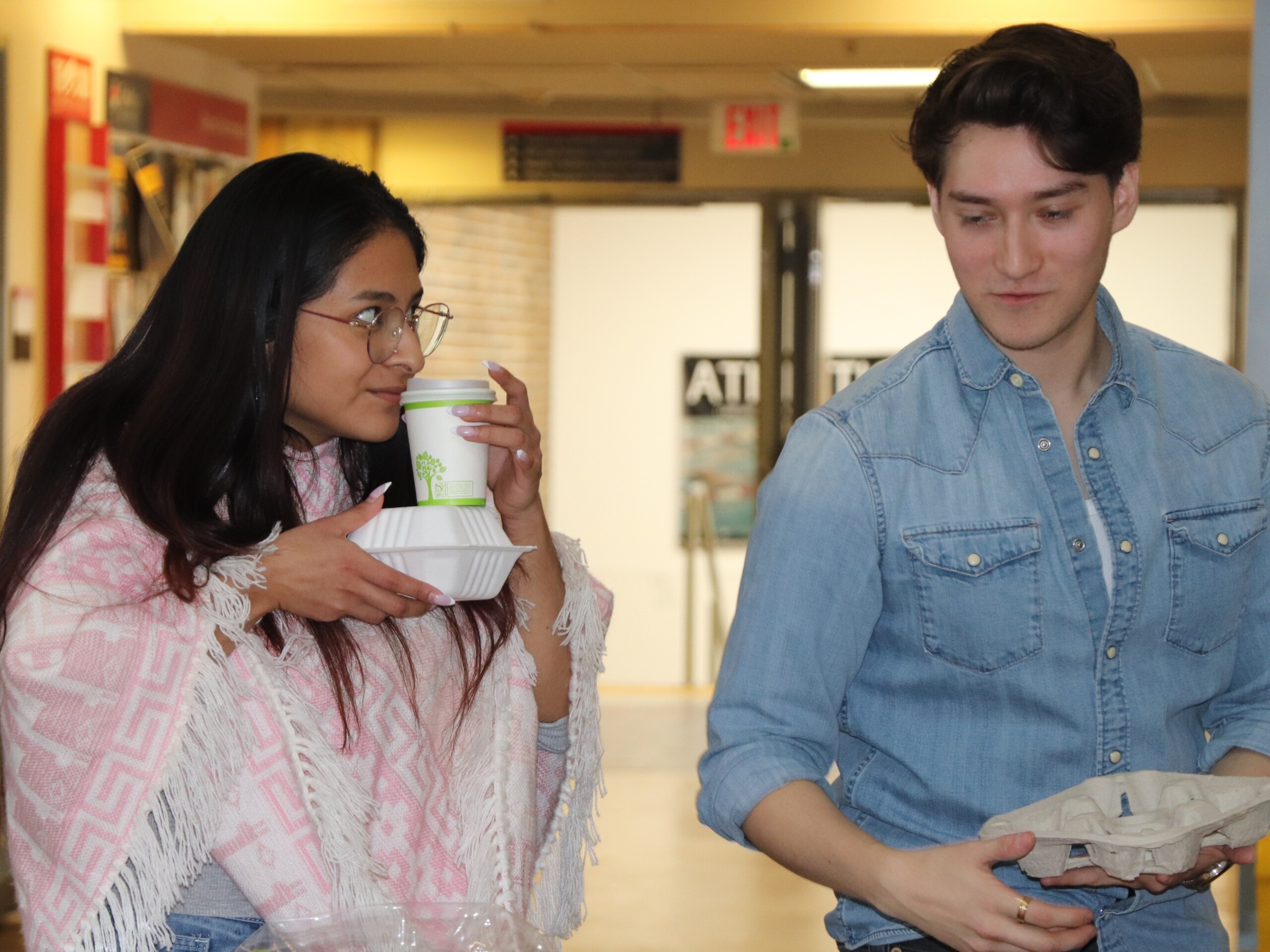
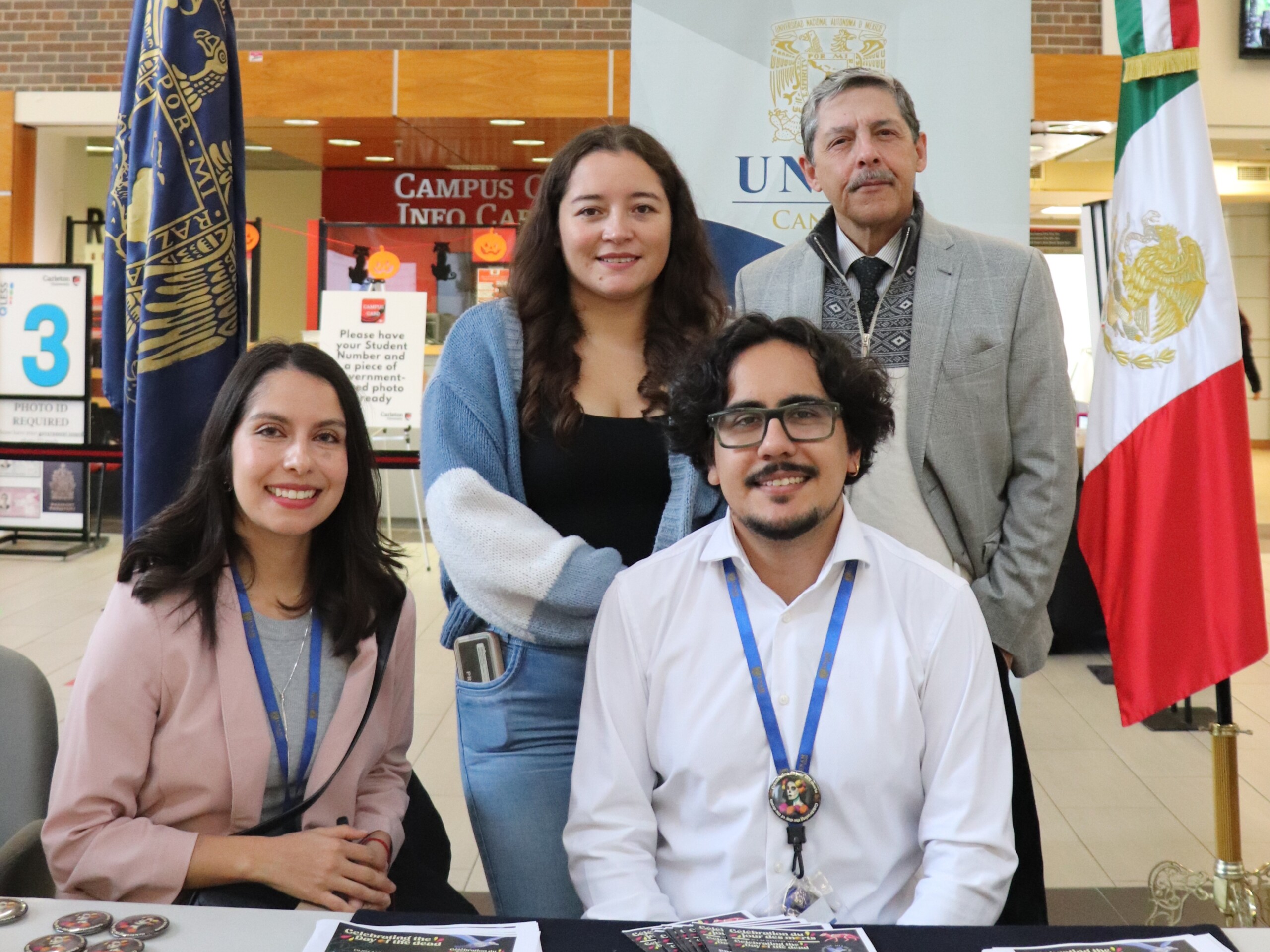
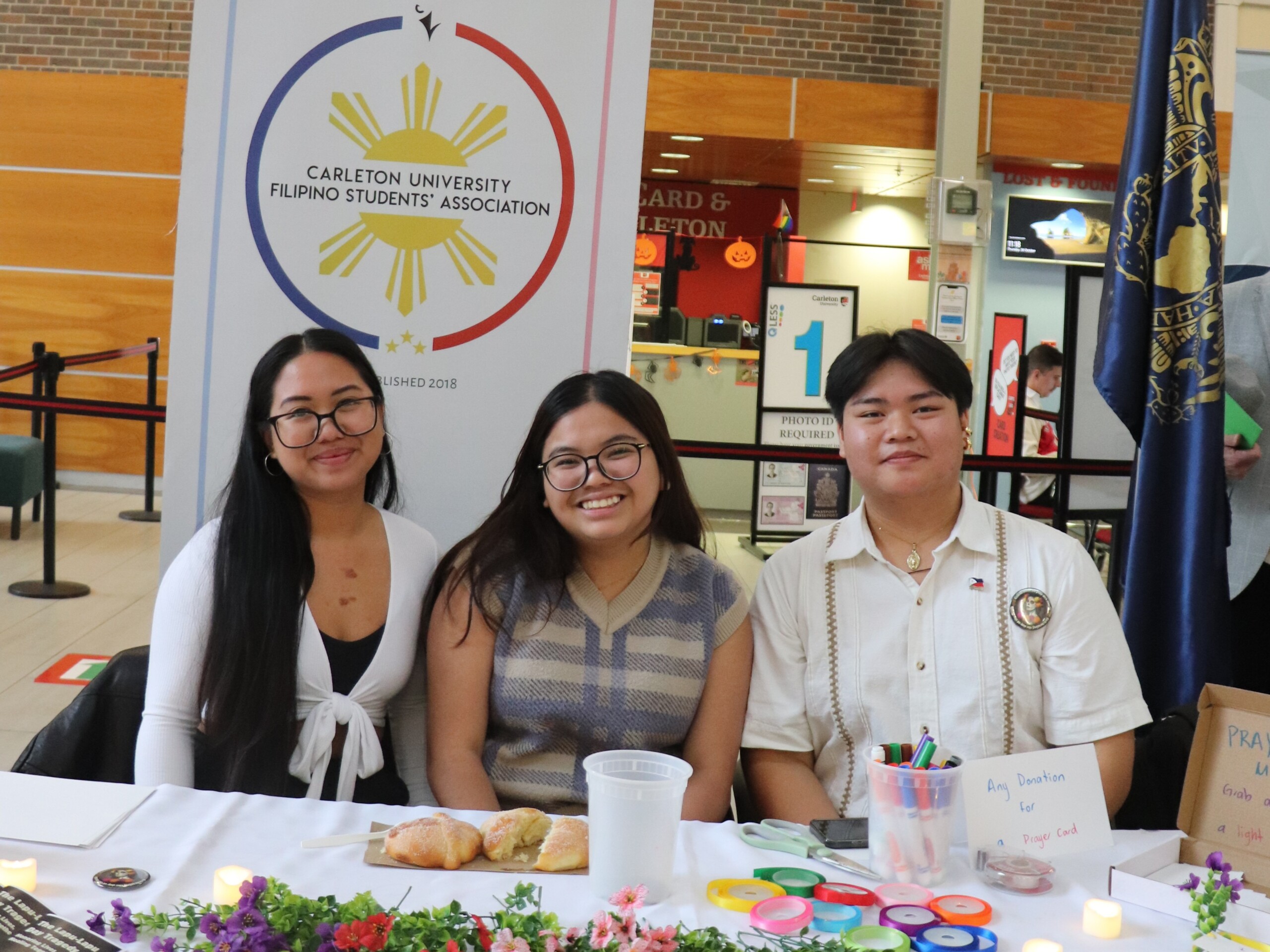
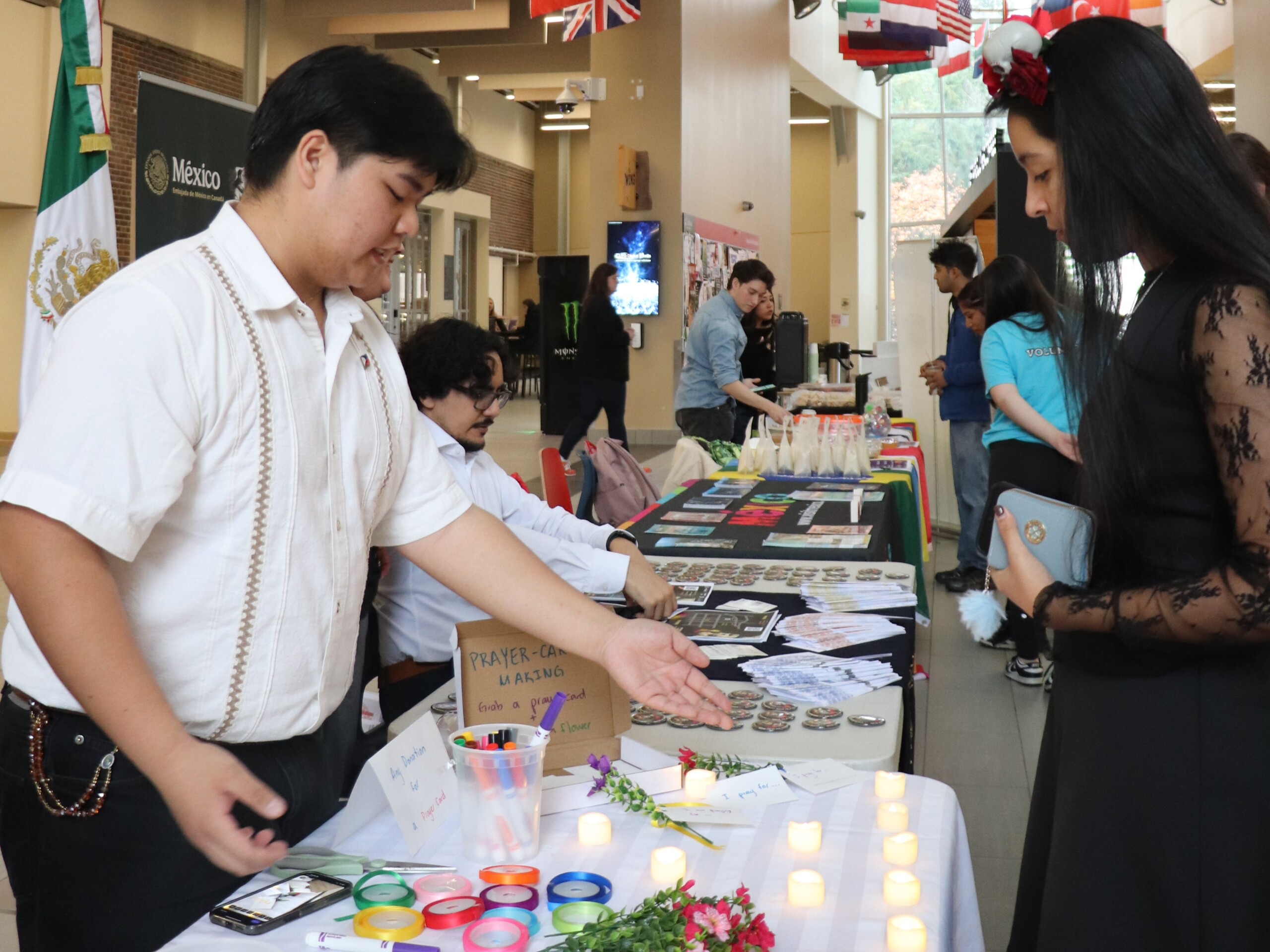
And as the group mingled and chatted, alongside the altar so bright it was difficult to look away, photos of Día de Muertos celebrations from all across Mexico (provided by the Embassy of Mexico) cycled through on the big screen.
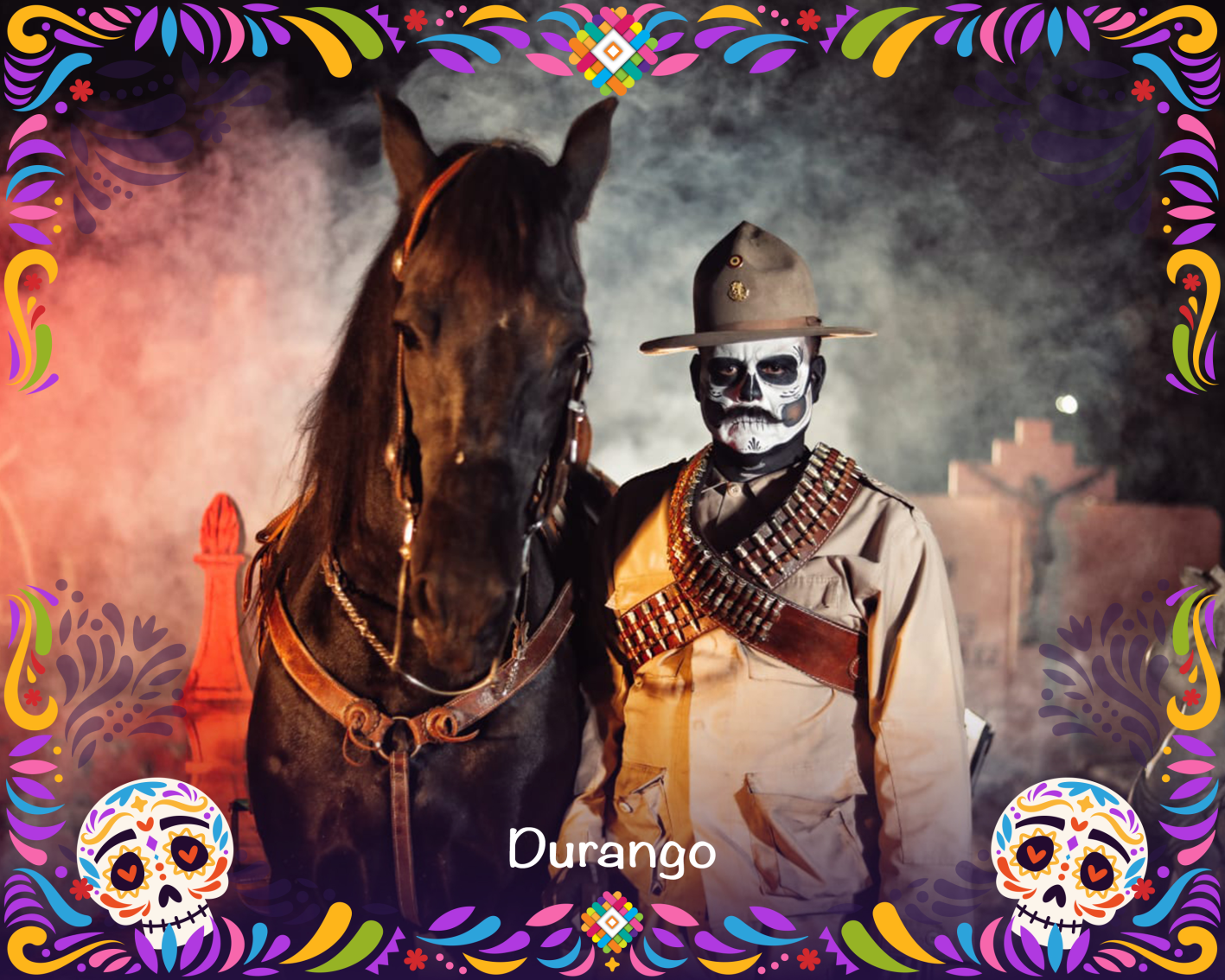
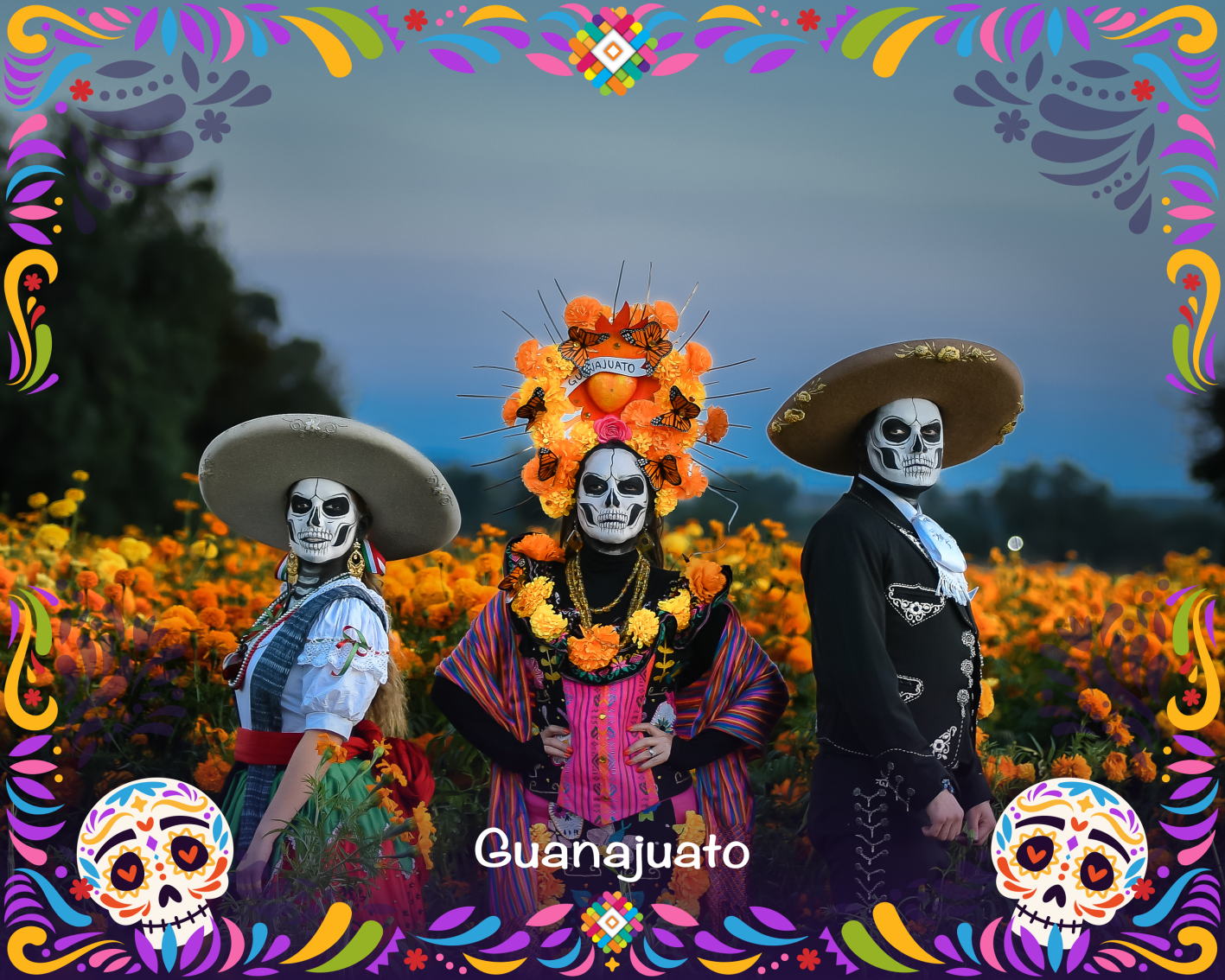
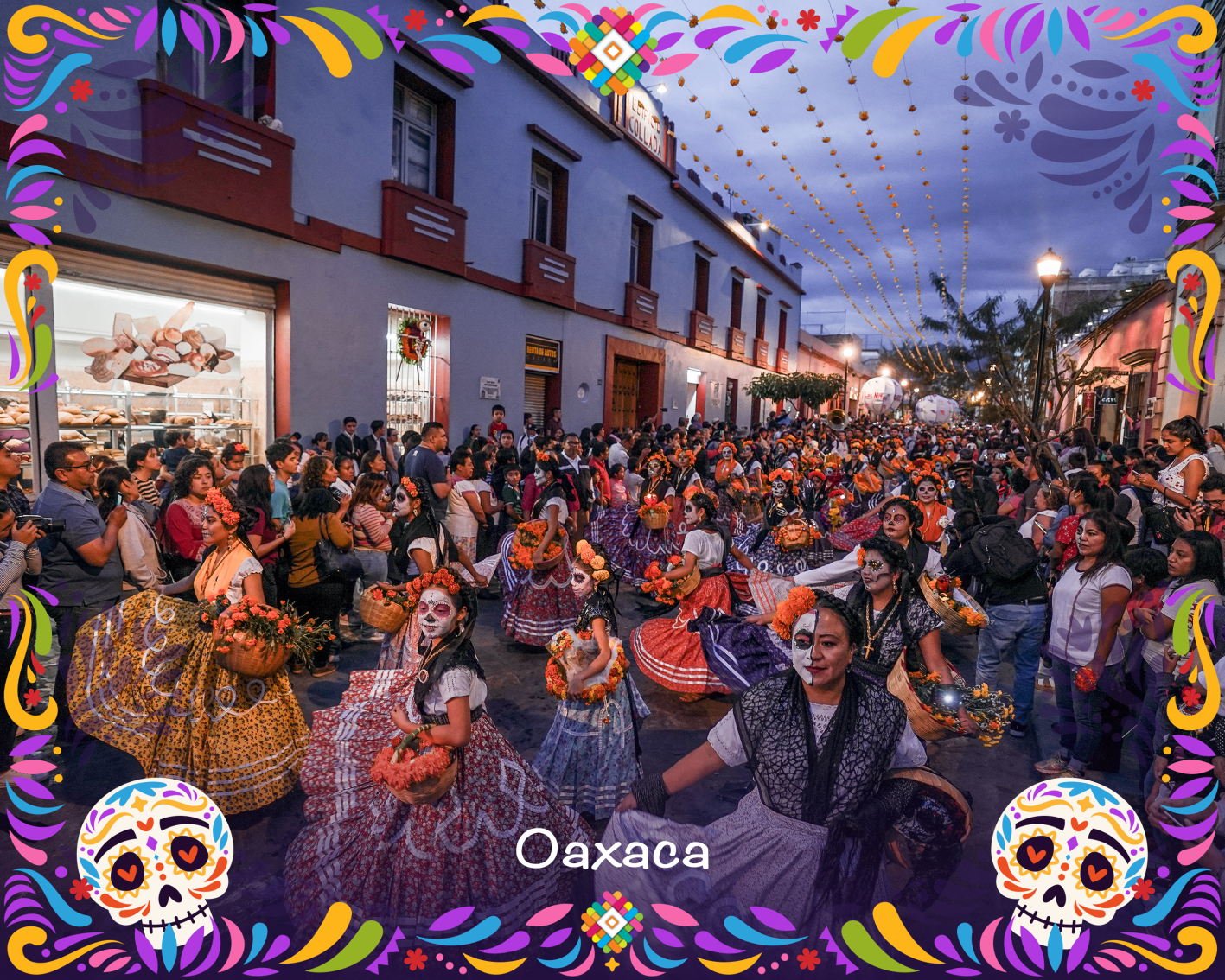
Clusters of candles lighting up the faces of families in a San Miguel de Allende cemetery, a group of no-nonsense Catarinas standing guard over field of marigolds in Guanajuato, dancers in bright swirling dresses and painted faces filling the cobblestone streets of Oaxaca, and in Durango, a lone soldier with crossed bandoliers, his face a skeleton, standing with his horse as smoke rises behind him. This year’s Día de Muertos celebration has succeeded in bringing a sense of genuine Mexican culture to the Carleton campus and we look forward to participating in the event again in the future.
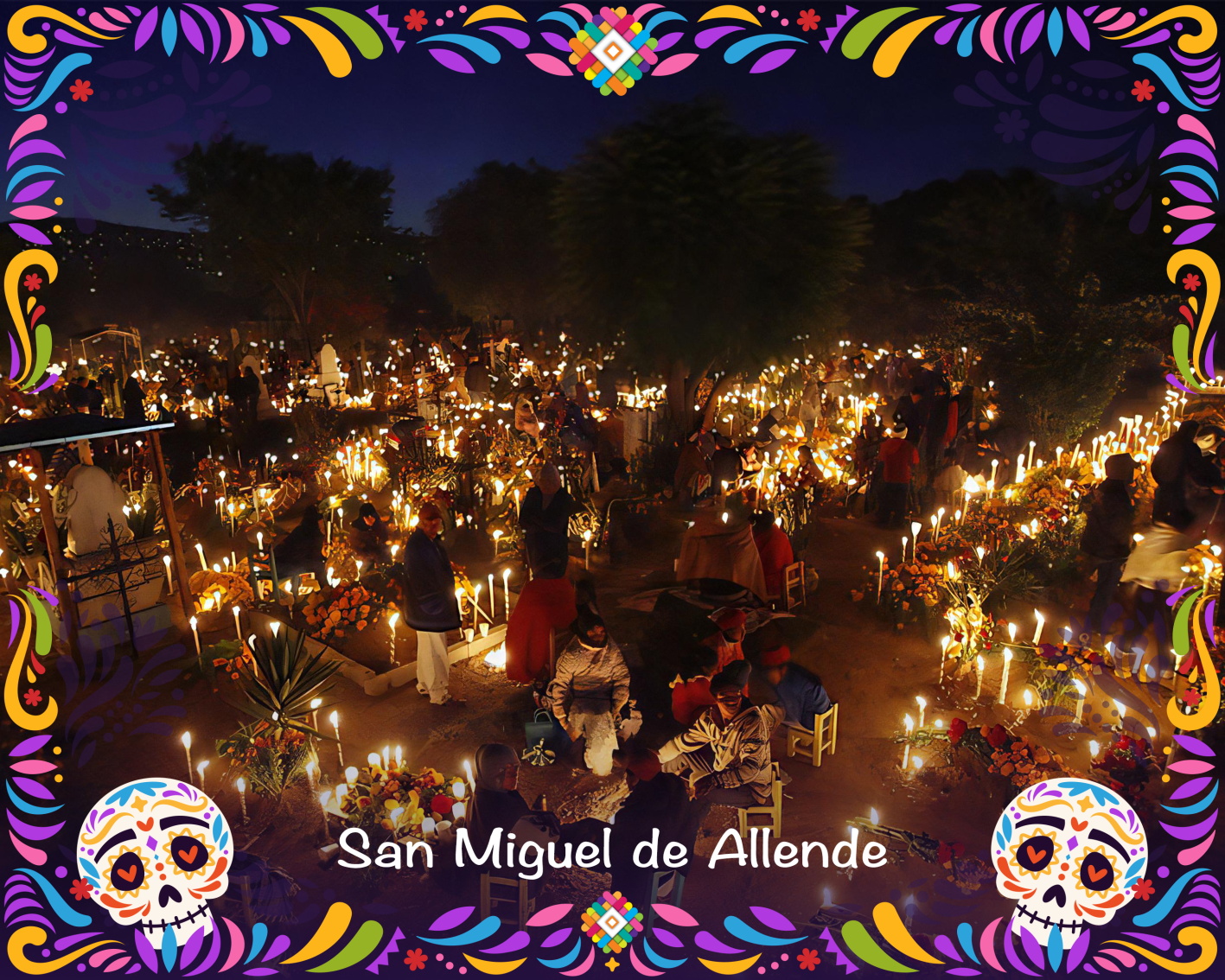
Thanks again to all those who made this event possible: the Embassy of Mexico in Canada, the School of Linguistics & Language Studies, Carleton University Students’ Association, and UNAM-Canada. Thanks also to H.O.L.A.S, and Chiqui Bakery for their enthusiastic participation. And finally, thanks especially to students and teachers at the Modern American School for sharing with us such a beautiful and memorable creation, and to the CUFSA – and by extension the Filipino community here in Canada and abroad – for entrusting us with such a profoundly meaningful responsibility.