InspirED Symposium Explores Relationship-Rich Teaching and Learning
By Carleton journalism students Justin Campbell and Clarisa Gonzalez
Teaching and Learning Services hosted a one-day symposium on April 28 showcasing the transformative power of “relationship-rich education” — an innovative approach to student development that emphasizes how a post-secondary learner’s relationships with faculty, staff and peers are crucial to both academic success and personal well-being.
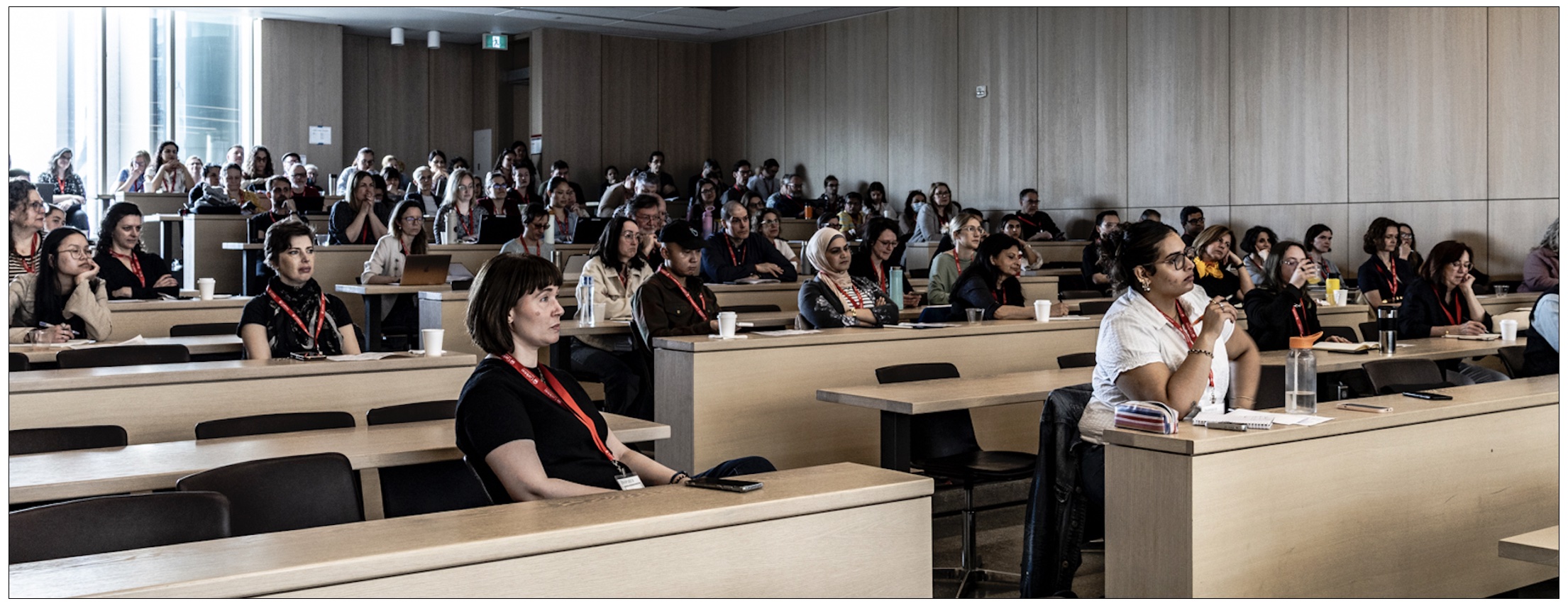
The event, which featured more than 30 speakers and panelists, drew some 200 participants to lecture and seminar spaces throughout Carleton’s Nicol Building, where two main plenary sessions and a dozen panel discussions, workshops and other activities were held over the course of the day.
Symposium highlights included a morning keynote address from U.S. education researcher Peter Felten and an afternoon keynote by the University of Windsor’s Bonnie Stewart, a leading Canadian scholar on the impact of digital technologies in higher learning.
“There is literally more than five decades of research in the United States that demonstrates that the most important factor — or among the top two or three most important factors — in essentially any good thing that happens in undergraduate education is connected to the quality of relationships students have with faculty, with each other and with staff,” said Felten, a professor of history and executive director of the Center for Engaged Learning at North Carolina’s Elon University.
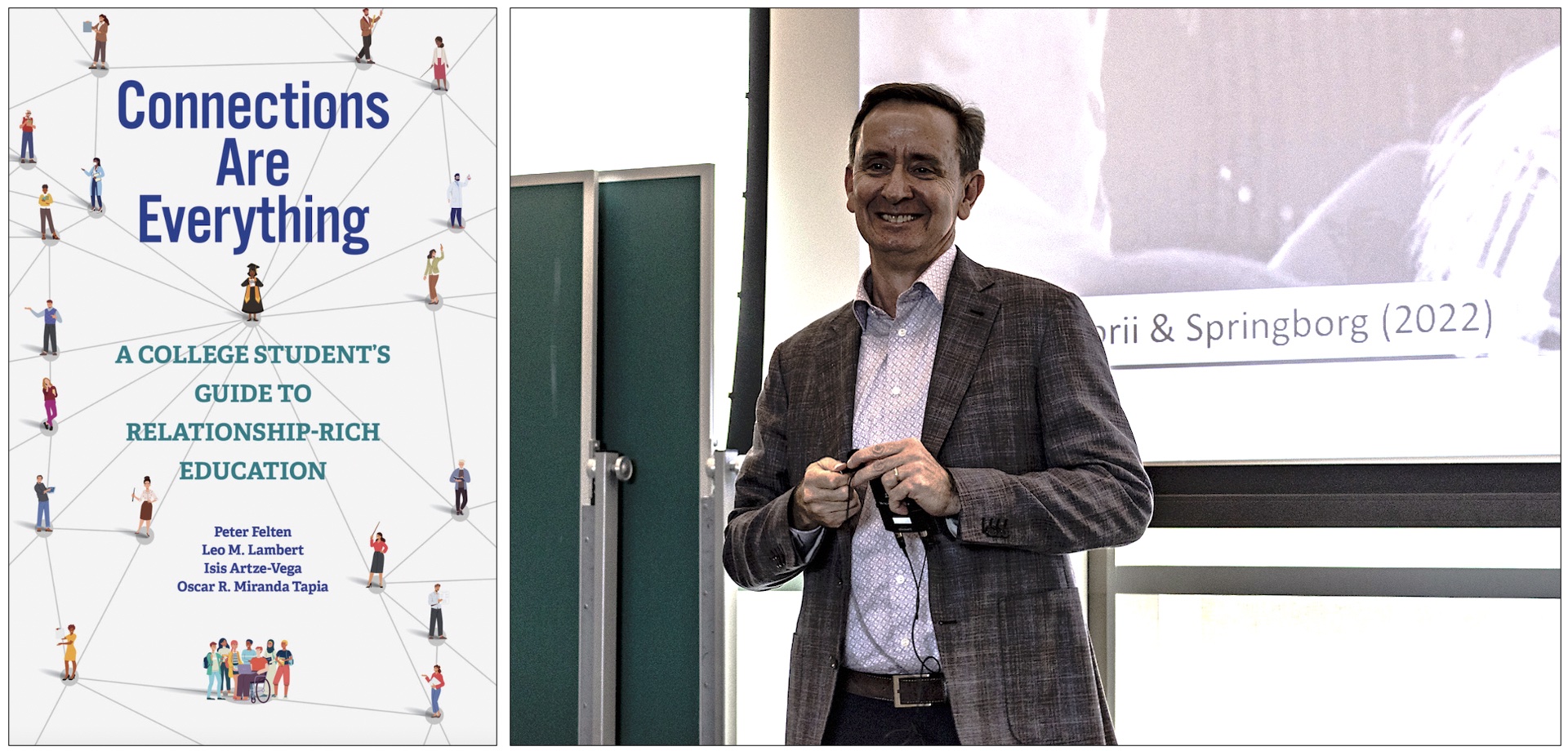
“Relationships are extra important for students from marginalized communities,” added Felten, who spent the 2022-23 academic year at Carleton as a Fulbright Canada Distinguished Chair in the Scholarship of Teaching and Learning. He identified students of colour, LGBTQ+ students, non-traditionally aged students and those who are first in their families to attend a post-graduate institution as learners for whom “positive relationships with faculty, with staff, with peers are extra motivating, convey an extra sense of belonging (and) contribute to them persisting through struggle and succeeding.”
In her address, Stewart explored the implications of AI in post-secondary education and in society broadly. She explained that she has been guided in her thinking by a former colleague’s piercing insight into what he called the three “logics” or overarching sets of values shaping modern life, and why students’ post-secondary experiences are so important.
“Education holds a particular space in society. There are three key logics that are driving what we do” in the 21st-century world, said Stewart. “One is the logic of business — profit, things need to make money, institutions need to make money, etc. One is the logic of media — we live in an ‘attention economy,’ you want eyeballs on the thing you’ve done in order for it to make money. But the third one — and the one that he said is the balance to the other two if you want to keep living in a society, is the logic of education. He framed that as the one that values knowledge as a public good.”
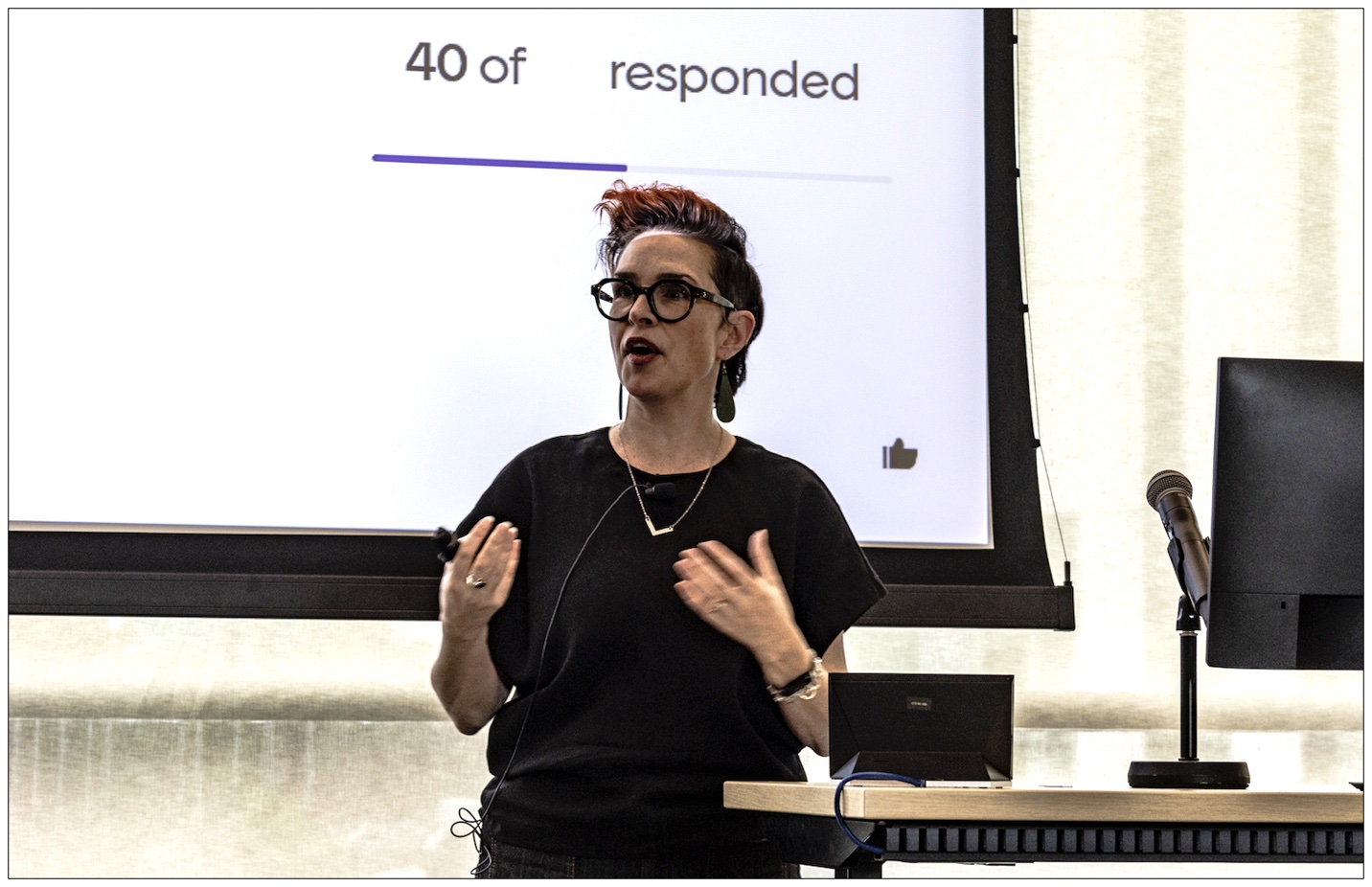
“This type of place,” Stewart said of the university, “is where we build people’s capacity to live in a society that values, (yes), the logics of business and media, but also the values and logics of education. It doesn’t mean we’re not using (generative AI) but we do need to be aware of what it is, and limit the agency that we give over to it.”
In later interviews, the two keynote speakers elaborated on their messages to symposium attendees.
“I don’t think we’ve completely recognized that (the) logic of education is actually under threat in the version of society that our would-be tech overlords are dreaming of,” said Stewart. “AI takes away the process (of learning) for us. There are so many things (where) the learning process itself is what has changed me along the way, allowed me to grow as a human, allowed me to make connections with other humans — and those are the things and the parts of learning that have enriched my life, but also enriched my capacity to contribute to a community. The parts of learning that are actually more process-based tend to be the ones that make a difference to us as humans, as individuals.”
Felten said he learned from his own experience as a student how critical those kinds of relationships were to his journey in education.
“I realized really quickly I needed to understand my students and their lives if I was really going to be able to teach them,” said Felten. “What mattered was not how much knowledge I had or how much knowledge I conveyed, but what students learn, how students developed, how students thought of themselves as capable and working, of doing certain things and knowing certain things. And that flipped it a lot for me.”
He recalled a moment from his undergraduate years that encapsulated what he considered an enriching experience with a teacher.
“My first semester at university, I had a professor in my philosophy course write on my final paper, ‘Peter, this is a really good paper.’ She gave me an A. Then she wrote, ‘You could have written a better paper. I’d love for you to come talk to me about that next semester.’ And honestly, my head exploded, because I’m like, but the point is getting an A! And she’s like, that’s not right. And so, I think one of the reasons why we should develop these kinds of connections is so that we can challenge (students) to develop their capacities even more, to push themselves even harder.”
Felten is co-author of the acclaimed 2023 book Connections are Everything: A College Student’s Guide to Relationship-Rich Education, billed as a resource that “shows students the simple steps they can take to make their own college experience meaningful and transformational.”
David Hornsby, Carleton’s Vice-Provost (Academic and Global Learning) and a professor in the Norman Paterson School of International Affairs, offered words of welcome to those assembled for the April 28 event.
In an interview, Hornsby said the themes Felten explored in Connections are Everything “really resonated” with the Carleton community, which made his time at the university as a Fulbright Scholar a few years ago especially impactful — and also made him a perfect keynote for this year’s innovation symposium.
Relationship-rich education, said Hornsby, is “a theme that we think is an enduring issue that we want to focus on in terms of how Carleton orients itself from a teaching and learning perspective, and relationships.”
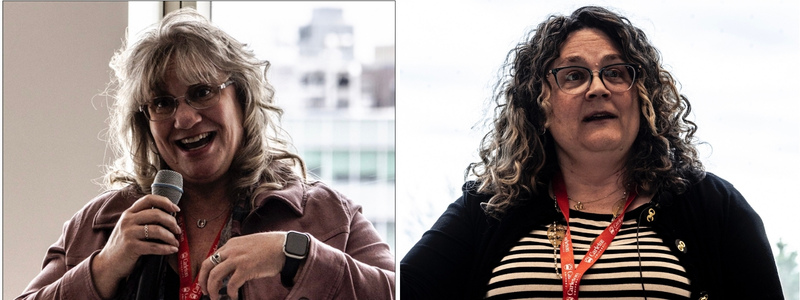
He added: “We want our teaching-learning environment to be globally relevant; we want to be examining themes or supporting teaching and learning practices in ways that matter. But we also accept that there’s going to be a Carleton flavour to all this. We really want to highlight what the Carleton approach to relationship-rich education is about. This is what InspirED allows us to do.”
A series of concurrent panel discussions and workshops followed each of the plenary sessions that featured Felten and Stewart’s keynote presentations. These breakout sessions spotlighted the many ways that Carleton’s faculty, students and staff have been fostering relationship-enriched teaching and learning.
Among those sessions was one focused on creating small-group learning communities within large classes where hundreds of students may come together for foundational lectures in their discipline.
Carleton professors Julie Caldwell (Sprott), Edward Cyr (Mechanical and Aerospace Engineering), Martha Mullally (Biology) and Laura Pickell (Health Sciences) shared various strategies — experiential learning, collaborative syllabus creation, journal clubs and more — to help build meaningful connections between students so they can engage in “conversation, reflection and learning from one another.”
Another session focused on the deployment of the Collaborative Indigenous Learning Bundles — 17 different online modules covering a wide range of issues and perspectives — to foster challenging discussions between students about history, science, film and immigration, all aimed at “weaving relationships into learning.”
A panel on “Learning in the City” featured testimonials from professors in Art and Architectural History, English Language and Literature and Industrial Design describing excursions beyond the classroom to “neighbourhoods, public spaces, cultural sites and community settings to support learning in real‑world contexts.”
The symposium agenda also included workshops on game-based learning and project demonstrations on podcasting and virtual reality.
“All of this,” said Hornsby, “is meant to feed into a broader effort to support student success.”
The goal, he explained, is that while students are taking their degree programs at Carleton, “they feel like they are welcome and they belong and that they matter.” But then, as well, “when they leave the university, they have transferable skills and they’ve had a good experience. So they look back fondly on their time here.”
“That’s the really important piece here,” he added. “We think about our learning environment as not only about the classroom, but about creating a student, a graduate, a citizen-scholar that really cares about the community, cares about society more broadly, and having a positive impact.”