Activist in Residence Program
Activist in Residence Program
About the Program
Meet our Activist in Residence
Interviews with Human Rights Activists
Scholars At Risk Program
News
About the Activist in Residence Program
The Activist in Residence program (AiR) is an initiative to host a human rights activist in the Department of Law and Legal Studies each year. Building on our successful participation in the Scholars at Risk program, the Department determined that it would like to explore ways to provide a home base for human rights activists, particularly at-risk human rights activists, within university departments.
The AiR program is designed to recognize the important role activists play in advancing the goals of protecting and fostering human rights. The program provides an intellectual home for a human rights activist, while also providing our students and faculty members the opportunity to learn from someone with on the ground experience fighting to protect human rights.
AiR participants teach one course each year and are invited to further share their knowledge and experience through guest lectures, other speaking engagements and special initiatives. In addition to teaching a fourth year seminar in Patriarchy, Human Rights and Informal Justice, our inaugural Activist in Residence, Rehana Hashmi, is producing a series of video interviews with human rights activists from around the globe.
The Department will launch a series of AIR Program initiatives in Summer and Fall 2021.
We hope that this initiative will grow into a national network of Activists in Residence.
Meet our Activist in Residence
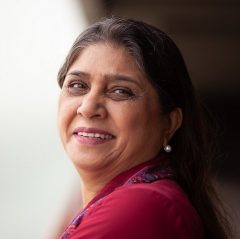
Rehana Hashmi is a human rights defender and activist whose over 30 years of advocacy focuses on protecting women and minorities in Pakistan, her home country, from which she now lives in exile.
In 2019, Hashmi was appointed as the inaugural Activist in Residence (AIR) in the Department of Law and Legal Studies at Carleton University—a position that is the first of its kind in Canada.
Learn more about Rehana Hashmi.
Watch an interview with Rehana Hashmi.
Interviews with Human Rights Activists
In our interview series, Rehana Hashmi interviews human rights activists from around the world to hear about their life, activist work and the strategies activists employ in pursuit of defending human rights.
Introducing Rehana Hashmi, Activist in Residence
As part of the AiR Program, the Department’s inaugural Activist in Residence, Rehana Hashmi, will be interviewing human right activists from around the world to learn more about their life, activist work and the strategies activists employ in pursuit of defending human rights. However, for the first interview in this series we focus on the life and work of Rehana Hashmi. Hashmi is a human rights defender and activist whose over 30 years of advocacy focuses on protecting women and minorities in Pakistan, her home country.
-
Part 1: An Activist’s Journey in Pakistan Hashmi discusses how childhood events and early activism impacted her life and helped cement her commitment to advocating for justice and human rights in Pakistan.
Part 2: Civil Society and Human Rights in Pakistan Hashmi discusses how the events of the late 70s and 80s, and the post-9/11 international political climate, impacted daily life in Pakistan and the trajectory of her advocacy.
Watch the full interview.
Part 3: Helping Human Rights Activists Hashmi shares how she has been threatened and persecuted due to her advocacy. Hashmi calls for a network of formal systems of support for human rights defenders, particularly for those facing violence and persecution.
Activist in Residence Interview: Professor Chinnaiah Jangam
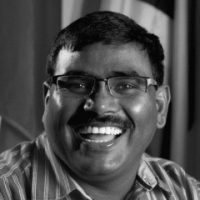
Hear Professor Jangam speak about the historical oppression of Dalit people in India, his activist journey, the rise of far-right Hindu nationalism, and how activists can unite to oppose oppression and violence in India and beyond. Professor Jangam is an Associate Professor in the Department of History, Carleton University.
Learn more about Professor Chinnaiah Jangam.
-
Part 1: Education as a Political Act and an Act of Survival Professor Jangam shares the history of the Telangana region of India where he was born and his experiences as a Dalit person, also known as an “untouchable” in the caste system, including his enrolment in the Indian government’s rural education programs which targeted Dalit people. Professor Jangam highlights the emancipatory opportunities of education in light of the Dalit peoples’ historical experiences as bonded labourers.
Part 2: Mobilizing Against Dalit Oppression Professor Jangam discusses how he mobilized with fellow students to protest the 1991 Tsundur Massacre of Dalit people in the Guntur district, Andhra Pradesh. Professor Jangam emphasizes the importance of activism and resistance in responding to the every-day violence experienced by Dalit people and how increased awareness of Dalit oppression dovetails with the rise of Dalit scholarship, literature and critiques of dominant Indian narratives.
Part 3: Indian Nationalism and Cross-cultural Solidarity Professor Jangam discusses how the rise of Hindu far right nationalism, often referred to as “Hindutva,” has impacted Dalits, Muslims and women in India. Professor Jangam provides an overview of the impact of the 2019 revocation of Article 370 of the Indian Constitution, a Hindutva policy, which took away autonomy from the regions of Jammu and Kashmir. Professor Jangam outlines the need for different oppressed peoples in India to unite to oppose state and non-state violence and oppression.
Part 4: Activism, Academia, and Combatting Oppression Professor Jangam discusses how he negotiates his dual roles of activist and academic, and the role that memoir and self-care plays in his activist work. Professor Jangam further outlines how memoir can act as a testimony of historical oppression, and as a tool to humanize “the other.” Professor Jangam outlines the barriers women human rights activists face in India, as well as the hope and community available to activists who collaborate across cultural barriers.
Watch the full interview.
Activist in Residence Interview: Ketty Nivyabandi

Hear Ketty Nivyabandi speak about her experiences mobilizing a group of women for peaceful protests in response to the 2015 Burundi constitutional crisis, the consequences of state repression and exile, the role of women’s liberation in countering oppression, and the importance of human rights activism.
Ketty Nivyabandi joined Amnesty International Canada (English Section) as Secretary General in October 2020. She is the primary spokesperson for the Branch and holds responsibility for the development and delivery of Amnesty International’s human rights work in Canada. A global human rights activist and advocate, Ketty holds in-depth and lived expertise on refugee issues and the intersections of gender, race, democracy, and human rights. Prior to seeking asylum in Canada in 2015, she faced police violence as a leading organizer of women’s peaceful protests for democratic change in her country, Burundi.
In her previous roles, Ketty has led research and advocacy to support global women peace activists in several conflict and post conflict countries, including Syria, Yemen, South Sudan, Myanmar and Guatemala. As a communications strategist, she has extensive experience working with activists to amplify their voices through international media and shape public policy. Her work is rooted in peoplepower, public accountability, and a feminist, decolonial approach to human rights.
Ketty studied International Relations, is a former journalist and a published poet.
-
Part 1: Mobilizing Against Burundi’s Constitutional Crisis Ketty Nivyabandi discusses the events preceding protests against the Burundi government during the 2015 constitutional crisis and subsequent failed coup. Nivyabandi shares how women-led peaceful protests were met by brutal police crackdowns.
Part 2: The Consequences of State Repression and Exile Ketty Nivyabandi discusses how the Burundi government targeted women peaceful protesters under the guise of retaliating against coup participants. She details how the resulting violence and persecution forced her to flee her home in Burundi, and the specific ways in which women human rights defenders are targeted and threatened. She also provides insight into the lack of support available to exiled human rights defenders.
Part 3: Countering Repression through Women’s Liberation Ketty Nivyabandi shares how women’s liberation is intimately tied to the project of countering repressive regimes. She reflects on the forms of oppression women often face, how women can be empowered, and how women are uniquely positioned to oppose state-based oppression. Nivyabandi additionally discusses the revolutionary capacities of artists and writers in furthering human rights and liberation.
Part 4: Fostering Advocacy through Introspection and Education Ketty Nivyabandi reflects on the promising shifts in young peoples’ interest and participation in different forms of human rights advocacy. Nivyabandi shares advice for becoming a better advocate for human rights and liberation. She concludes her interview with a reading of her poem Remembering Burundi.
Activist in Residence News

An Interview with Poet and Human Rights Defender Ketty Nivyabandi
As part of the Activist in Residence Interview Series, The Department of Law and Legal Studies’ Activist in Residence, Rehana Hashmi, and Feminist Advocate and …
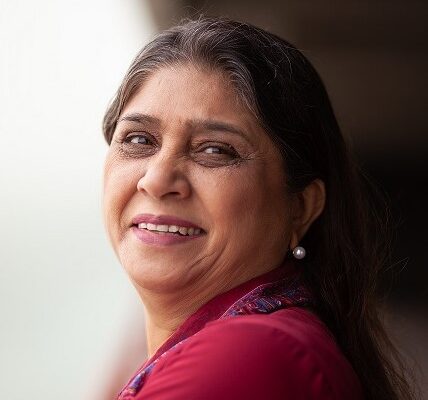
Introducing the Activist in Residence Program
The Department of Law and Legal Studies is proud to announce the launch of the Activist in Residence (Air) Program. The AiR Program is an …