How can you give 100 students the intense, real-time experience of managing an aircraft’s complex systems without ever leaving the ground?
Prof. Derek Gransden found the solution through the Experiential Learning Hub‘s custom sim rig flight simulator.
In his fourth-year aerospace engineering course, Gransden faced the challenge of translating complex systems design theory into a practical, real-world context for a large class. He needed a way to introduce core concepts to his students, such as cockpit situational awareness, crew and resource management, and avionics.
Having a pilot’s license, Gransden tested the simulator and found that it did a good job of matching the stressors of piloting and could give students hands-on experience with the core course concepts.
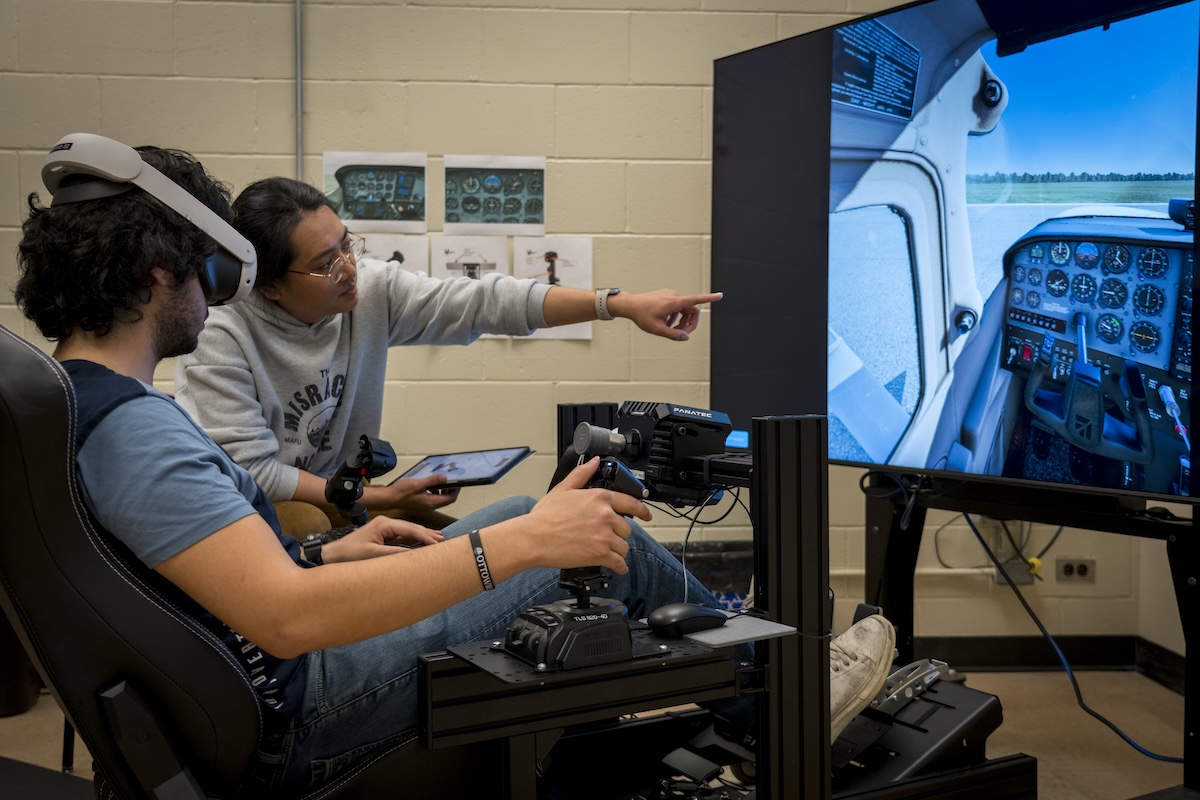
Photo by Greg Allison
The Flight Simulator: A Hands-On Solution
The pedagogical strategy for using the simulator was to provide students with “flight” experience, encourage collaboration in a co-piloting scenario and invite them to problem-solve collaboratively.
“Students were thrown into a situation where they had to control the aircraft with little advanced knowledge, apart from some guides on how to fly with the controls given and some training videos,” says Gransden.
Pairs of students were tasked with performing flight manoeuvring exercises standard in a Transport Canada-approved flight test, such as taking off, performing turns and even stalling (and recovering) the aircraft.
Students were designated roles as pilot and co-pilot and worked together to ensure the aircraft and crew performed the required manoeuvres. They monitored avionics instruments, such as airspeed, vertical speed and heading indicators, effectively stressing the critical importance of excellent communication and cockpit situational awareness in high-pressure scenario.
The team at the Experiential Learning Hub was there to support the project through consultations with Gransden along the way and helping students with any technical difficulties during the flight experiences.
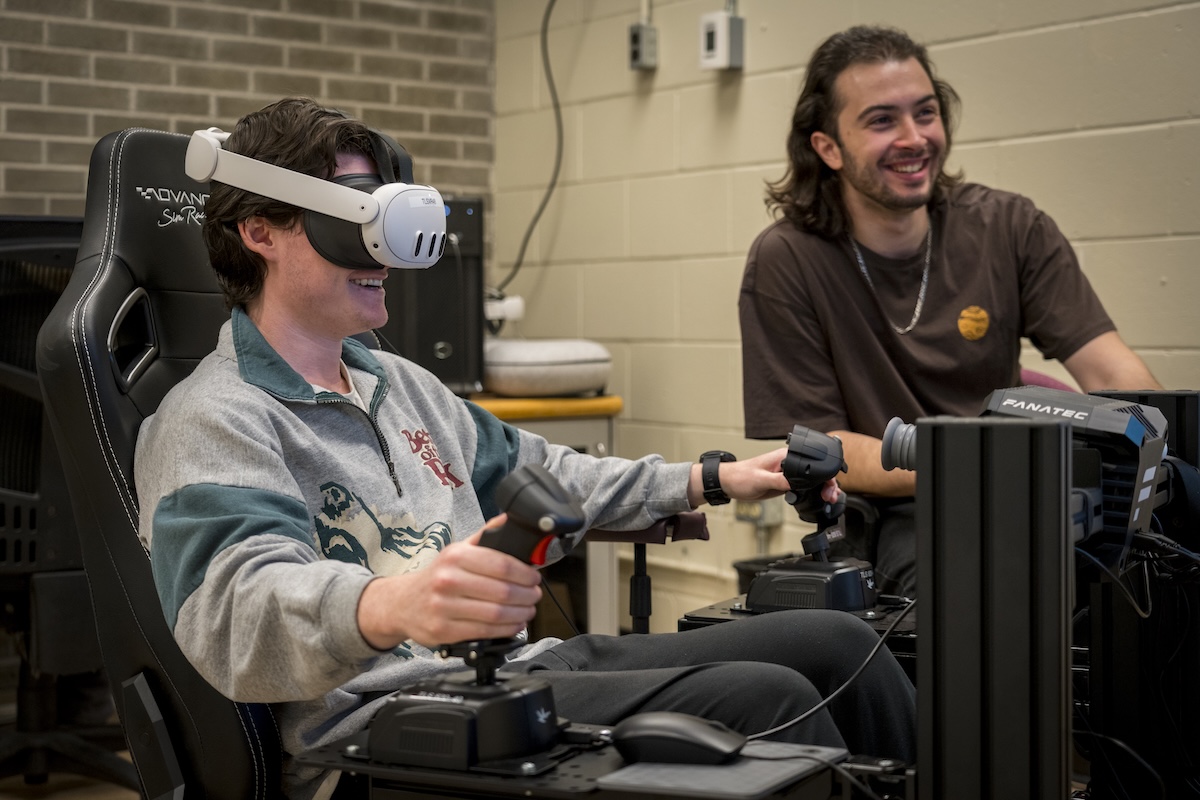
Photo by Greg Allison
Overwhelmingly Positive Outcomes
“Students have been challenging the mechanical and aerospace engineering department to include more experiential learning, particularly in the aerospace stream,” Gransden says.
This project seemed to hit the mark. Gransden says the student response was overwhelmingly positive, with many students thanking him for the opportunity.
“I have even had students tell me that they were going to get their pilot’s licence after the experience,” he says. “Most students don’t have a pilot’s licence and would not get this kind of experience without expensive discovery flights or renting a pilot.”
By leveraging the Experiential Learning Hub to implement this experience, Gransden was able to move beyond textbook examples and give students the chance to practice applying their skills, making their learning immediately ready for their resume and conversations with employers.
Do you have a teaching dilemma that immersive technology could solve? Come talk to us about incorporating experiential learning into your course! Fill out a consultation form or email elh@carleton.ca.