Teaching and Learning Services is pleased to announce the recipients of the 2025-26 Future Learning Innovation Fellowship, a program designed to support instructors in implementing innovative teaching and learning practices.
The recipients of this year’s fellowship are focused on integrating immersive technology, such as digital storytelling, mixed reality, simulations and 360-degree video, into their courses to address teaching and learning challenges, and enhance student engagement and academic success. The fellowship provides funding and support from TLS’ Experiential Learning Hub to help instructors develop their projects.
There are six recipients this year:
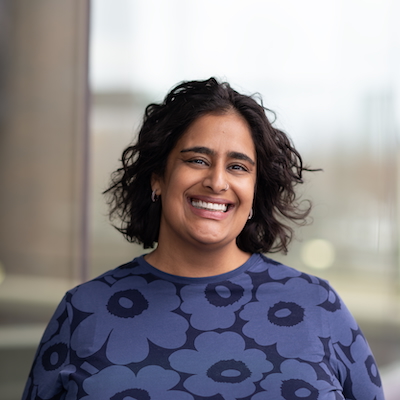 Manjeet Birk (Feminist Institute of Social Transformation) is building off her experience of creating Home to provide students in her Critical Race Studies classes with the tools to write and create their own narratives using digital storytelling. This project breaks away from traditional virtual reality experiences, which often present damage-centred narratives, and instead prioritizes empathy and inclusivity, while challenging students to critically examine systemic inequities.
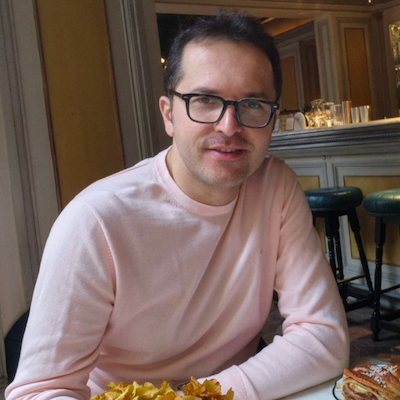 Mehdi Eshaghi (Department of Mechanical and Aerospace Engineering) is implementing a VR-based pre-lab module in his Fluid Mechanics course to improve student readiness. Students will be able to explore experiments virtually before they attend the physical lab, reducing uncertainties and ensuring continuity when equipment issues arise.
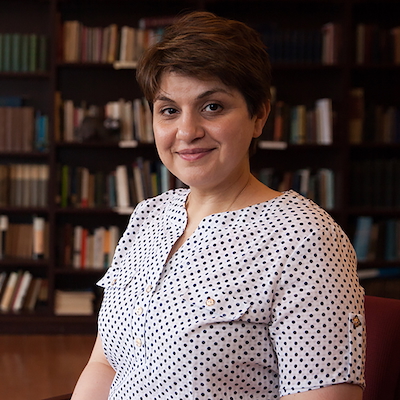 Eva Kartchava (School of Linguistics and Language Studies) is leveraging virtual reality and artificial intelligence to prepare teacher-trainees to transfer their classroom learning into real-world teaching contexts. Her project will help teacher-trainees experience lifelike classroom corrective feedback scenarios and experiment with different corrective scenarios, enhancing their confidence and teaching skills as a result.
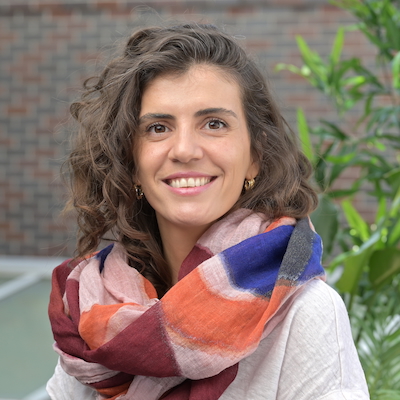 Lama Mourad (Norman Paterson School of International Affairs) is incorporating a fully immersive, narrative-driven simulation that gives students structured, experiential practice with negotiation, collaboration and reflective analysis. By integrating AI “Deputies” that generate real-time prompts, counterarguments and narrative developments, the simulation will immerse students in the politically complex dynamics of global negotiations, strengthening their critical thinking, collaboration and policy-analysis skills.
 Mike Murphy (School of Linguistics and Language Studies) is inviting students to create a digital memoir that tells the story of their experience with one or more of the places, cultures and languages they have inhabited. The project aims to raise engagement and learning by granting students greater ownership of the texts they make. It takes students beyond monomodal writing tasks on low-relevance topics to building their English and digital communication skills through meaningful storytelling.
 Jesse Stewart (School for Studies in Art and Culture: Music) is making improvisation more accessible and inclusive, while fostering intercultural awareness and a deeper understanding of musical dialogue. He will leverage a 360-degree virtual reality film and companion publication to give students the opportunity to experience improvisation from the inside—observing gestures, interactions and spatial relationships not shown in traditional media.
We are excited to see the impact of these projects on our students and the Carleton community. Congratulations to this year’s recipients!